Fragments of ancient grandeur
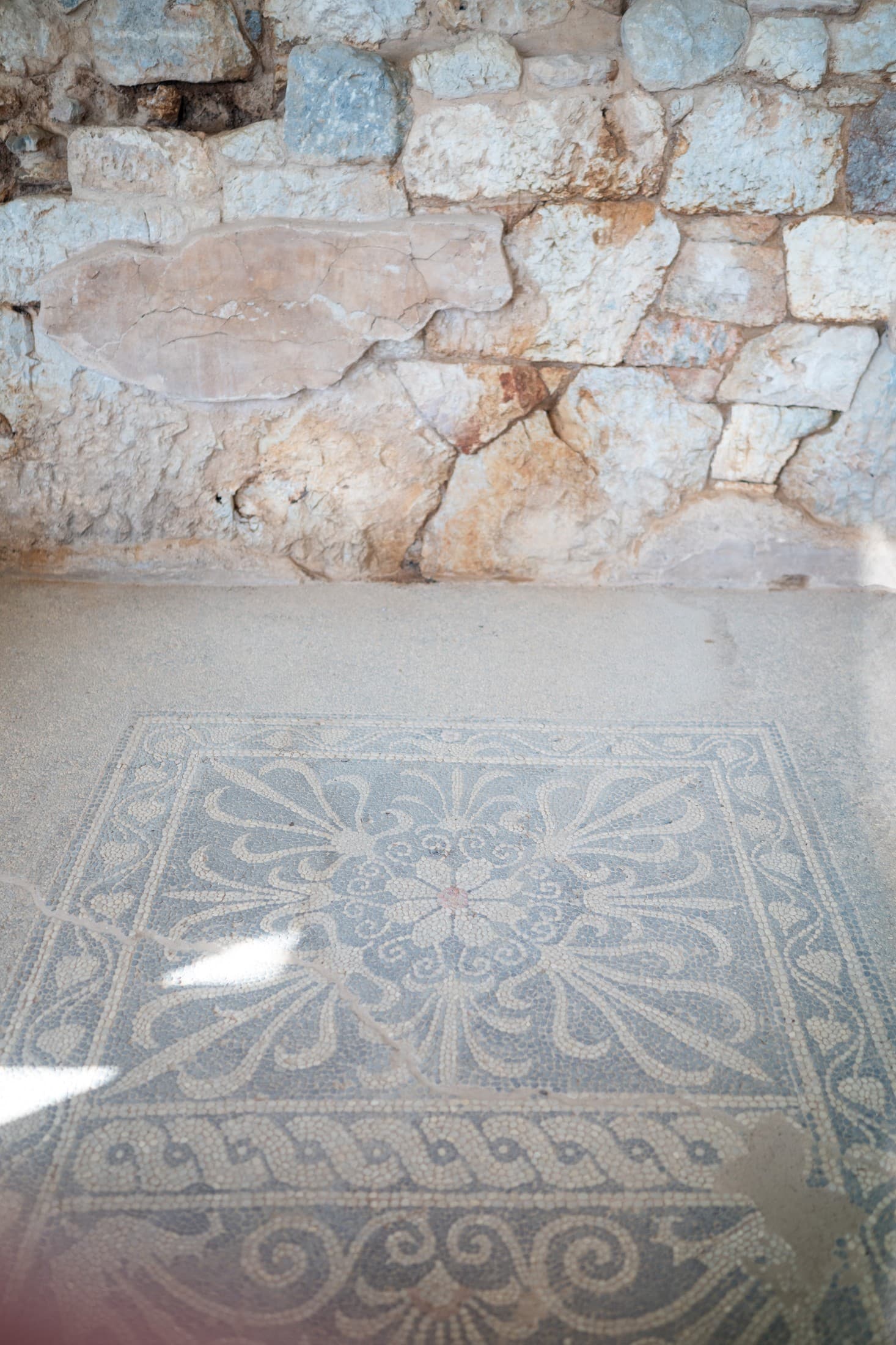
Within the archaeological site of Eretria—once a great naval city of antiquity—most visitors seek out the so-called House of the Mosaics. It stood in the city’s most affluent quarter, where luxurious residences were built during the Hellenistic period. Some of its floors have survived through the centuries, offering a glimpse into the wealth of the ancient city.
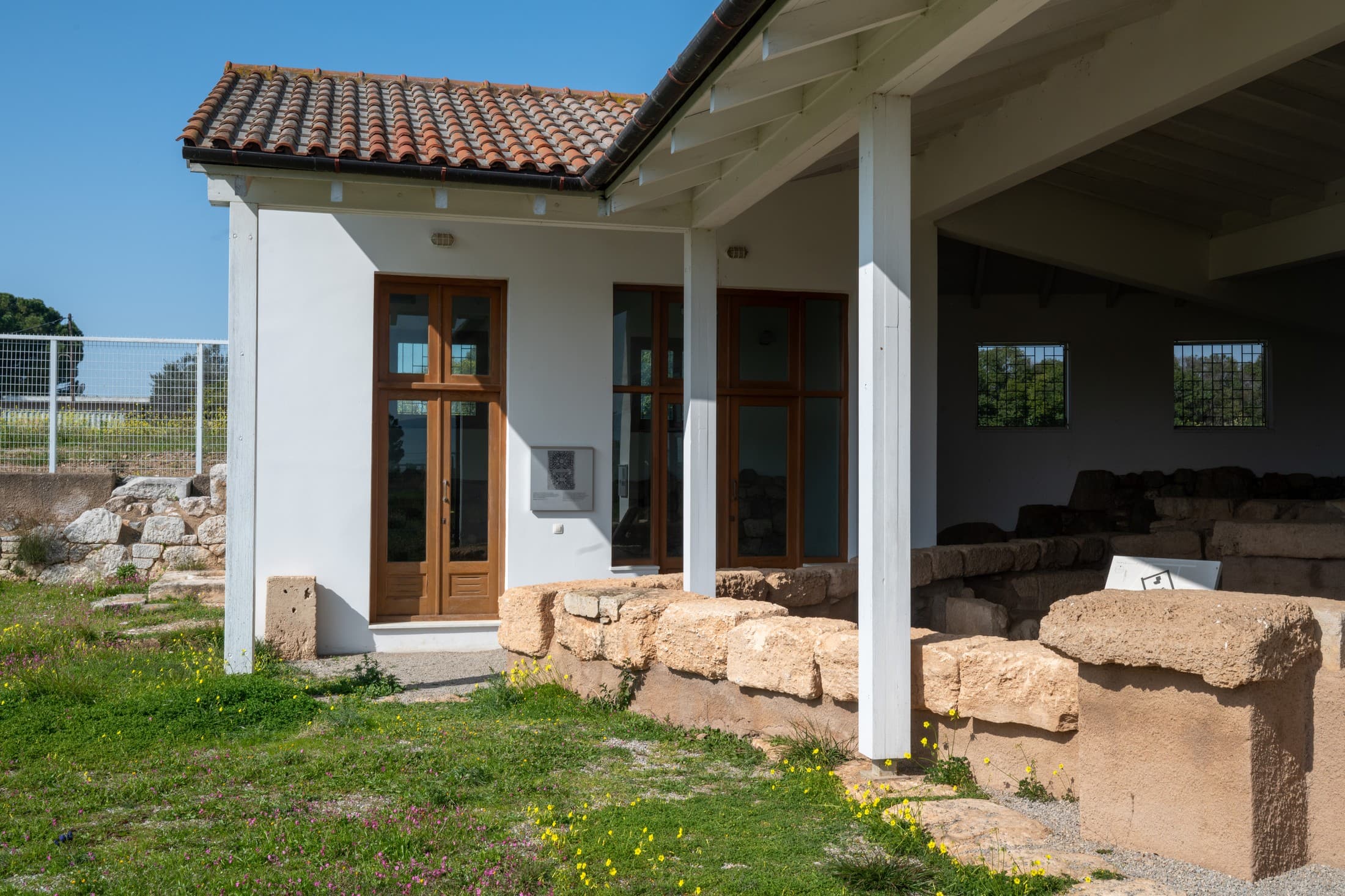
The impressive mosaics, now protected under a shelter, reveal exquisite mythological scenes. The large central mosaic of the luxurious residence depicts a battle between Arimaspians and Griffins, along with Sphinxes and Lephytas, while another shows a Nereid riding a hippocamp.
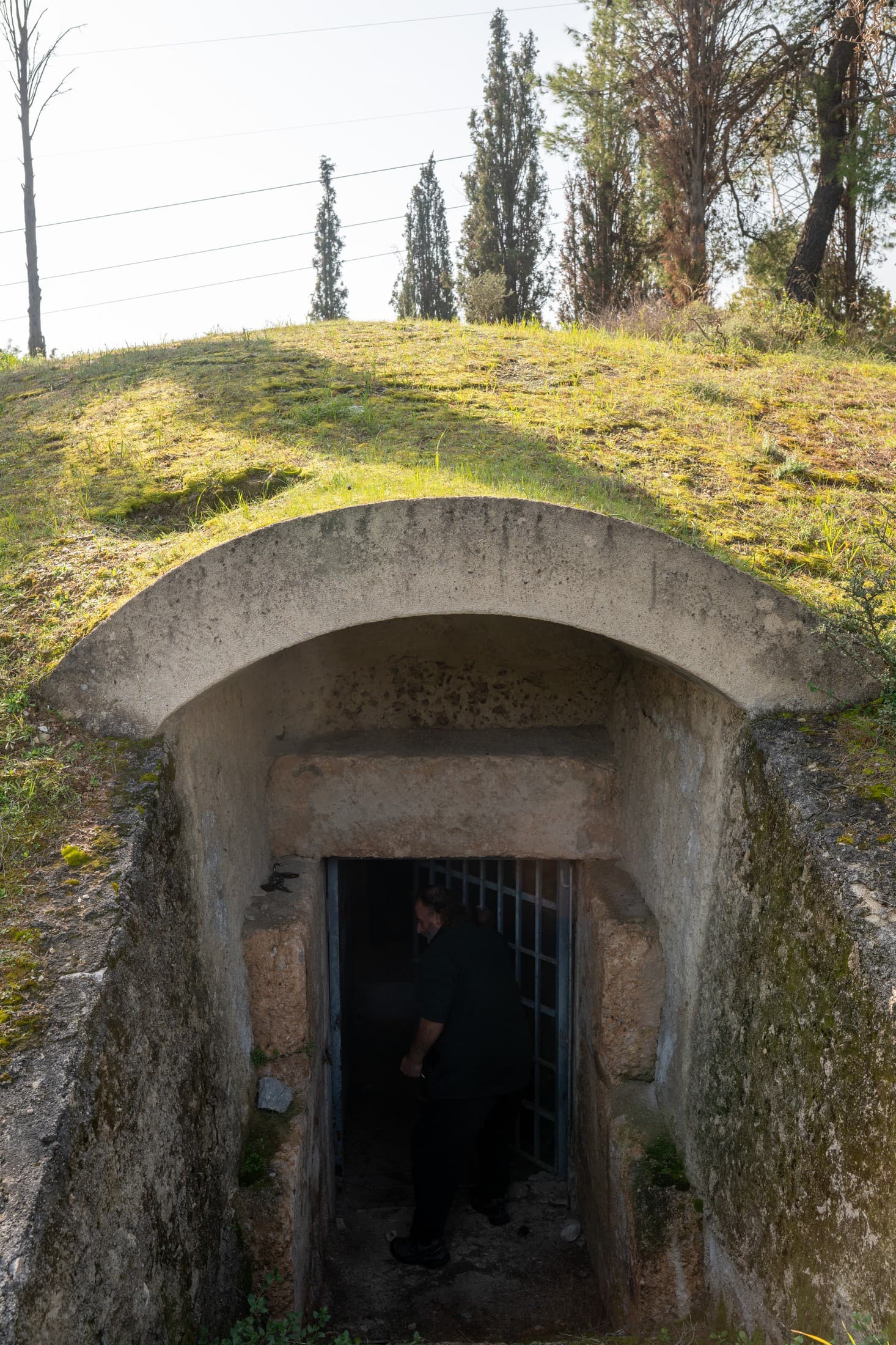
The house is estimated to have been built around 370 BC and appears to have been destroyed about a century later. In the 1st century AD, it was reused for the burial of a prominent man.
During works on the water supply system, another pebble mosaic floor was discovered nearby. It depicts two Satyrs—one playing the aulos and the other dancing—supporting archaeologists’ view that the space was an andron, a men’s symposium room, much like the House of the Mosaics itself. The pebble mosaic has been reburied by archaeologists and is not yet open to visitors. Until it becomes accessible, enjoy exploring the rest of the archaeological site, and be sure not to miss the important Temple of Apollo Daphniphoros.
The impressive mosaics, now protected under a shelter, reveal exquisite mythological scenes. The large central mosaic of the luxurious residence depicts a battle between Arimaspians and Griffins, along with Sphinxes and Lephytas, while another shows a Nereid riding a hippocamp.
The house is estimated to have been built around 370 BC and appears to have been destroyed about a century later. In the 1st century AD, it was reused for the burial of a prominent man.
During works on the water supply system, another pebble mosaic floor was discovered nearby. It depicts two Satyrs—one playing the aulos and the other dancing—supporting archaeologists’ view that the space was an andron, a men’s symposium room, much like the House of the Mosaics itself. The pebble mosaic has been reburied by archaeologists and is not yet open to visitors. Until it becomes accessible, enjoy exploring the rest of the archaeological site, and be sure not to miss the important Temple of Apollo Daphniphoros.