A Sanctuary of Myths and Athenian Worship
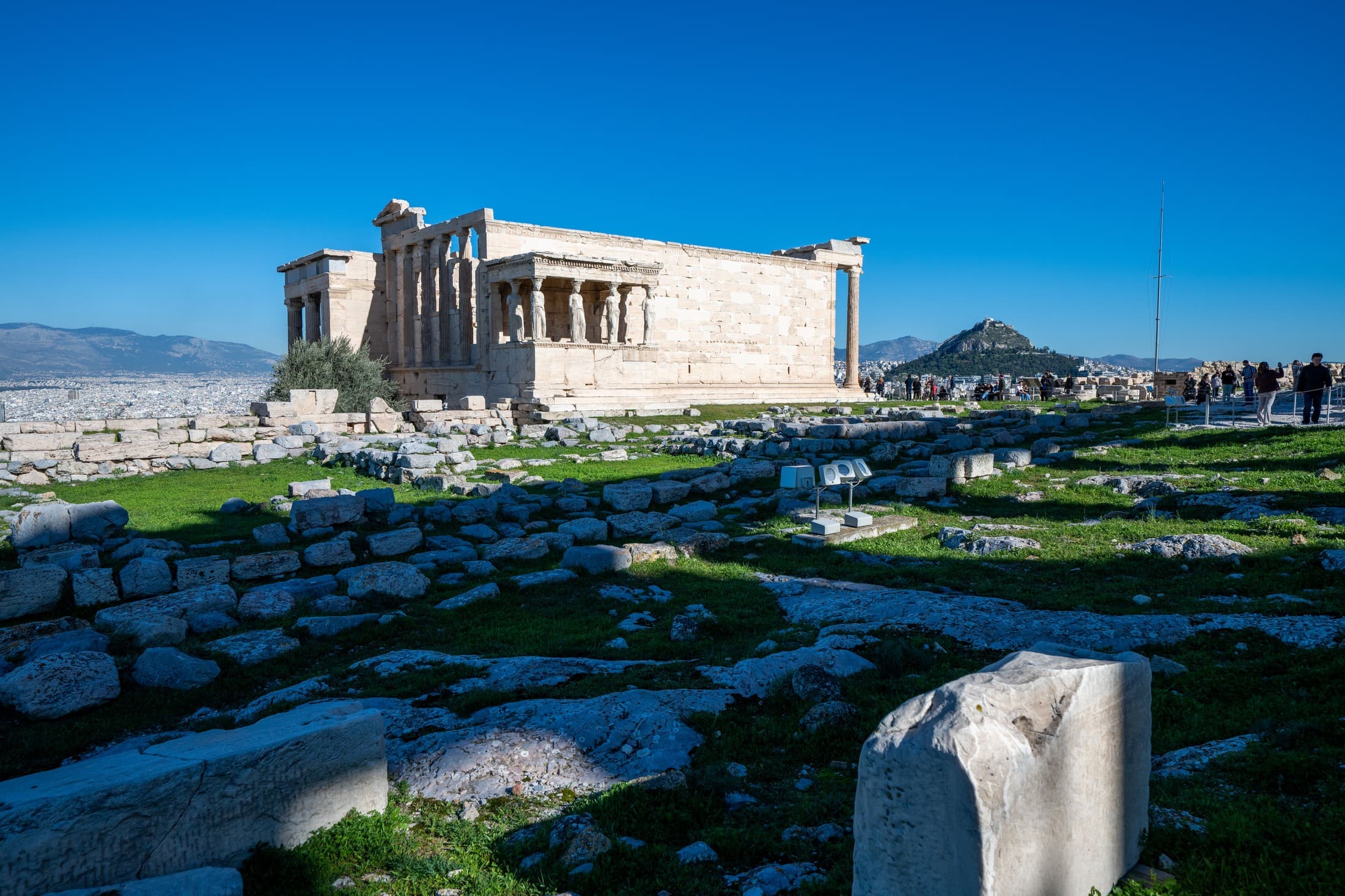
The Erechtheion is the most idiosyncratic and elegant building on the Acropolis. Built on the north side of the Sacred Rock between 421 and 406 BC, it replaced the "Ancient Temple" of Athena Polias. Its unique and complex architectural form is due to the steep slope of the ground and the need to house multiple and different cults under the same roof.
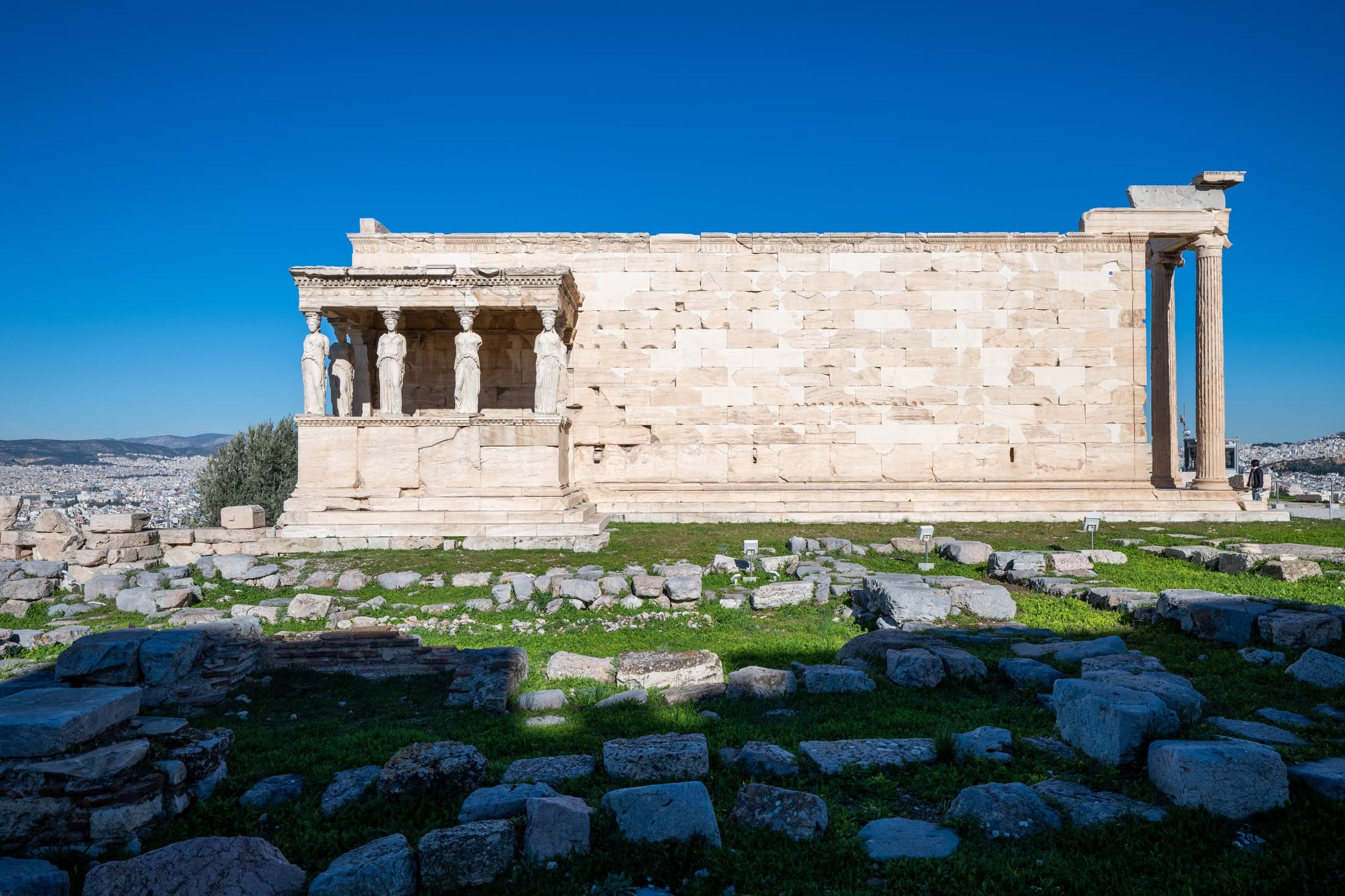
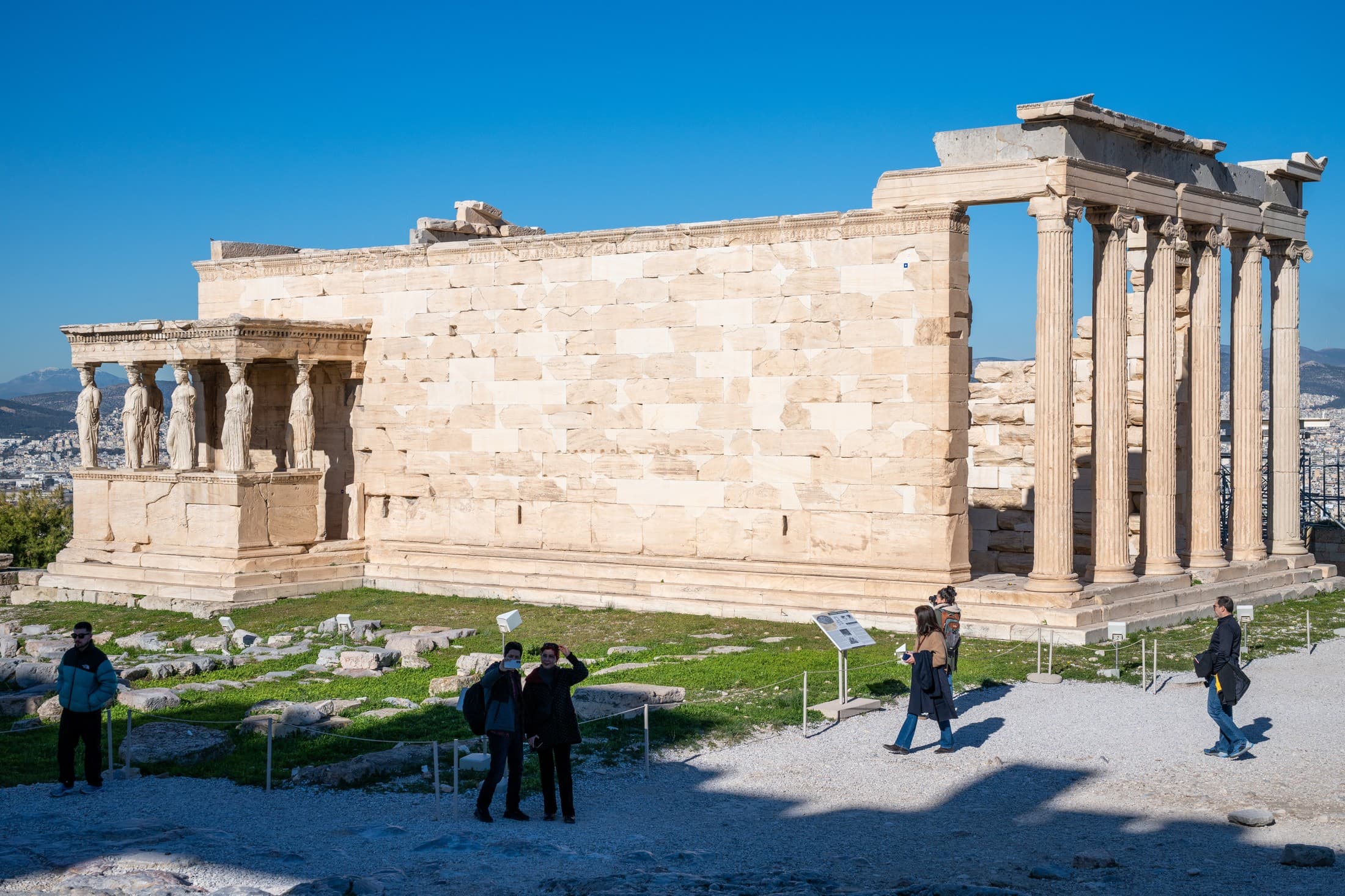
Made of white Pentelic marble, the building is distinguished by its frieze, which was made from grey Eleusinian stone. The eastern side, which is higher, features a six-columned Ionic portico and was dedicated to Athena Polias. This is where the ancient xoanon, the sacred wooden statue of the goddess, was kept, draped with a veil by the Arrephoroi (girl acolytes) during the Panathenaic Games.
The westernmost section, with its magnificent entrance on the north side, was dedicated to Poseidon-Erechtheus and heroes such as Hephaestus. The area is steeped in mythology: it was home to the sacred snake of Athena as well as the tomb of Cecrops, while the marks of Poseidon's trident were preserved alongside the “Sea of Erechtheus”, the saltwater spring that gushed forth during the dispute between the two gods.
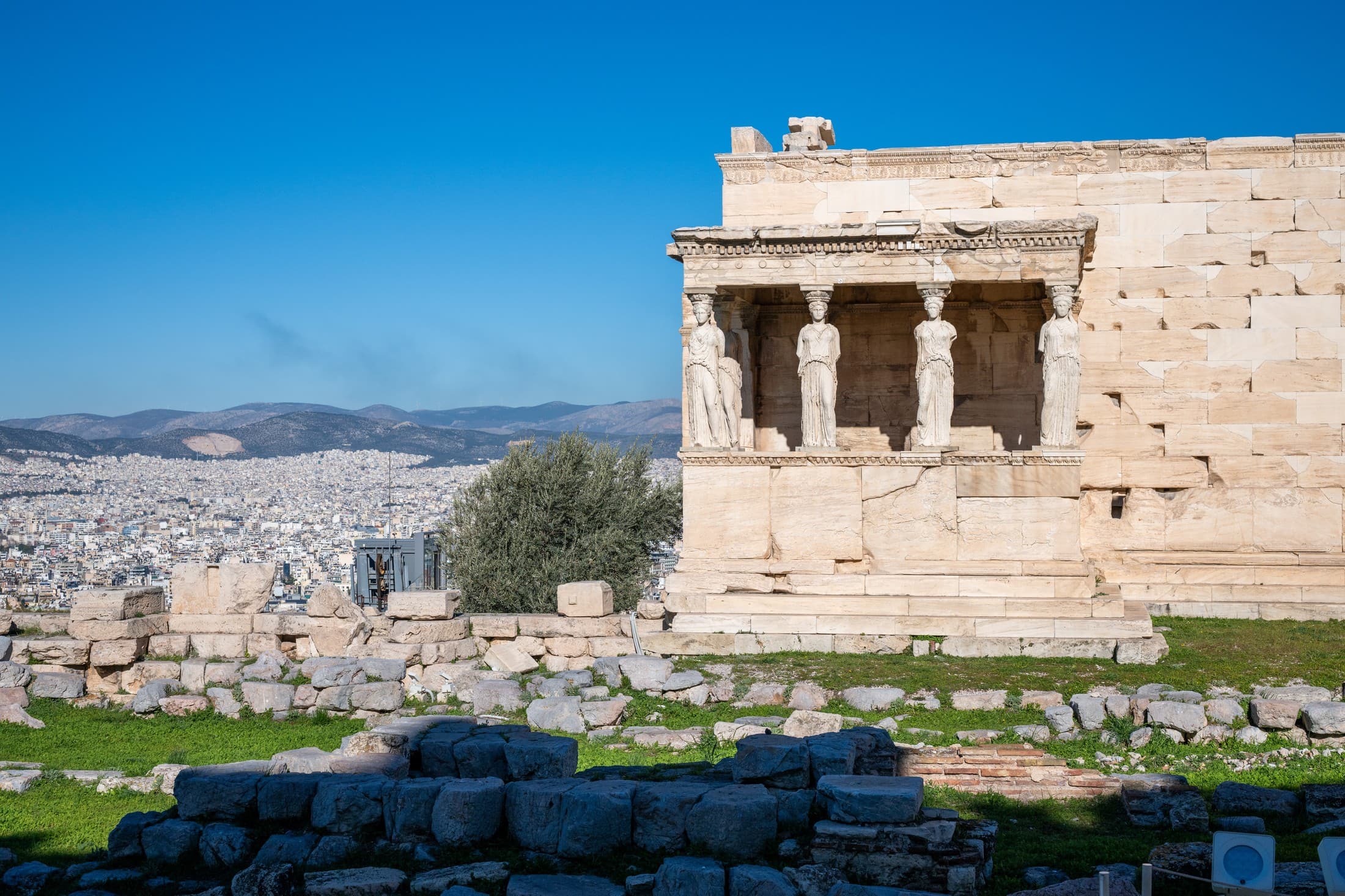
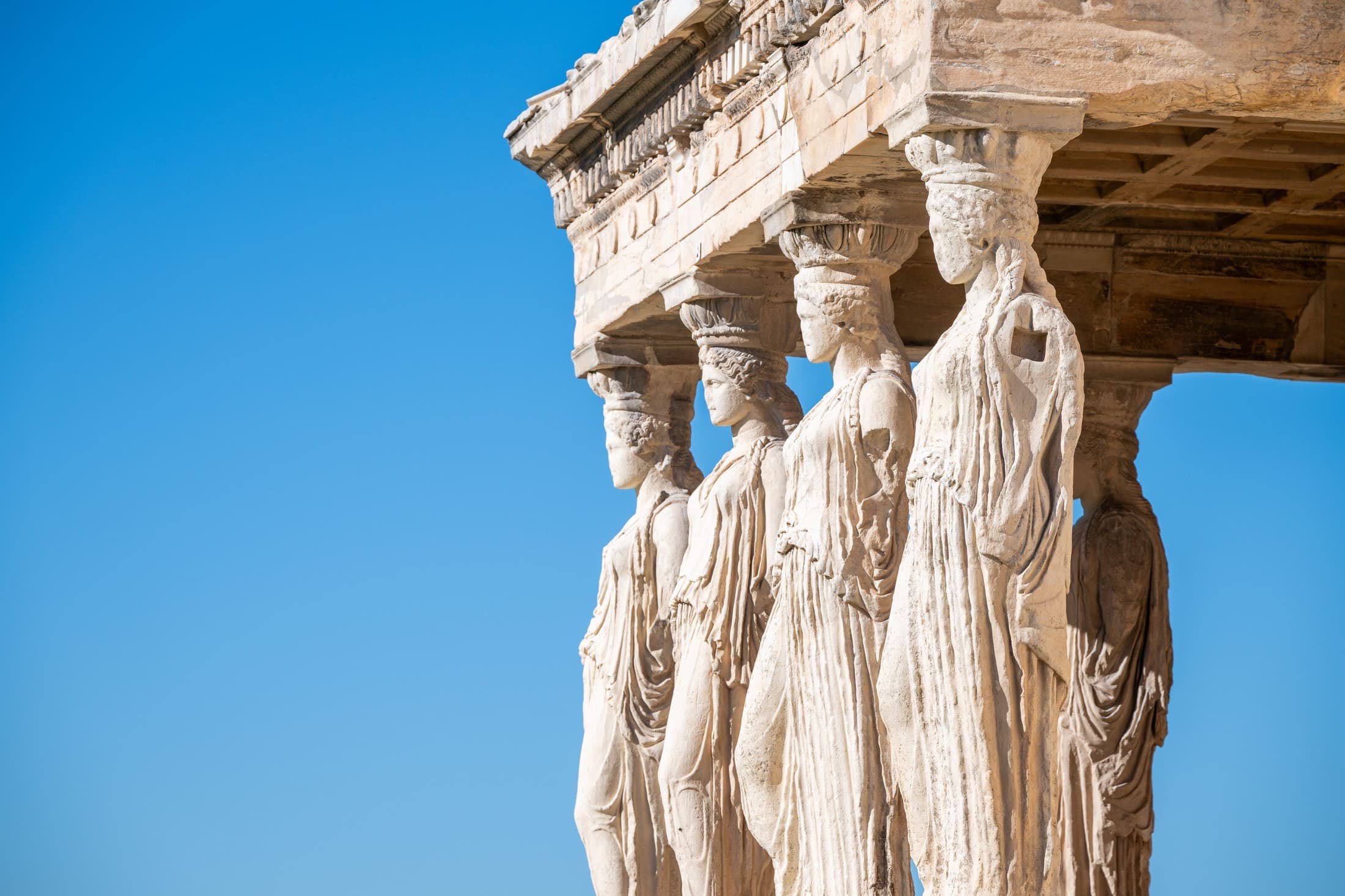
The most recognisable feature is the southern “Portico of the Caryatids”. Six marble korai (maidens) stand in place of columns, gracefully supporting the roof. The five original statues are now exhibited at the Acropolis Museum, while the sixth is on display at the British Museum, having been looted by Lord Elgin in the early 19th century.
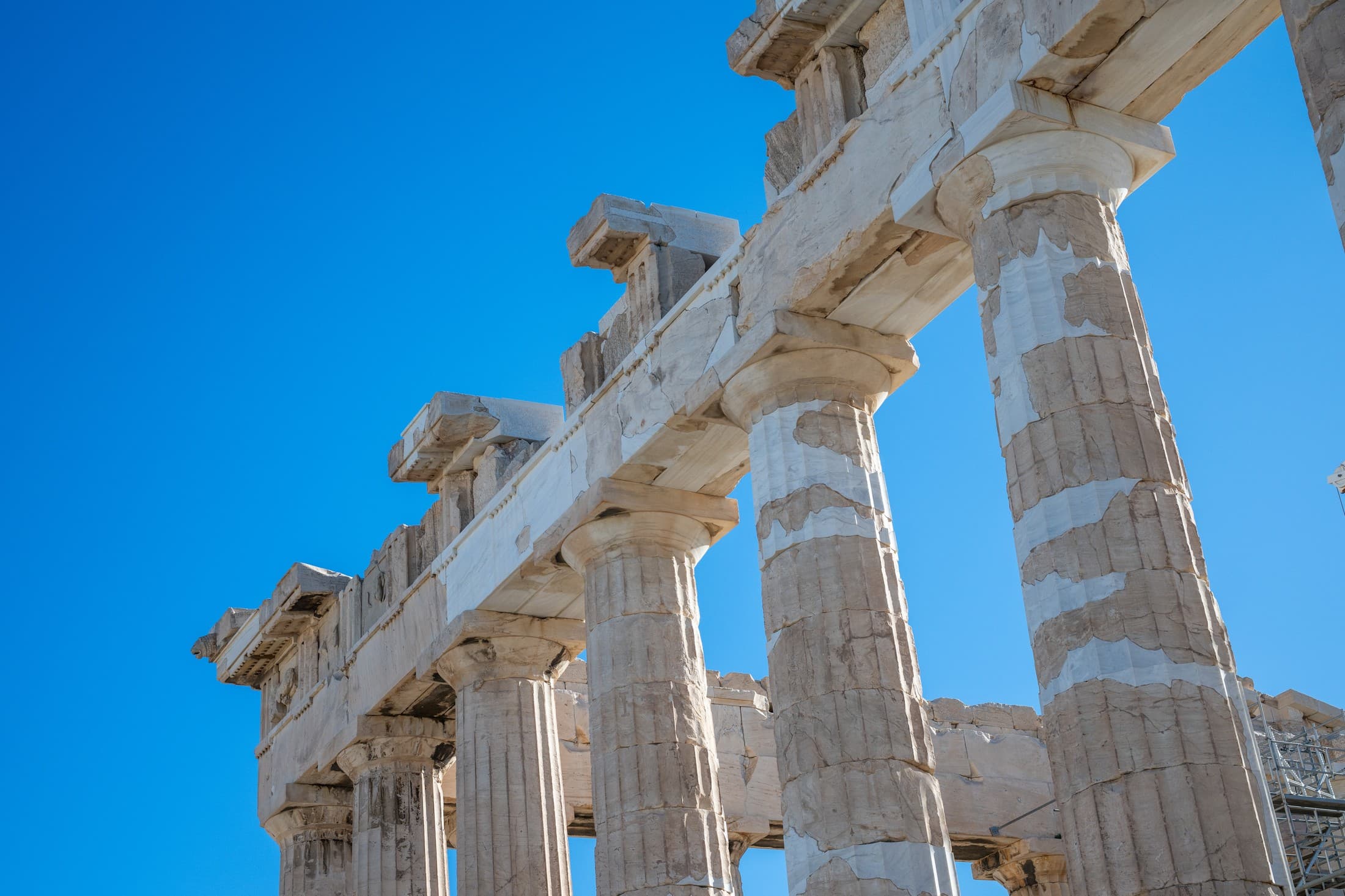
Throughout the centuries, the Erechtheion served various purposes: it became a Christian church, a Frankish palace, and an Ottoman harem. It suffered significant damage after being bombarded in 1827 during the Greek Revolution. However, its exemplary restoration (1979-1987) was awarded by Europa Nostra, restoring the brilliance of this unique monument.
Architecture and Materials
Made of white Pentelic marble, the building is distinguished by its frieze, which was made from grey Eleusinian stone. The eastern side, which is higher, features a six-columned Ionic portico and was dedicated to Athena Polias. This is where the ancient xoanon, the sacred wooden statue of the goddess, was kept, draped with a veil by the Arrephoroi (girl acolytes) during the Panathenaic Games.
Myths and Cults in the Western Section
The westernmost section, with its magnificent entrance on the north side, was dedicated to Poseidon-Erechtheus and heroes such as Hephaestus. The area is steeped in mythology: it was home to the sacred snake of Athena as well as the tomb of Cecrops, while the marks of Poseidon's trident were preserved alongside the “Sea of Erechtheus”, the saltwater spring that gushed forth during the dispute between the two gods.
The Famous Caryatids
The most recognisable feature is the southern “Portico of the Caryatids”. Six marble korai (maidens) stand in place of columns, gracefully supporting the roof. The five original statues are now exhibited at the Acropolis Museum, while the sixth is on display at the British Museum, having been looted by Lord Elgin in the early 19th century.
Historical Overview
Throughout the centuries, the Erechtheion served various purposes: it became a Christian church, a Frankish palace, and an Ottoman harem. It suffered significant damage after being bombarded in 1827 during the Greek Revolution. However, its exemplary restoration (1979-1987) was awarded by Europa Nostra, restoring the brilliance of this unique monument.