The Monumental Entrance to the Sacred Rock
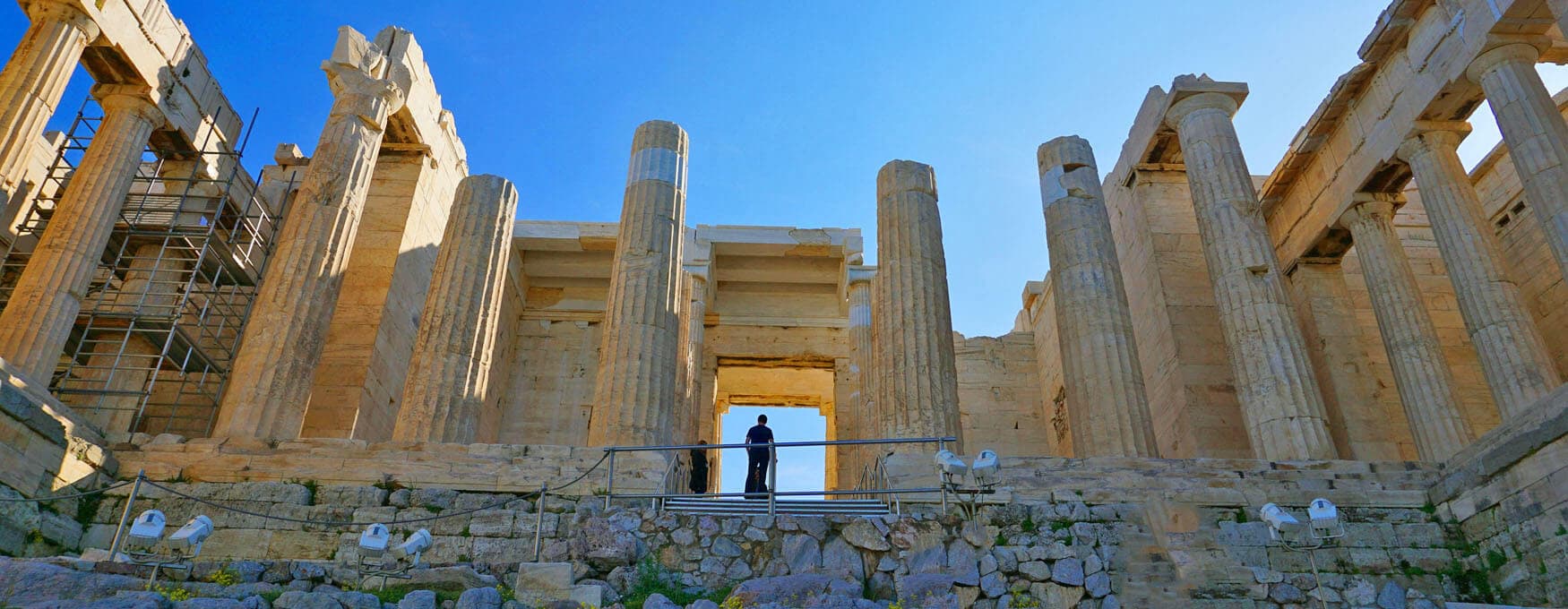
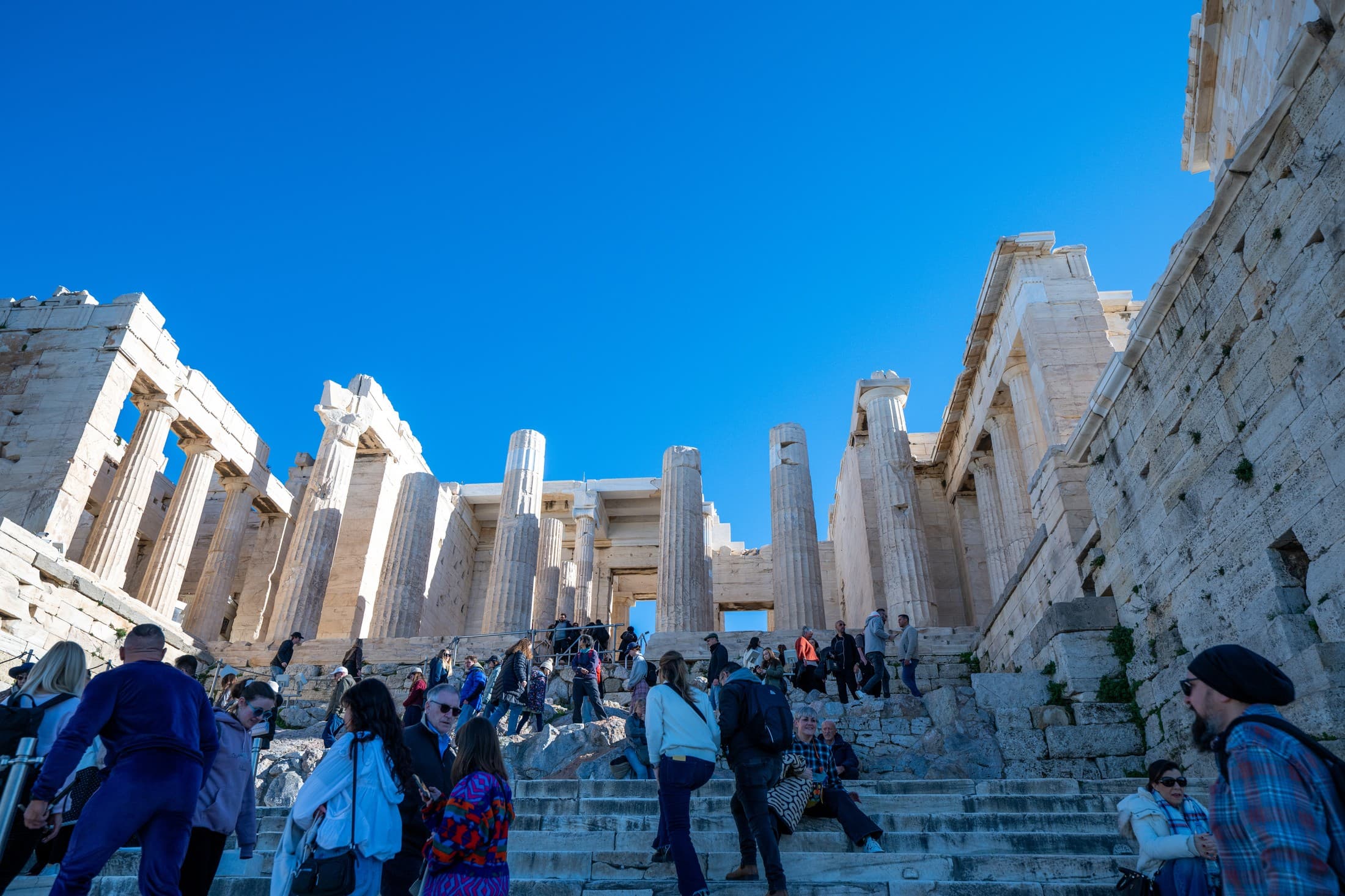
The Propylaea were constructed on the western side of the hill, in the same location where the gate of the Mycenaean fortress stood. Following successive phases of construction and destruction by the Persians, the monument we admire today was built during the Golden Age of Pericles (437-432 BC) by the architect Mnesicles, immediately after the completion of the Parthenon.
Architectural Innovation
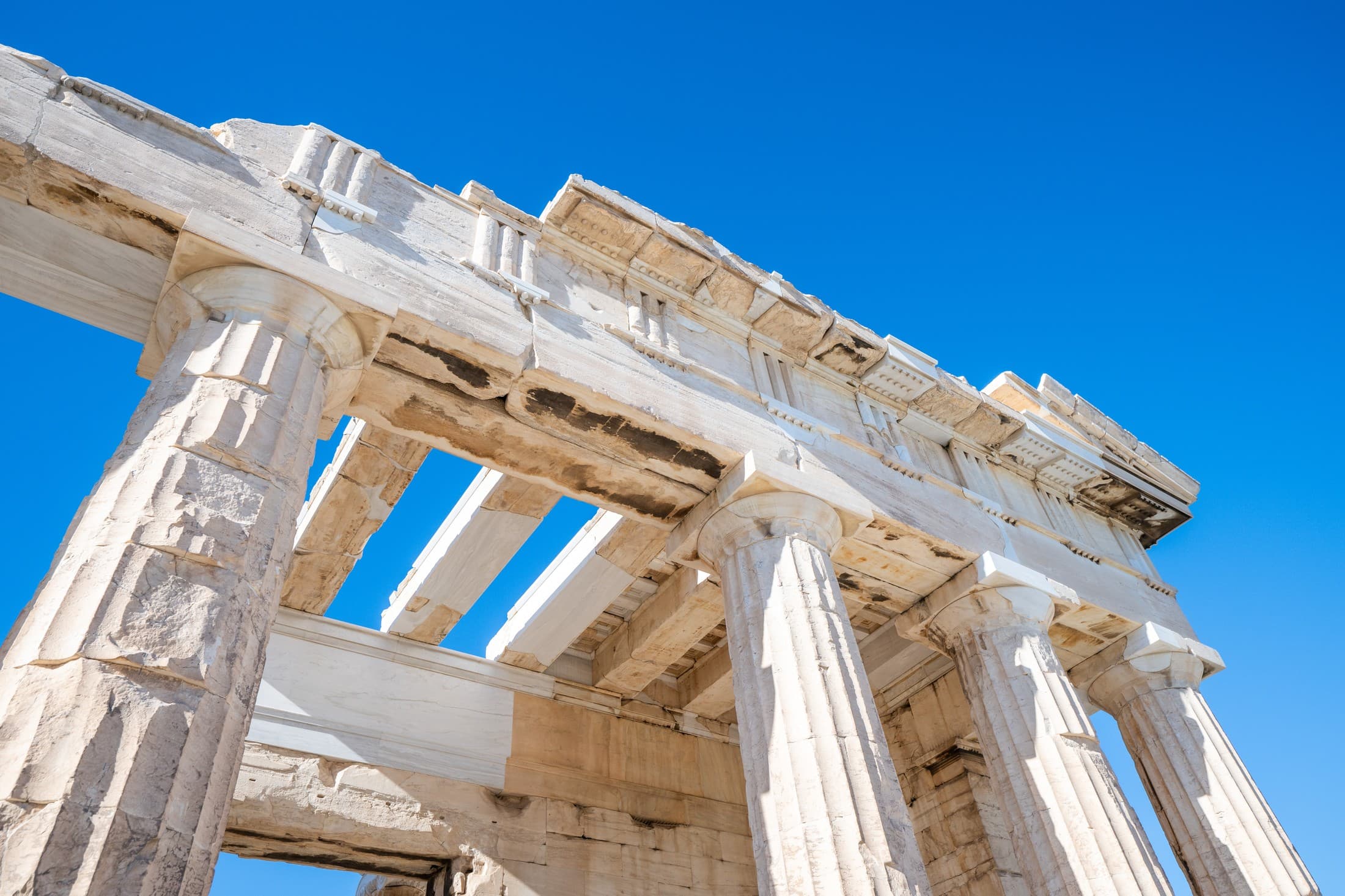
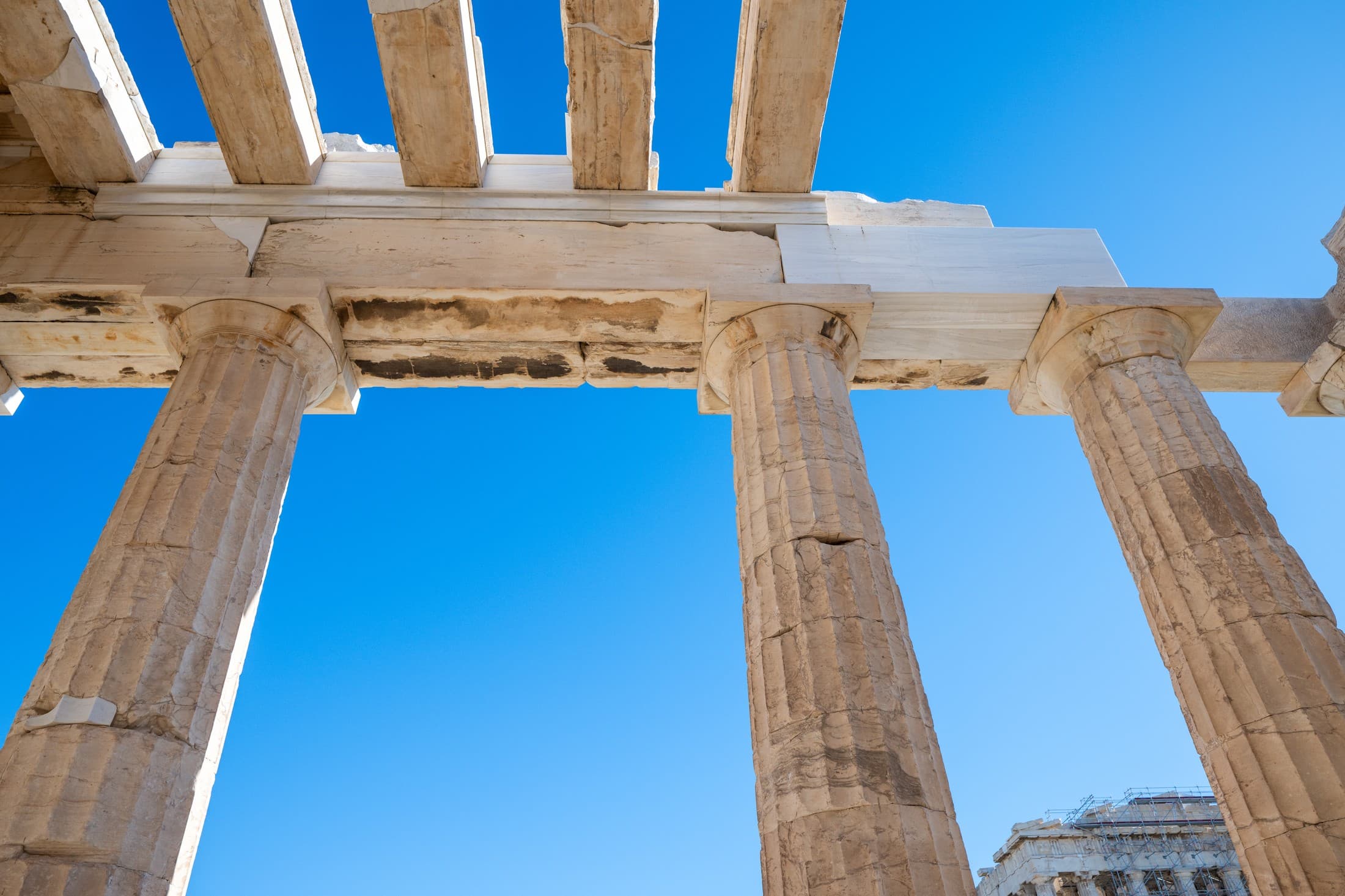
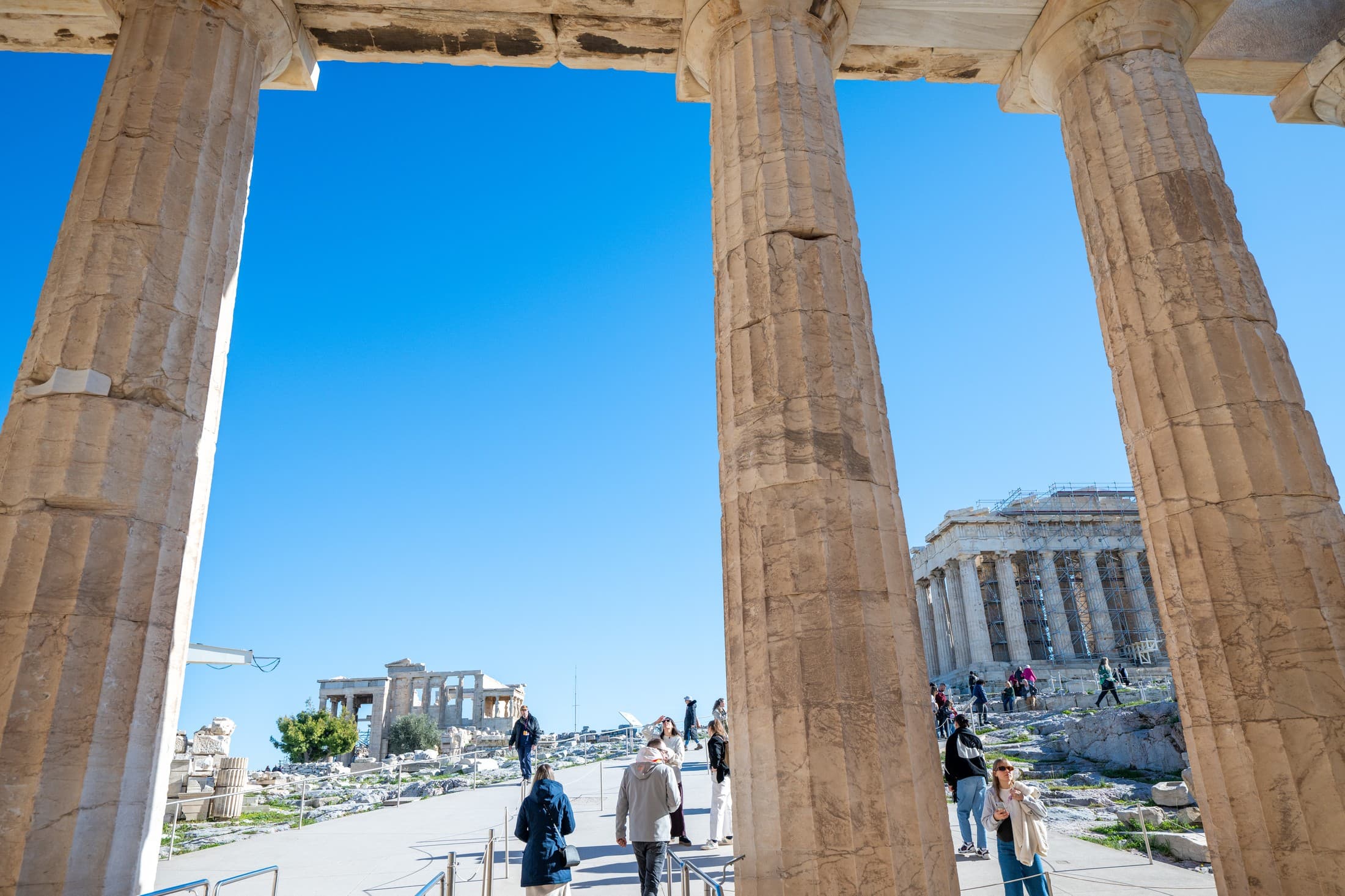
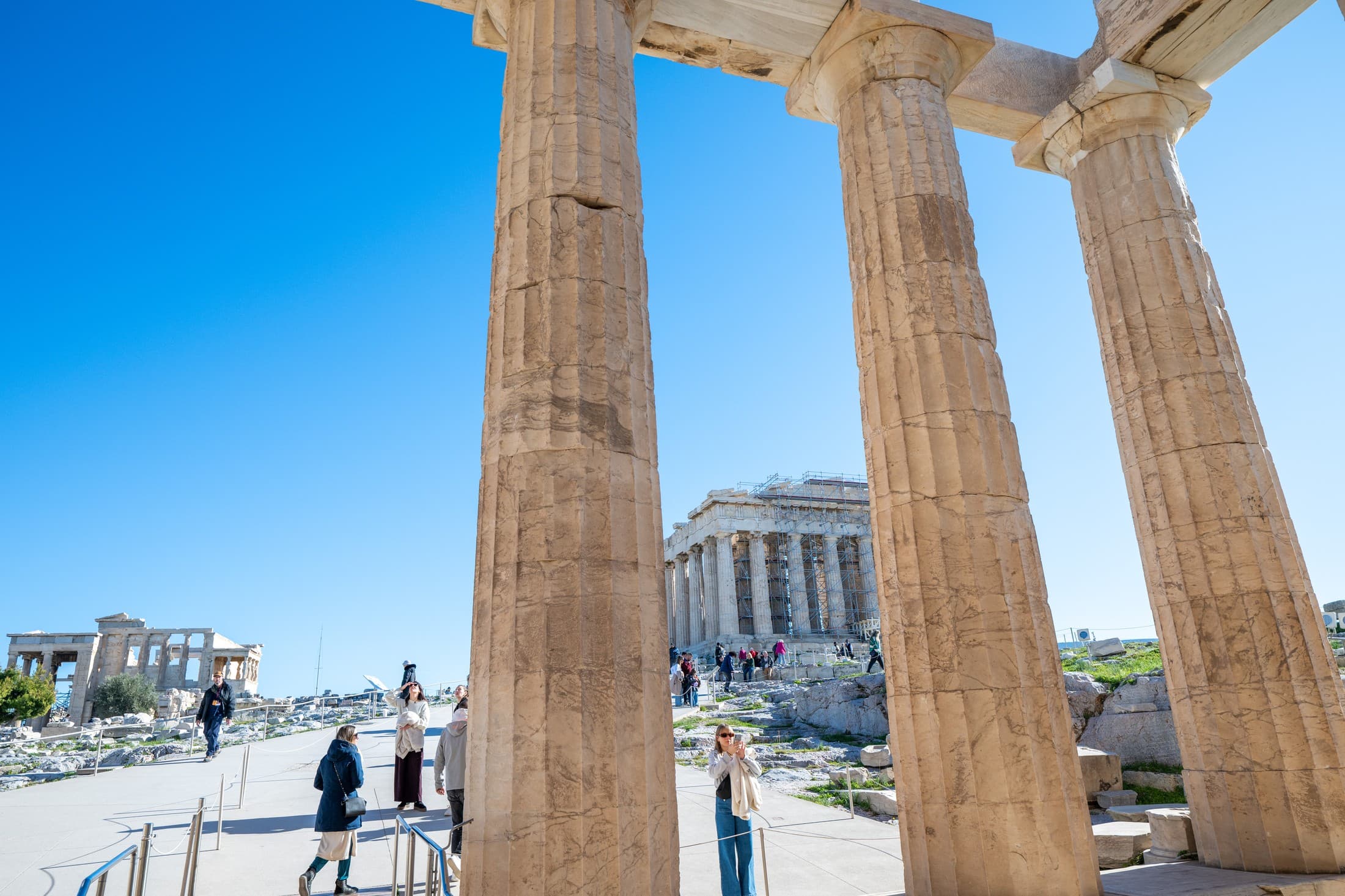
Crafted primarily from Pentelic marble, the Propylaea consist of a central building and two flanking wings. The central section features two six-columned porticoes in the Doric order and a transverse wall with five openings. The main entrance is flanked by three Ionic columns on each side, creating an impressive combination of styles. Mnesicles addressed the slope of the ground with staggered roofs and terraces, imparting a unique plasticity to the structure, although his ambitious design was never fully completed.
The Wings and Their Uses
The north wing, known as the Picture Gallery, was adorned with works by renowned painters such as Polygnotos and Aglaophon in antiquity. Due to the earlier sanctuary of Athena Nike, the south wing was ultimately designed to be smaller, consisting of a portico with three columns that allowed direct access to the nearby temple.
A Journey through the Ages
The monument’s form changed significantly over time. During the Byzantine period, it was converted into a church, while during the Frankish period, it served as the residence of the Frankish ruler. During the Ottoman period, the Propylaea became the headquarters of the fortress commander and a gunpowder depot. This use proved fatal, as a powerful explosion in 1640 caused the first major destruction of the monument. After the liberation of Greece, the medieval and Ottoman additions were demolished, revealing the classical grandeur of one of the most important architectural structures of the ancient world, which continues to inspire awe.
Architectural Innovation
Crafted primarily from Pentelic marble, the Propylaea consist of a central building and two flanking wings. The central section features two six-columned porticoes in the Doric order and a transverse wall with five openings. The main entrance is flanked by three Ionic columns on each side, creating an impressive combination of styles. Mnesicles addressed the slope of the ground with staggered roofs and terraces, imparting a unique plasticity to the structure, although his ambitious design was never fully completed.
The Wings and Their Uses
The north wing, known as the Picture Gallery, was adorned with works by renowned painters such as Polygnotos and Aglaophon in antiquity. Due to the earlier sanctuary of Athena Nike, the south wing was ultimately designed to be smaller, consisting of a portico with three columns that allowed direct access to the nearby temple.
A Journey through the Ages
The monument’s form changed significantly over time. During the Byzantine period, it was converted into a church, while during the Frankish period, it served as the residence of the Frankish ruler. During the Ottoman period, the Propylaea became the headquarters of the fortress commander and a gunpowder depot. This use proved fatal, as a powerful explosion in 1640 caused the first major destruction of the monument. After the liberation of Greece, the medieval and Ottoman additions were demolished, revealing the classical grandeur of one of the most important architectural structures of the ancient world, which continues to inspire awe.