An Eternal Symbol of Classical Culture
Its Historical Journey: From the Prehistoric Era to the Peak of the Classical Age
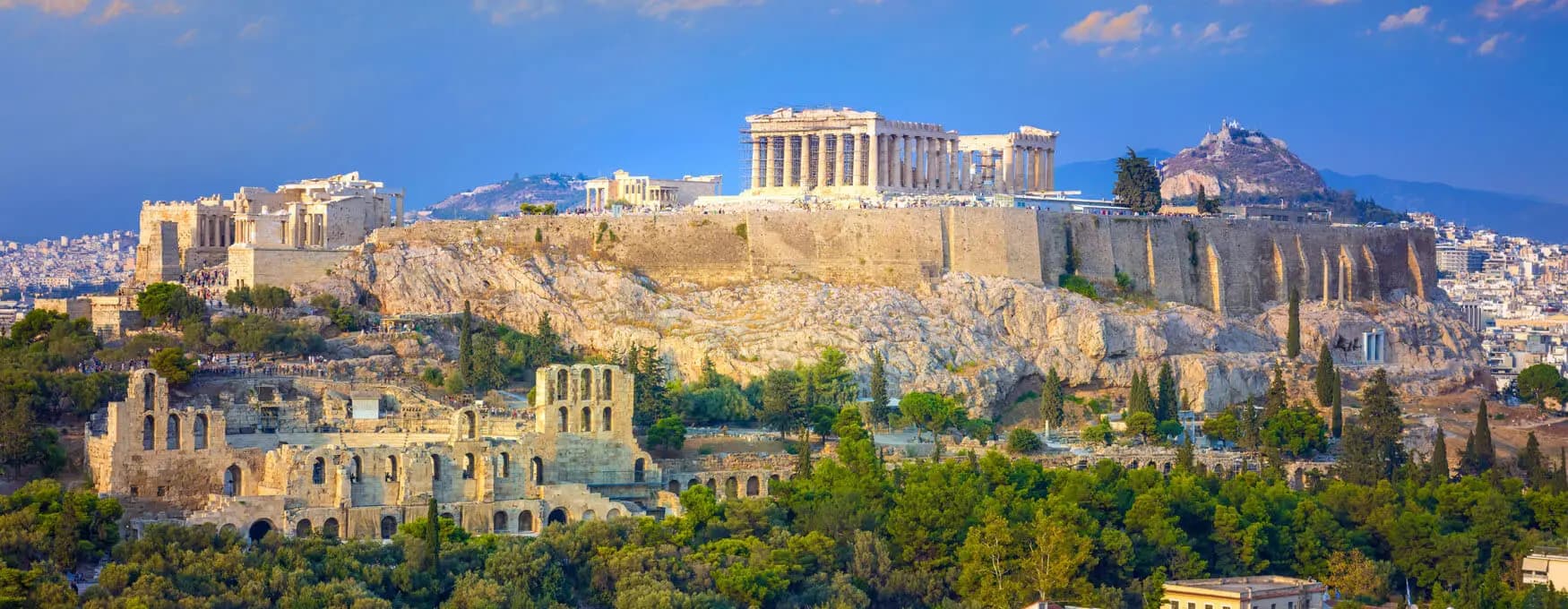
On the rocky hill of the Acropolis, overlooking the centre of modern Athens, stood the most important sanctuary of the ancient city, dedicated to the patron goddess Athena. The site was inhabited as early as the Neolithic period, while in the 13th century BC it was fortified with the “Cyclopean” wall, serving as the seat of the local ruler. In the 8th century BC, it acquired an exclusively sacred character, while in the mid-6th century BC, during the reign of Peisistratus, the Panathenaic Games were established and the first monumental buildings were erected.
A major catastrophe occurred in 480 BC, when the Persians pillaged and burned everything. After the Greek victory, the area was re-fortified, but the great flourishing occurred in the second half of the 5th century BC. During that era, at the initiative of Pericles, the masterpieces that we still admire today were built: the Parthenon, the Propylaea, the Erechtheion, and the temple of Athena Nike.
The Transformations of the Monuments through the Ages
Over the centuries that followed, the monuments underwent dramatic changes. With the advent of Christianity, they were transformed into churches; during the Frankish period, the Propylaea became a palace; during the Ottoman era, the Acropolis served as a fortress, and the Parthenon as a mosque. In 1687, during the siege by Morosini, a bomb caused immense damage to the Parthenon, while in 1801, the monument was looted by Lord Elgin. After the liberation in 1822, the Greek state undertook the systematic restoration of the monuments.
Exploring the Monuments: The Entrance and Propylaea
The entrance to the archaeological site is from the western side, via the Beulé Gate, or from the entrance below the tower of Athena Nike. Visitors are greeted by the monumental Propylaea of Mnesicles, while to the right stands the elegant temple of Athena Nike, and in front of the northern wing is the tall platform of Agrippa.
The Main Temple and the Parthenon
Passing through the Propylaea, we arrive at the main sanctuary. The peak is dominated by the Parthenon, the finest example of Doric architecture, where in antiquity the gold-and-ivory statue of Athena Parthenos was housed. On the north side stands the Erechtheion, in Ionic style, with the famous Caryatids.
The Slopes of the Rock and the ‘Peripatos’
On the steep slopes of the rock were cave-like sanctuaries dedicated to other deities, accessible via the “peripatos”. This was a path that encircled the hill, connecting the places of worship with iconic monuments such as the Theatre of Dionysus and the Odeon of Herodes Atticus.
On the rocky hill of the Acropolis, overlooking the centre of modern Athens, stood the most important sanctuary of the ancient city, dedicated to the patron goddess Athena. The site was inhabited as early as the Neolithic period, while in the 13th century BC it was fortified with the “Cyclopean” wall, serving as the seat of the local ruler. In the 8th century BC, it acquired an exclusively sacred character, while in the mid-6th century BC, during the reign of Peisistratus, the Panathenaic Games were established and the first monumental buildings were erected.
A major catastrophe occurred in 480 BC, when the Persians pillaged and burned everything. After the Greek victory, the area was re-fortified, but the great flourishing occurred in the second half of the 5th century BC. During that era, at the initiative of Pericles, the masterpieces that we still admire today were built: the Parthenon, the Propylaea, the Erechtheion, and the temple of Athena Nike.
The Transformations of the Monuments through the Ages
Over the centuries that followed, the monuments underwent dramatic changes. With the advent of Christianity, they were transformed into churches; during the Frankish period, the Propylaea became a palace; during the Ottoman era, the Acropolis served as a fortress, and the Parthenon as a mosque. In 1687, during the siege by Morosini, a bomb caused immense damage to the Parthenon, while in 1801, the monument was looted by Lord Elgin. After the liberation in 1822, the Greek state undertook the systematic restoration of the monuments.
Exploring the Monuments: The Entrance and Propylaea
The entrance to the archaeological site is from the western side, via the Beulé Gate, or from the entrance below the tower of Athena Nike. Visitors are greeted by the monumental Propylaea of Mnesicles, while to the right stands the elegant temple of Athena Nike, and in front of the northern wing is the tall platform of Agrippa.
The Main Temple and the Parthenon
Passing through the Propylaea, we arrive at the main sanctuary. The peak is dominated by the Parthenon, the finest example of Doric architecture, where in antiquity the gold-and-ivory statue of Athena Parthenos was housed. On the north side stands the Erechtheion, in Ionic style, with the famous Caryatids.
The Slopes of the Rock and the ‘Peripatos’
On the steep slopes of the rock were cave-like sanctuaries dedicated to other deities, accessible via the “peripatos”. This was a path that encircled the hill, connecting the places of worship with iconic monuments such as the Theatre of Dionysus and the Odeon of Herodes Atticus.