The passage from ancient to Roman Athens
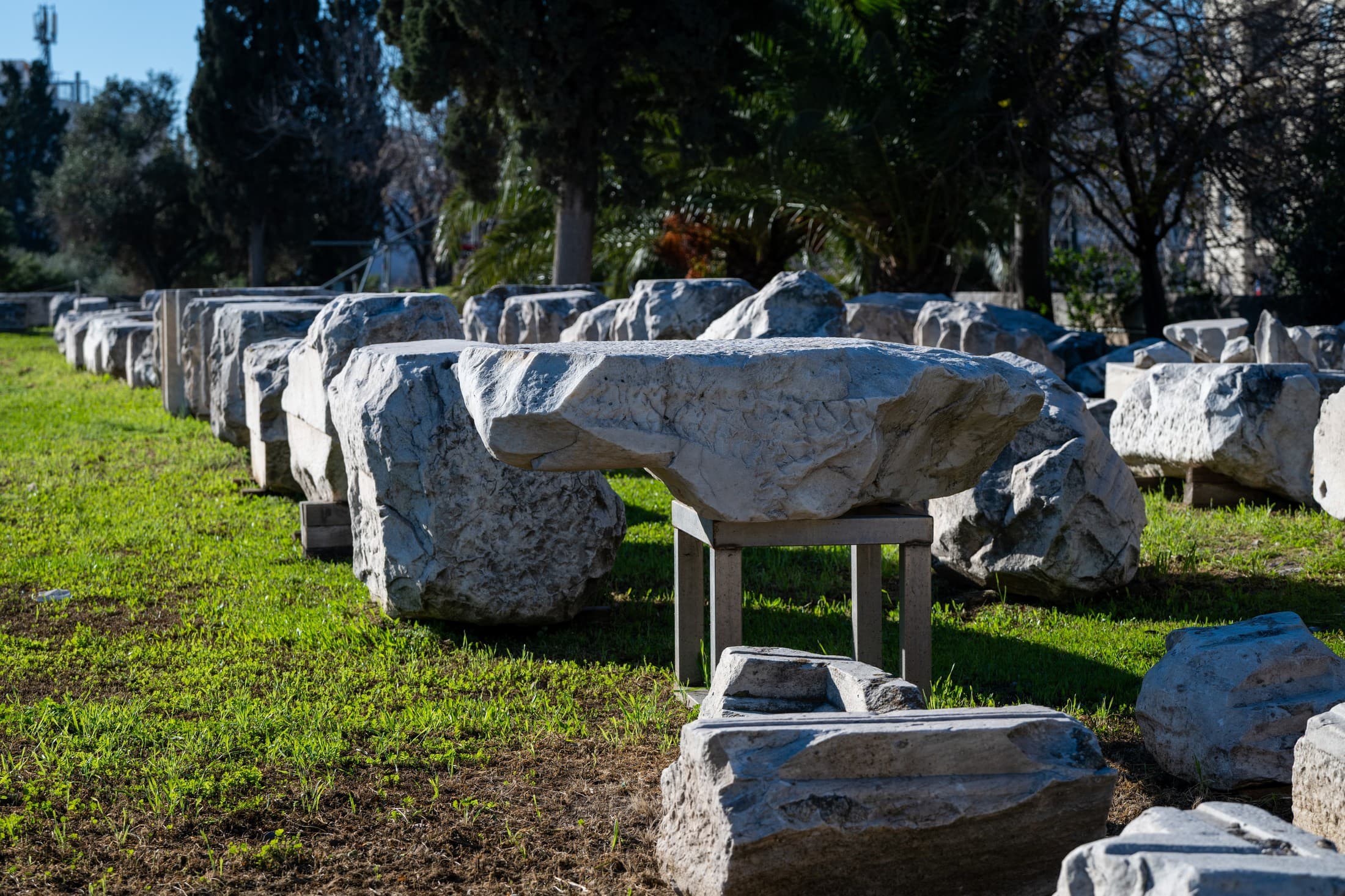
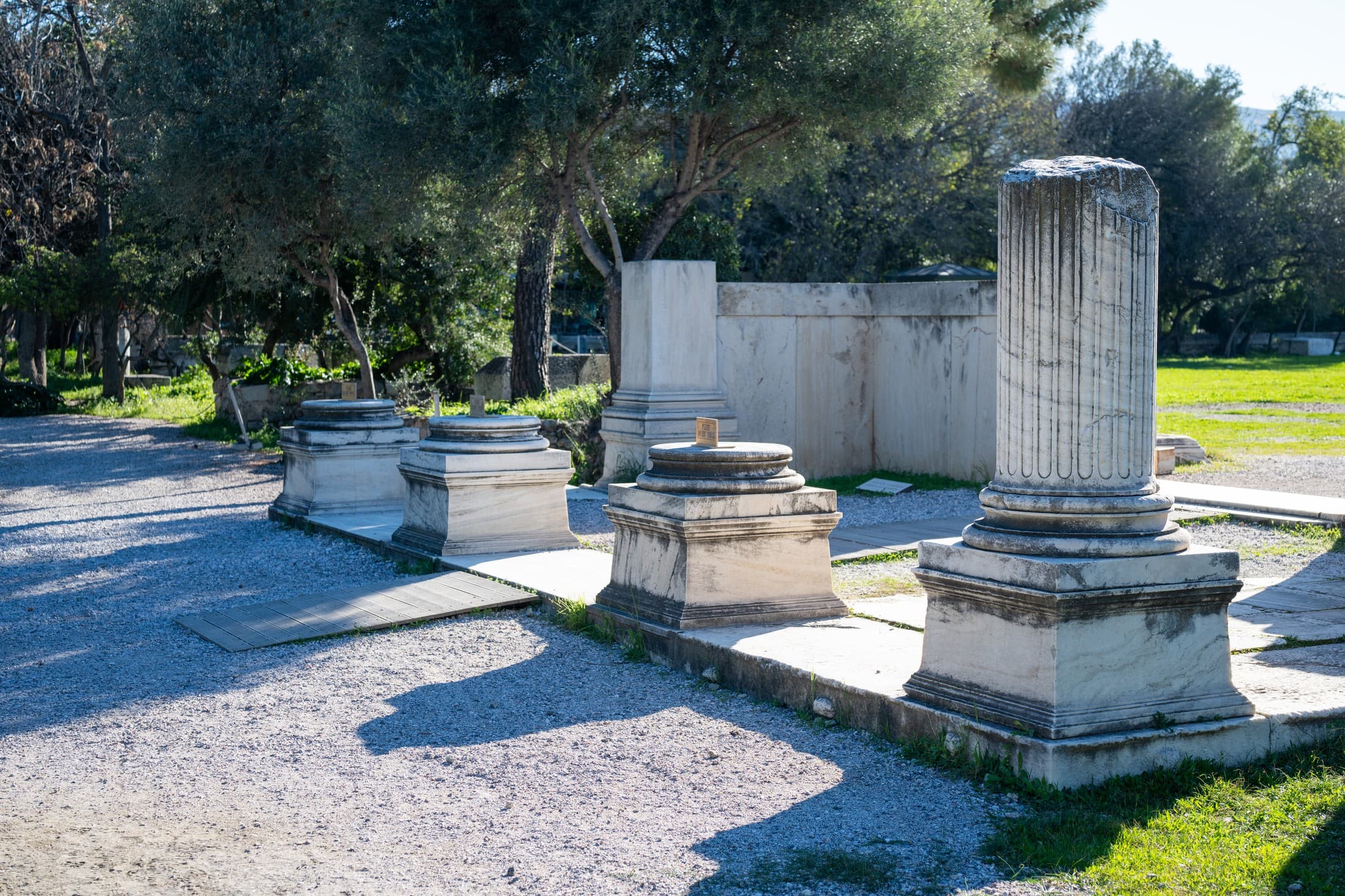
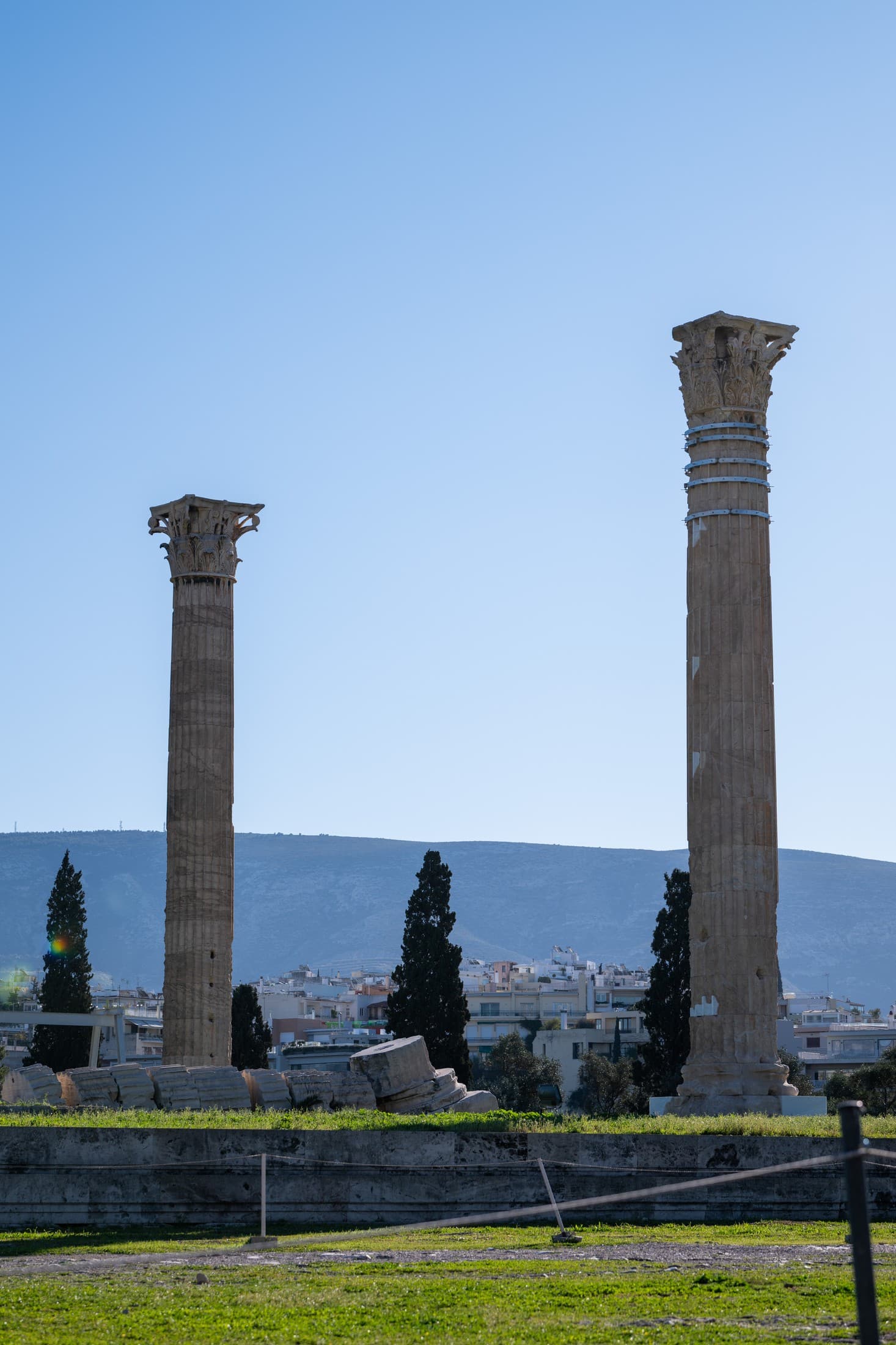
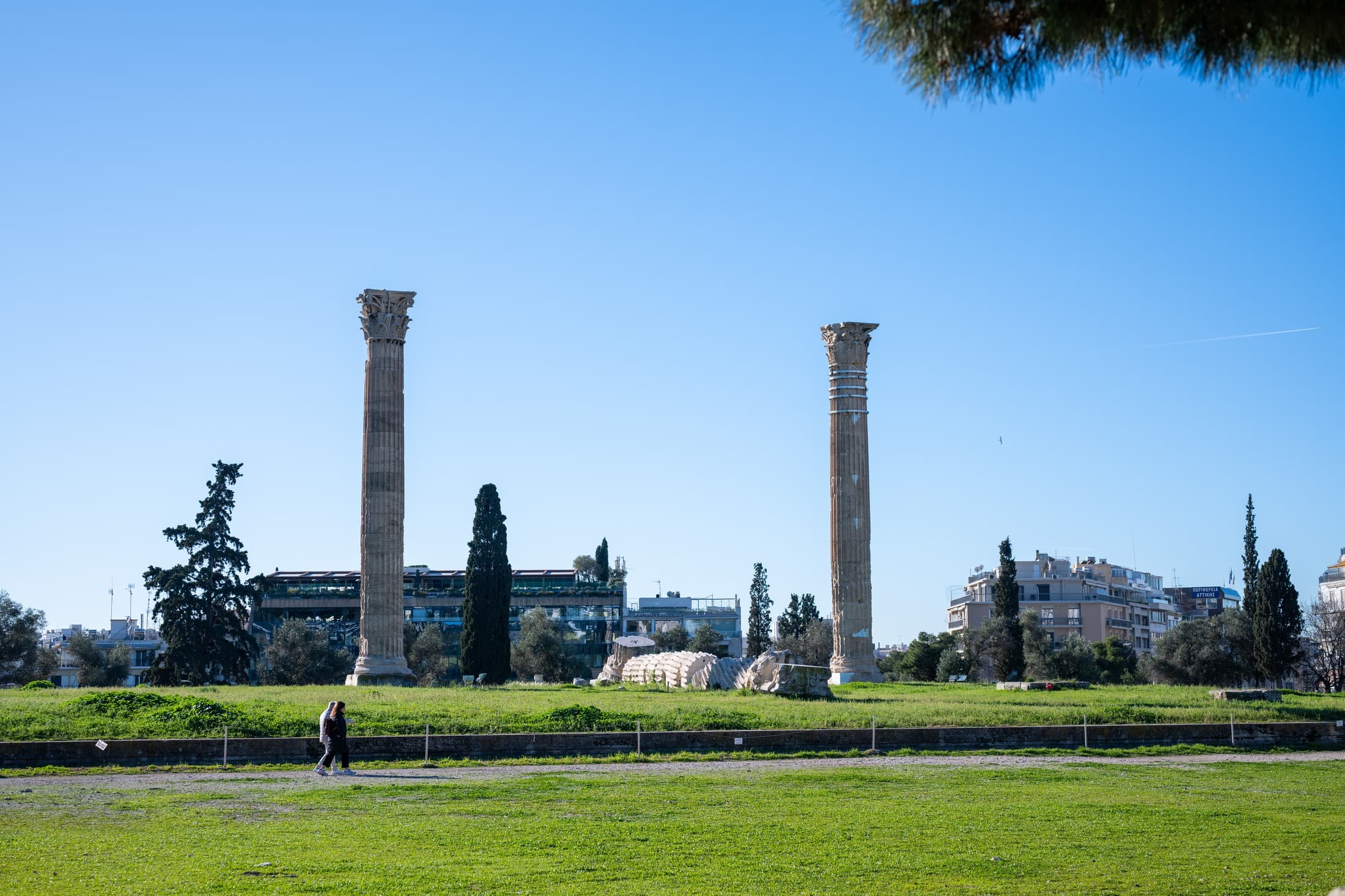
Between the Acropolis and the National Garden lies one of the most imposing archaeological sites of the city: the Olympieion, the Temple of Olympian Zeus. The temple of Zeus, father of the gods, was one of the most important works of the Hellenistic and Roman period.
Its history began to be written in the 6th century BC, when tyrant Peisistratos began its erection in Ionic style. The ambitious project remained unfinished for centuries, until it was completed in AD 131 by Hadrian, the Roman emperor who worshiped Athens and transformed it into the glorious capital of the empire.
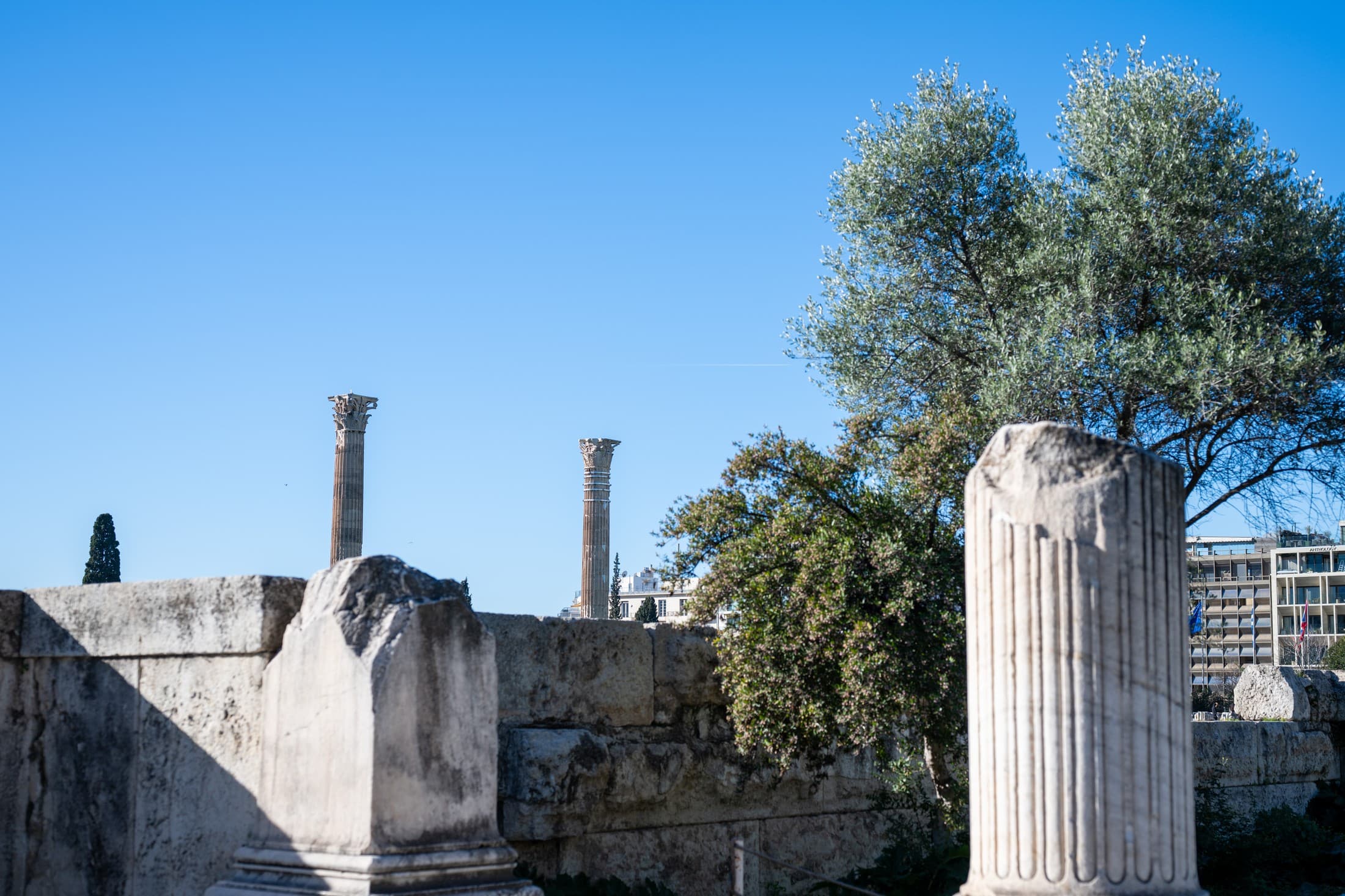
The temple, with 104 Corinthian columns 18 meters high, housed the gold and ivory statue of Zeus and the equally monumental statue of Hadrian, symbolically declaring the union of divine and human power.
Today, the monument is known as the Columns of the Temple of Olympian Zeus, as only 15 of the original columns survive standing. One more, which fell in the great storm of 1852, remains on the ground, creating a moving picture of the passing time. The view of the Acropolis behind the Corinthian columns makes the Olympieion one of the most photographed spots in Athens, but also a place full of memory, tranquility and a sense of eternity.
The Arch of Hadrian
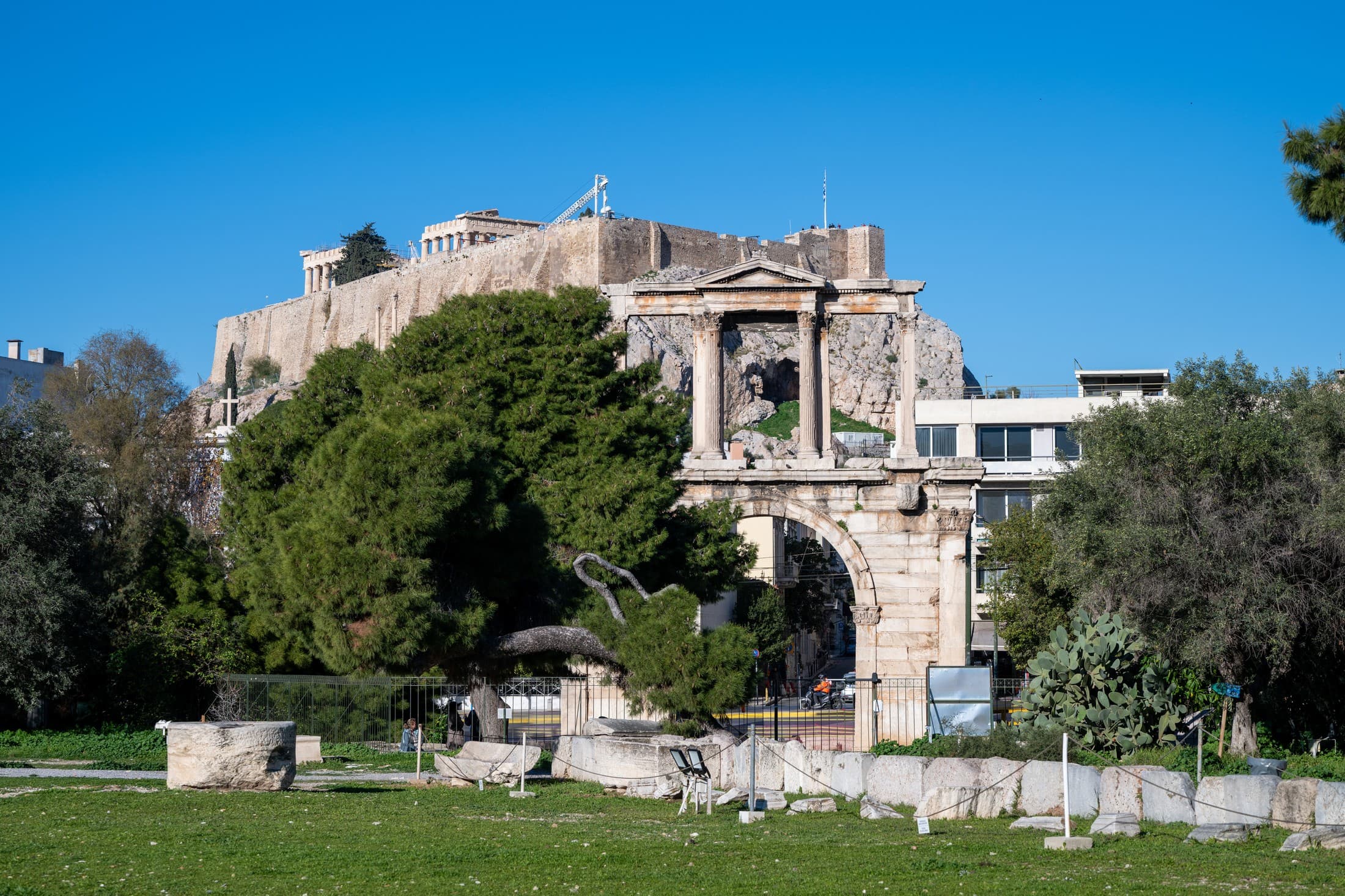
Next to the Olympieion, a monument dedicated to the emperor himself is erected: the Arch of Hadrian, made of Pentelic marble and completed in AD 132. Two inscriptions on it mark the transition from ancient to Roman Athens: on the west side the inscription carved reads "This is Athens, the ancient city of Theseus", while on the east, "This is the city of Hadrian and not of Theseus".
With the Corinthian columns and the pediment opening in the upper part, the Arch is the boundary between the old and the new world, and at the same time one of the most elegant marble constructions of the Roman era.
Its history began to be written in the 6th century BC, when tyrant Peisistratos began its erection in Ionic style. The ambitious project remained unfinished for centuries, until it was completed in AD 131 by Hadrian, the Roman emperor who worshiped Athens and transformed it into the glorious capital of the empire.
The temple, with 104 Corinthian columns 18 meters high, housed the gold and ivory statue of Zeus and the equally monumental statue of Hadrian, symbolically declaring the union of divine and human power.
Today, the monument is known as the Columns of the Temple of Olympian Zeus, as only 15 of the original columns survive standing. One more, which fell in the great storm of 1852, remains on the ground, creating a moving picture of the passing time. The view of the Acropolis behind the Corinthian columns makes the Olympieion one of the most photographed spots in Athens, but also a place full of memory, tranquility and a sense of eternity.
The Arch of Hadrian
Next to the Olympieion, a monument dedicated to the emperor himself is erected: the Arch of Hadrian, made of Pentelic marble and completed in AD 132. Two inscriptions on it mark the transition from ancient to Roman Athens: on the west side the inscription carved reads "This is Athens, the ancient city of Theseus", while on the east, "This is the city of Hadrian and not of Theseus".
With the Corinthian columns and the pediment opening in the upper part, the Arch is the boundary between the old and the new world, and at the same time one of the most elegant marble constructions of the Roman era.