Roman Athens in the living fabric of the city
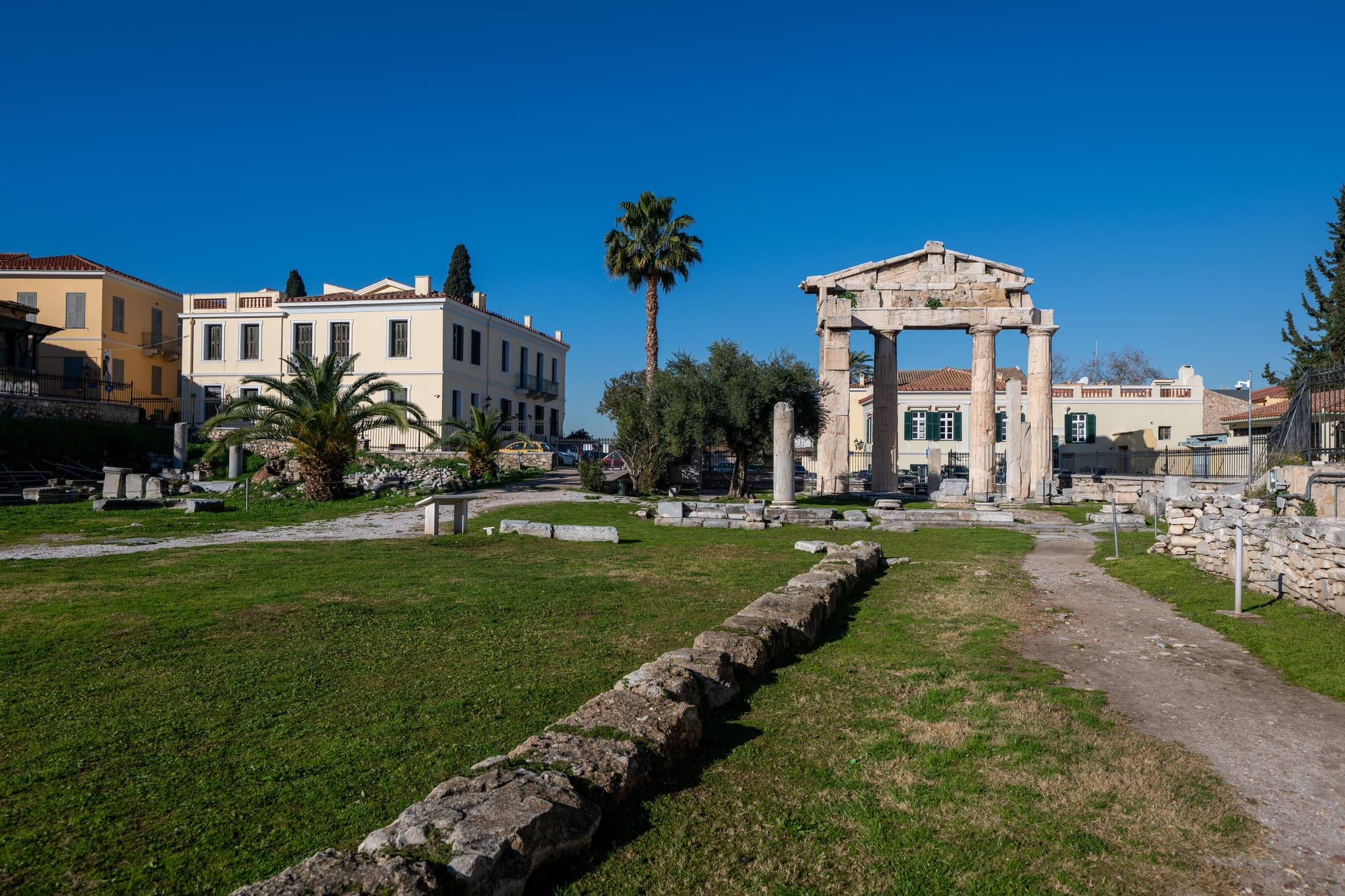
In the heart of Athens, a few steps from the Metropolitan Church, lies the Roman Agora, an open-air museum that bears witness to the Roman phase of Athenian history. It was built between 19 and 11 BC at the expense of Julius Caesar and Augustus, and served as the new administrative and commercial centre of the city, supplementing the function of the older Classical Agora.
In an impressive rectangular courtyard with arcades, columns, and marble streets, Athenians shopped, talked, and met in the shade of the colonnades.
Among the most important surviving monuments of the Agora is the Tower of the Winds, an octagonal building of the 1st century BC, which functioned as an horologion (clock) and weather station – one of the first of its kind in the world. It is the work of the astronomer Andronicus of Cyrrhus, and reflects the mathematical accuracy and technological progress of the time.
Next to the Roman Agora, Hadrian’s Library highlights the role of Athens as a centre of learning and letters. It was erected in AD 132 by Roman emperor Hadrian and it included reading rooms, classrooms, and a garden, while a central reservoir ensured cool temperatures for scholars.
During the Byzantine and Ottoman periods, the monument was transformed: parts of it were used as a church, administrative building, and mosque, testifying to its continued use over the centuries.
Currently, Hadrian’s Library is a place of culture and contemporary events, an open dialogue between the marbles of the past and the vibrant city that surrounds them.
Explore the archaeological site and discover the traces left on the heart of historical Athens by centuries of history. The external wall, 122 metres long, with its Corinthian columns and decorative niches, creates a sense of monumental tranquillity, while traces of the original papyri storage shelves remain.
In an impressive rectangular courtyard with arcades, columns, and marble streets, Athenians shopped, talked, and met in the shade of the colonnades.
Among the most important surviving monuments of the Agora is the Tower of the Winds, an octagonal building of the 1st century BC, which functioned as an horologion (clock) and weather station – one of the first of its kind in the world. It is the work of the astronomer Andronicus of Cyrrhus, and reflects the mathematical accuracy and technological progress of the time.
Next to the Roman Agora, Hadrian’s Library highlights the role of Athens as a centre of learning and letters. It was erected in AD 132 by Roman emperor Hadrian and it included reading rooms, classrooms, and a garden, while a central reservoir ensured cool temperatures for scholars.
During the Byzantine and Ottoman periods, the monument was transformed: parts of it were used as a church, administrative building, and mosque, testifying to its continued use over the centuries.
Currently, Hadrian’s Library is a place of culture and contemporary events, an open dialogue between the marbles of the past and the vibrant city that surrounds them.
Explore the archaeological site and discover the traces left on the heart of historical Athens by centuries of history. The external wall, 122 metres long, with its Corinthian columns and decorative niches, creates a sense of monumental tranquillity, while traces of the original papyri storage shelves remain.


