The World’s First Meteorological Station
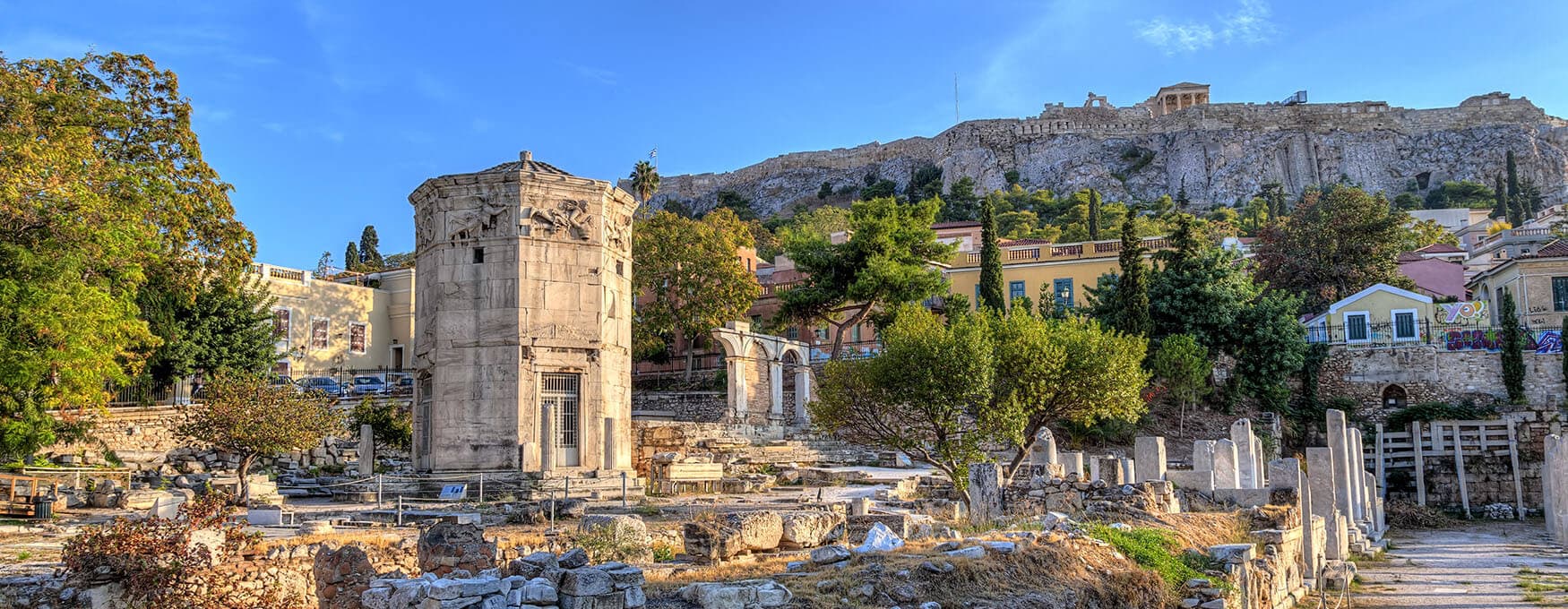
The Horologion of Cyrrhestes, better known as the Tower of the Winds (Aerides), is one of the most captivating monuments in Athens. Located in the Roman Agora in Plaka, it is considered the first meteorological station in history. It was constructed entirely from Pentelic marble during the first half of the 1st century BC by the Greek astronomer Andronicus Cyrrhestes (of Cyrrhus).
Architecture and Symbols
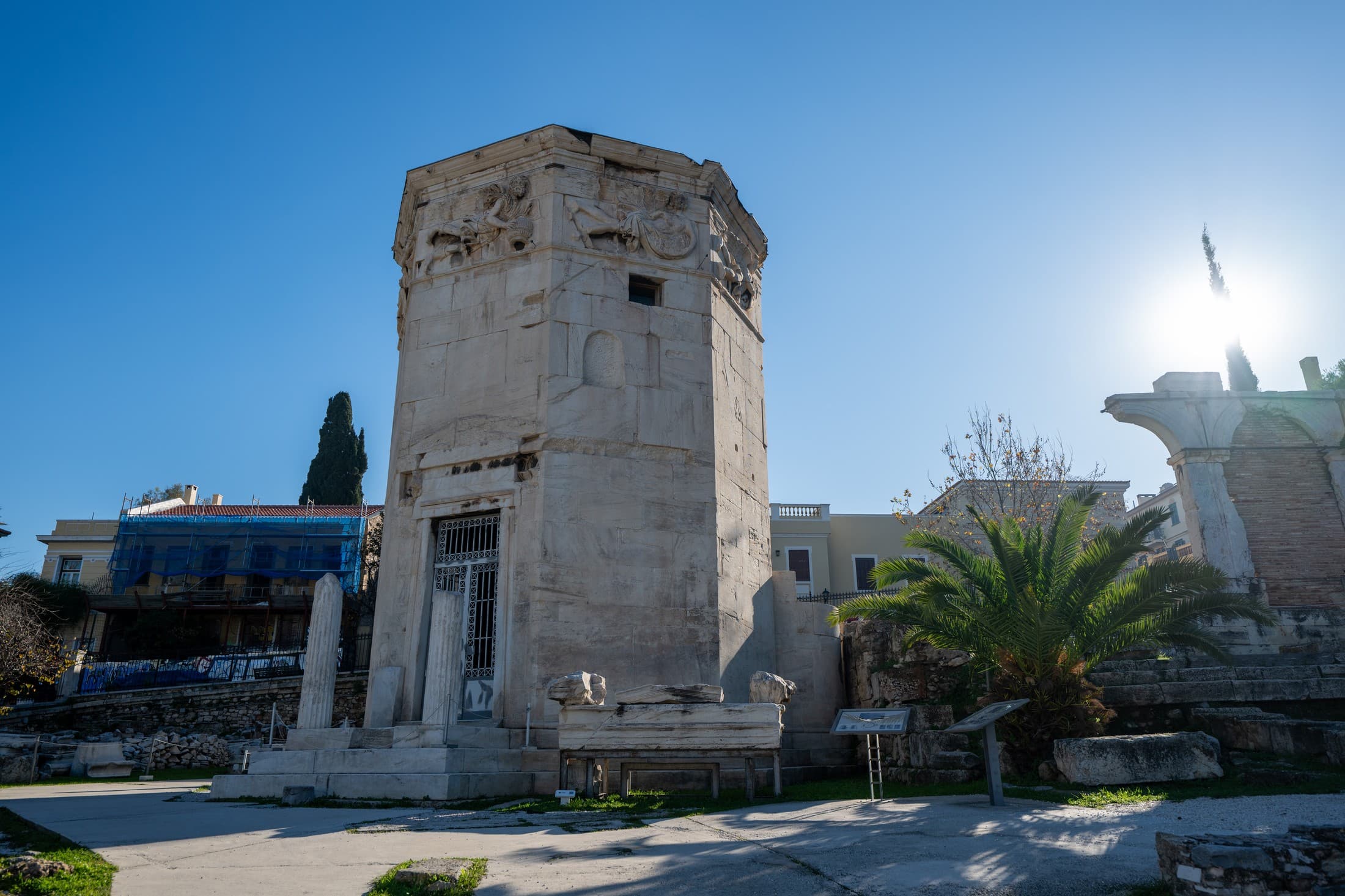
It is an octagonal structure, 12 metres tall. A bronze Triton, serving as a wind vane, once adorned the conical, tiled roof. The most striking feature is the eight relief depictions of winged winds on the metopes of the sides, each bearing its name and symbol: Boreas, Kaikias, Apeliotes, Eurus, Notus, Libs, Zephyrus, and Sciron. Architecturally, the tower combines the Corinthian style externally with the Doric style internally.
Scientific Use
The monument served as both a meteorological and timekeeping station. Externally, there were sundials, while a complex hydraulic clock operated indoors for days without sunshine. The builder appears to have utilised and combined earlier inventions by prominent scientists such as Archimedes, Ctesibius, and Philon.
A Journey through the Ages
Over time, the Tower served various purposes. During the Early Christian era, it functioned as a church or baptistery, while in the 18th century, it was used as a dervish tekke. According to historical tradition, the dervishes were those who saved the monument from looting by Lord Elgin. Its complete excavation in the 19th century by the Archaeological Society revealed its grandeur, lending it the name of the historical neighbourhood of Aerides, which remains to this day one of the most picturesque in Athens.
Architecture and Symbols
It is an octagonal structure, 12 metres tall. A bronze Triton, serving as a wind vane, once adorned the conical, tiled roof. The most striking feature is the eight relief depictions of winged winds on the metopes of the sides, each bearing its name and symbol: Boreas, Kaikias, Apeliotes, Eurus, Notus, Libs, Zephyrus, and Sciron. Architecturally, the tower combines the Corinthian style externally with the Doric style internally.
Scientific Use
The monument served as both a meteorological and timekeeping station. Externally, there were sundials, while a complex hydraulic clock operated indoors for days without sunshine. The builder appears to have utilised and combined earlier inventions by prominent scientists such as Archimedes, Ctesibius, and Philon.
A Journey through the Ages
Over time, the Tower served various purposes. During the Early Christian era, it functioned as a church or baptistery, while in the 18th century, it was used as a dervish tekke. According to historical tradition, the dervishes were those who saved the monument from looting by Lord Elgin. Its complete excavation in the 19th century by the Archaeological Society revealed its grandeur, lending it the name of the historical neighbourhood of Aerides, which remains to this day one of the most picturesque in Athens.