The Sanctuary of Demeter and Mysteries
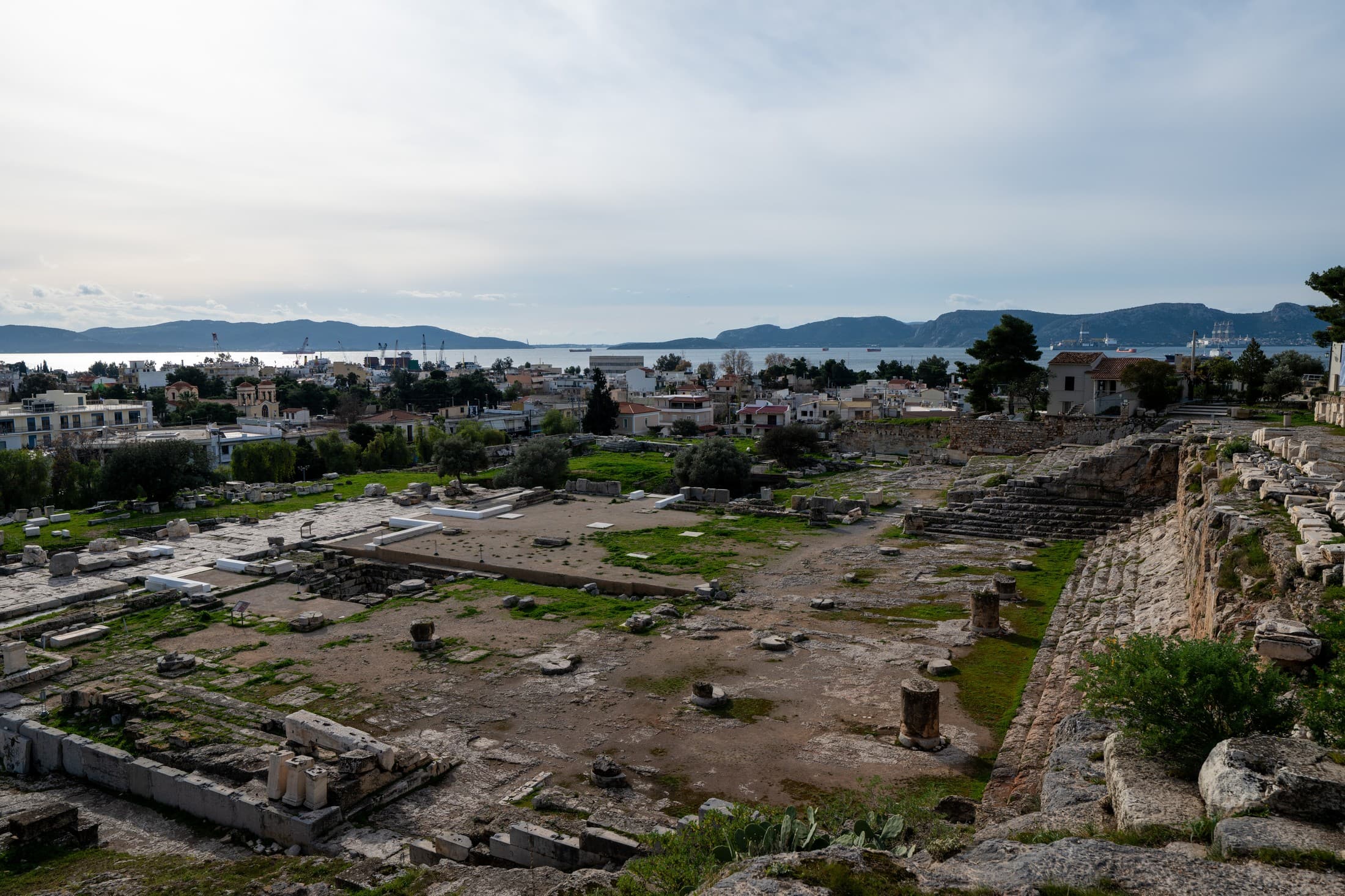
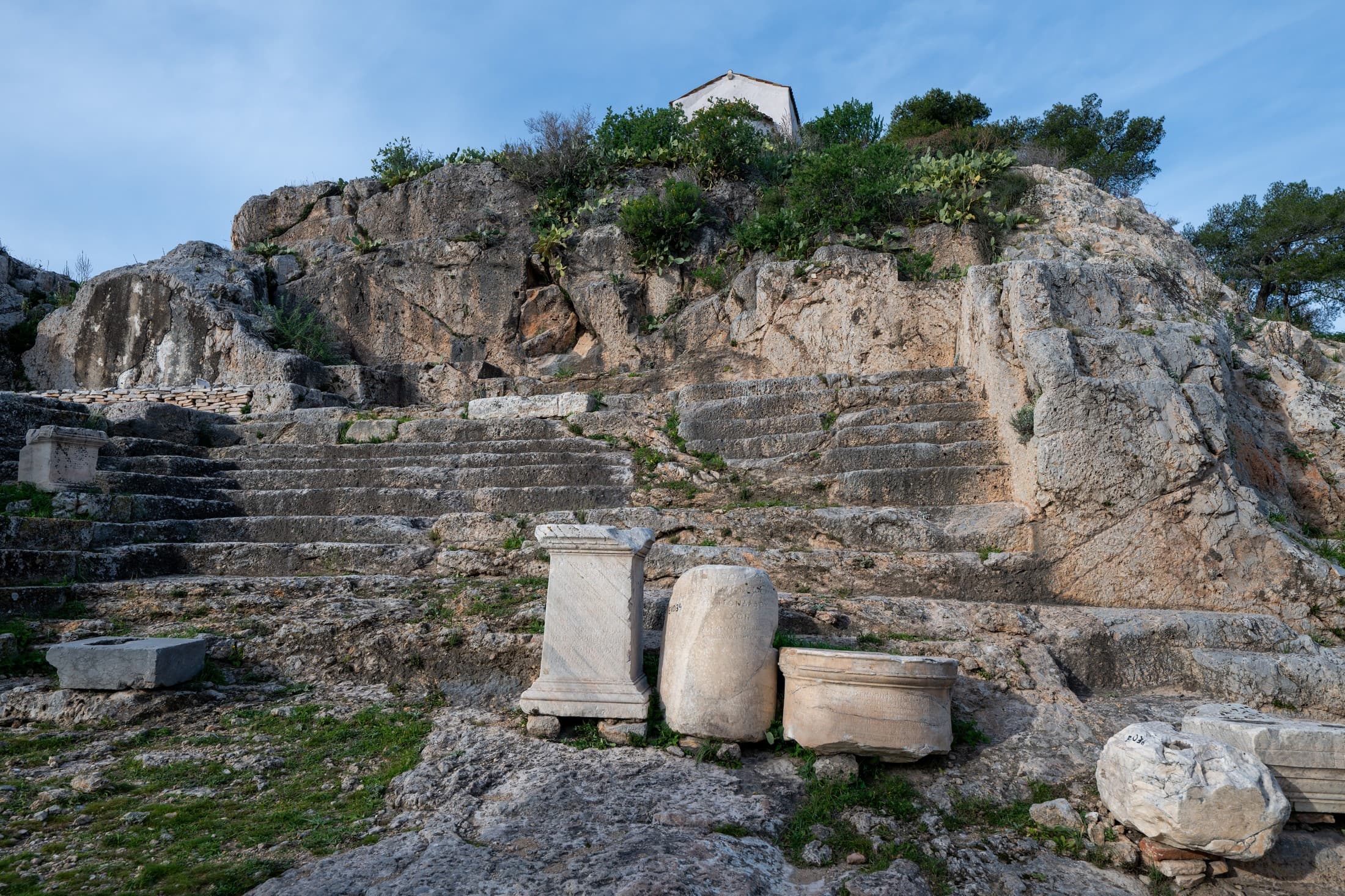
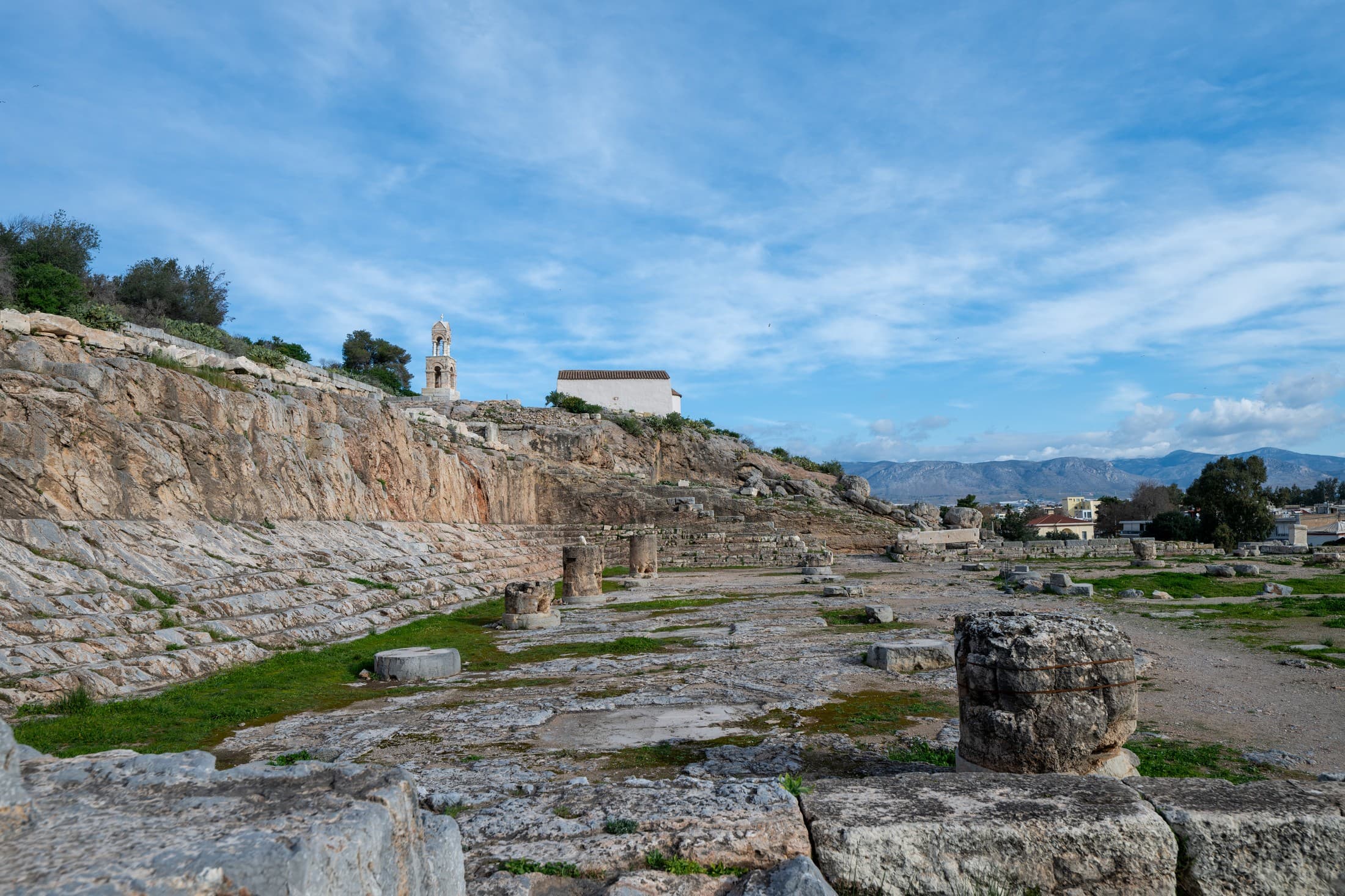
For centuries, the archaeological site of Elefsina was one of the most important spiritual centres of the ancient world. Here, the cult of the goddess Demeter and her daughter, Persephone, developed, connecting myths with the cultivation of the land, fertility, and the regeneration of nature. Today, the organised area extends along the slopes of the hill, below the later church of the Virgin Mary Mesosporitissa.
Exploring the Monuments
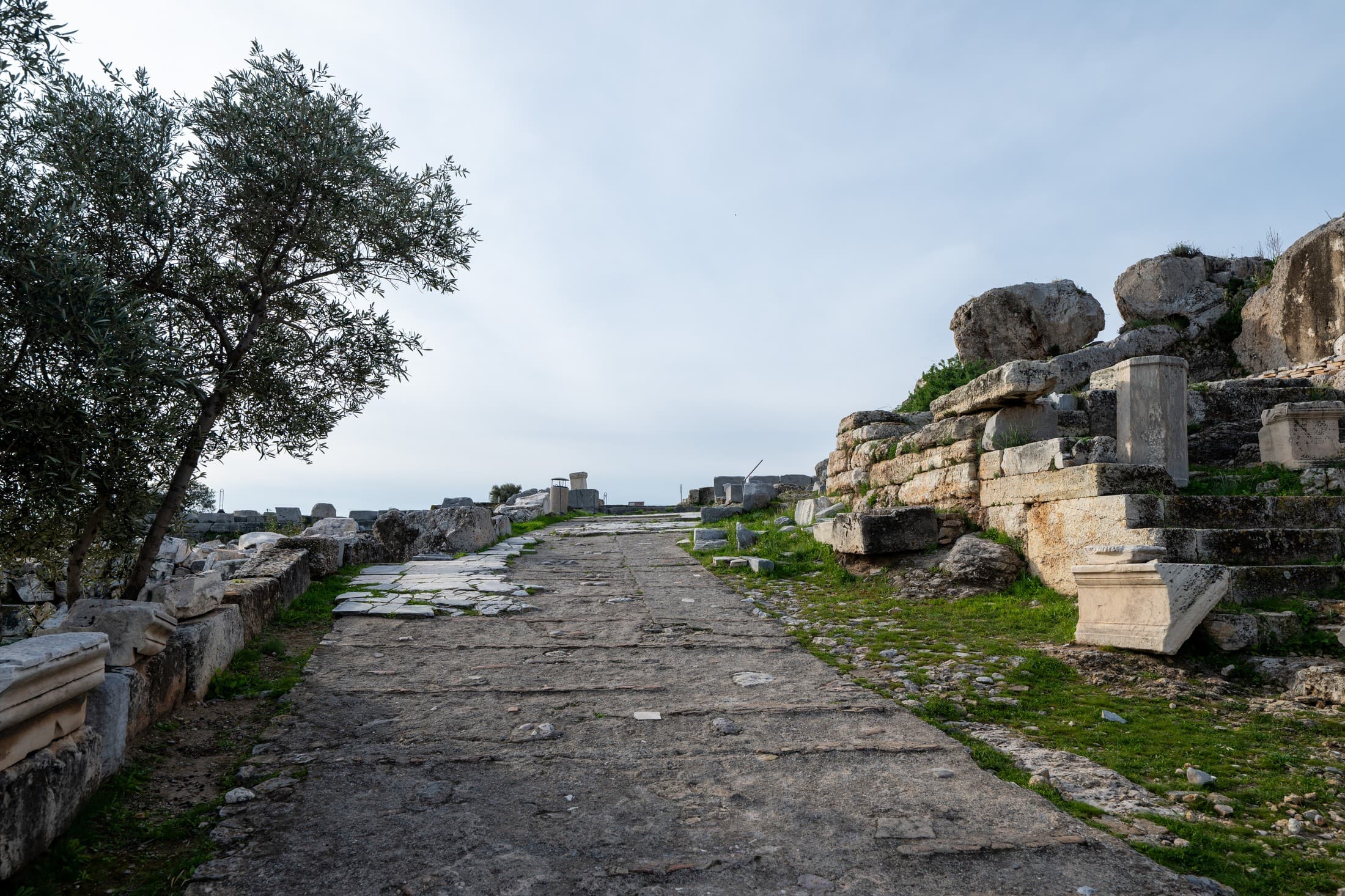
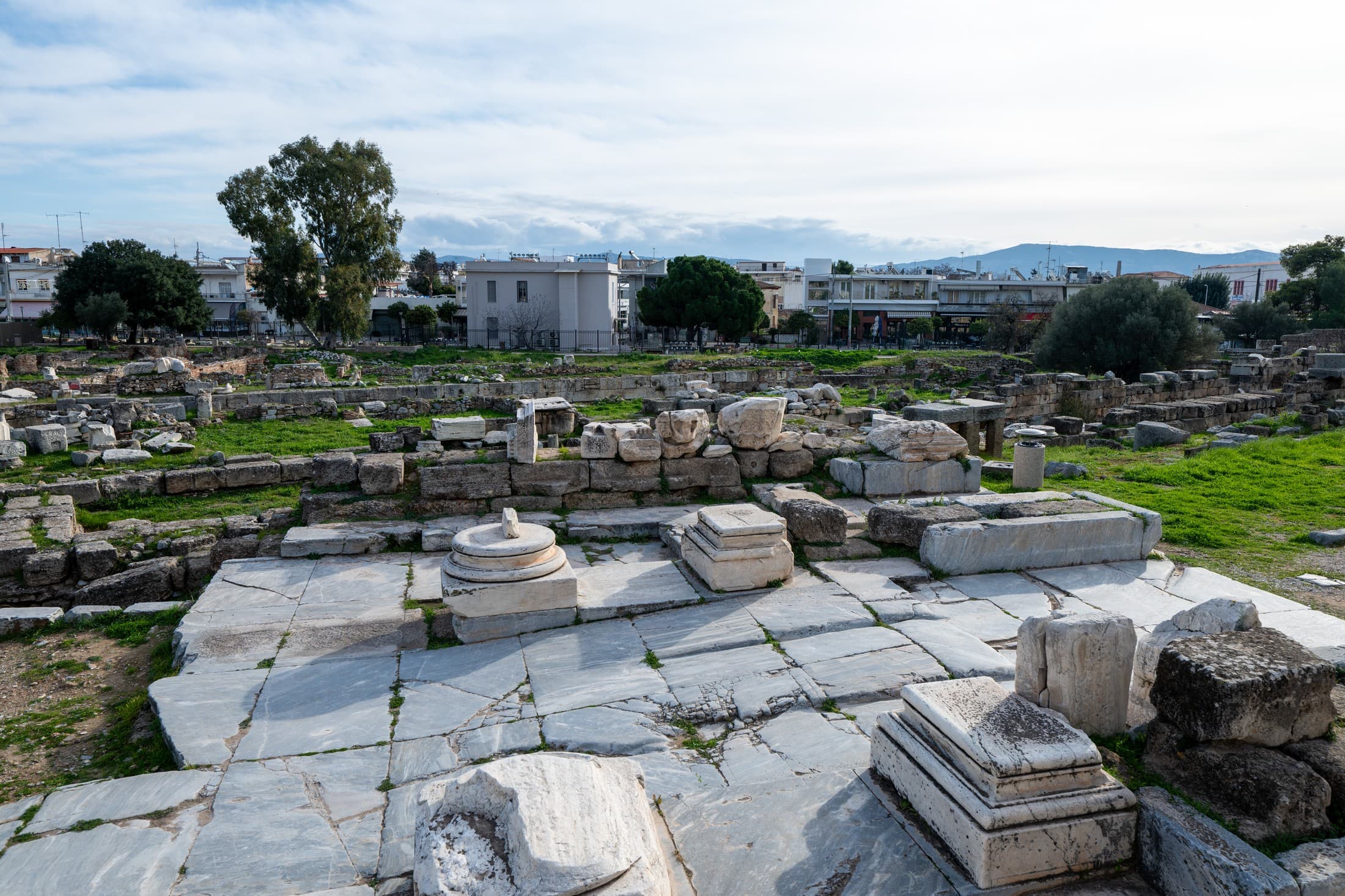
The visit begins at the Roman Courtyard, where the Sacred Way from Athens ended. From there, the paved Processional Way led initiates to the interior. On either side of the road, there were pedestals with statues and a carved stepped platform, where the faithful watched the sacred ceremonies.
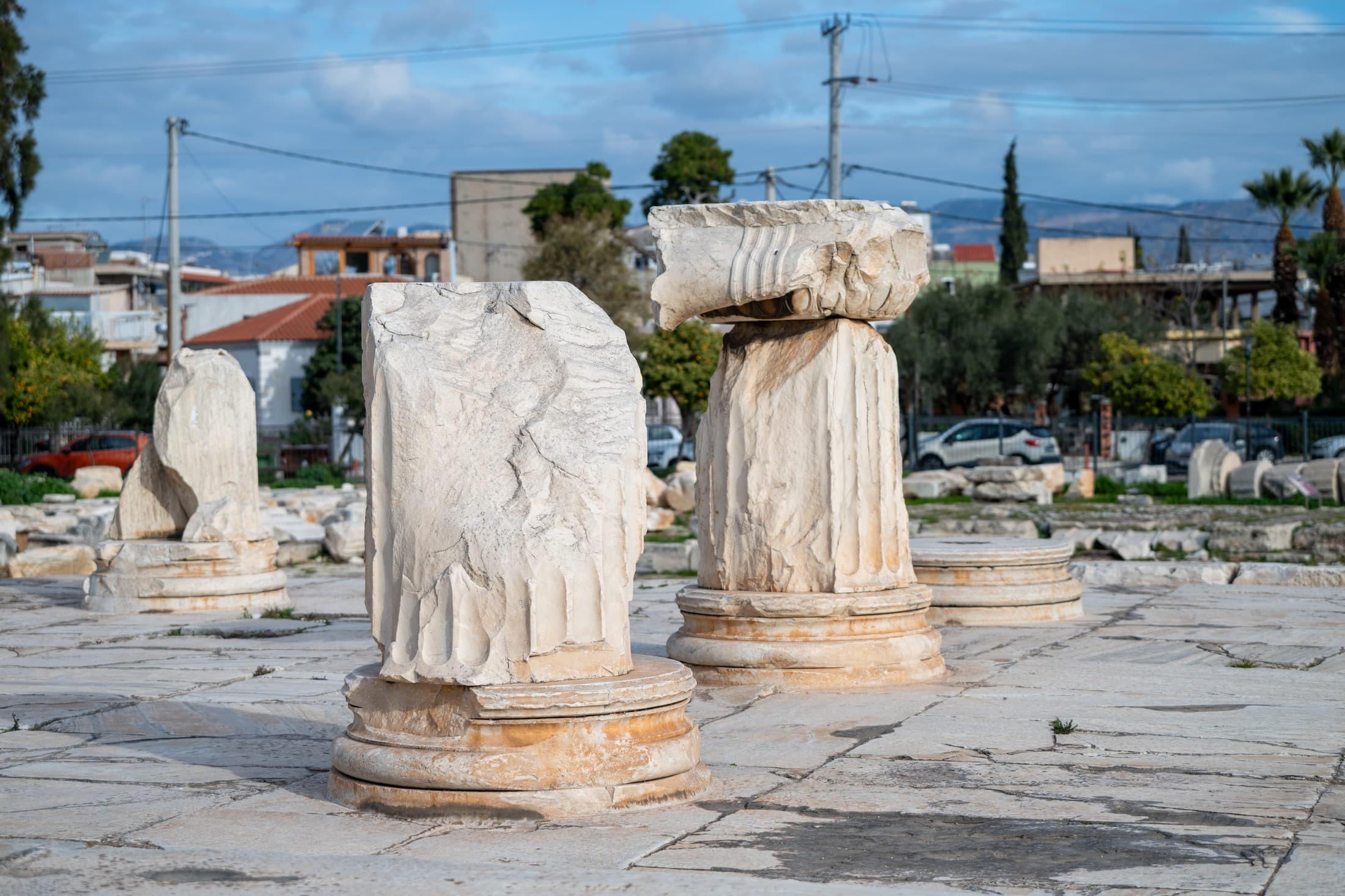
At the end of the road stands the Telesterion, the space where secret ceremonies were held. It is a structure with a long history: the oldest remains belong to a Mycenaean palace, while in the Classical period, the hall was expanded to accommodate 5,000 standing spectators. In the centre stood the sacred "Palace" with the throne of the Hierophant, and in the 4th century BC, the monumental Stoa of Philon with its marble columns was added to the façade.
The monuments from the Roman era are remarkable, such as the Great Propylaea. They are a faithful replica of the Propylaea of the Acropolis, and the relief portrait of Emperor Marcus Aurelius once adorned their pediment. Also found at the site are the Fountain, dating back to the 2nd century AD and featuring eight spouts, the temple of Artemis Propylaea and Poseidon, as well as the "siroi", underground granaries where the "aparches" (the first fruits of the harvest) were gathered. The Archaeological Museum (designed by Ioannis Moussis in 1890) is located within the area and houses significant finds.
The Eleusinian Mysteries
The rituals culminated in two periods. In the spring (during the month of Anthesterion), the "Lesser Mysteries" were held in Athens for purification in the Ilissos river. In September (during the month of Boedromion), the "Greater Mysteries" followed, lasting nine days and re-enacting the agonising wandering of Demeter in search of the lost Persephone.
Exploring the Monuments
The visit begins at the Roman Courtyard, where the Sacred Way from Athens ended. From there, the paved Processional Way led initiates to the interior. On either side of the road, there were pedestals with statues and a carved stepped platform, where the faithful watched the sacred ceremonies.
At the end of the road stands the Telesterion, the space where secret ceremonies were held. It is a structure with a long history: the oldest remains belong to a Mycenaean palace, while in the Classical period, the hall was expanded to accommodate 5,000 standing spectators. In the centre stood the sacred "Palace" with the throne of the Hierophant, and in the 4th century BC, the monumental Stoa of Philon with its marble columns was added to the façade.
The monuments from the Roman era are remarkable, such as the Great Propylaea. They are a faithful replica of the Propylaea of the Acropolis, and the relief portrait of Emperor Marcus Aurelius once adorned their pediment. Also found at the site are the Fountain, dating back to the 2nd century AD and featuring eight spouts, the temple of Artemis Propylaea and Poseidon, as well as the "siroi", underground granaries where the "aparches" (the first fruits of the harvest) were gathered. The Archaeological Museum (designed by Ioannis Moussis in 1890) is located within the area and houses significant finds.
The Eleusinian Mysteries
The rituals culminated in two periods. In the spring (during the month of Anthesterion), the "Lesser Mysteries" were held in Athens for purification in the Ilissos river. In September (during the month of Boedromion), the "Greater Mysteries" followed, lasting nine days and re-enacting the agonising wandering of Demeter in search of the lost Persephone.