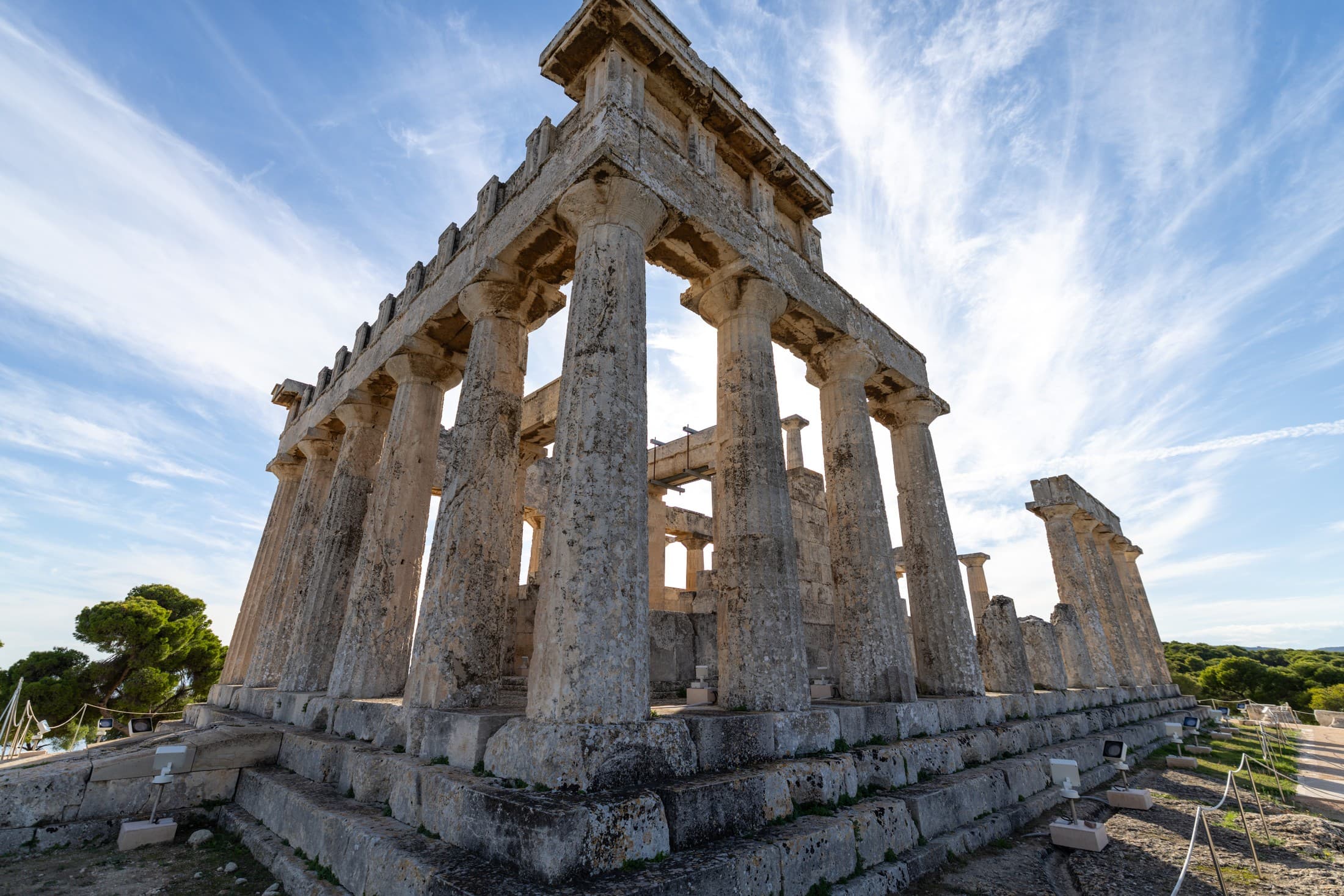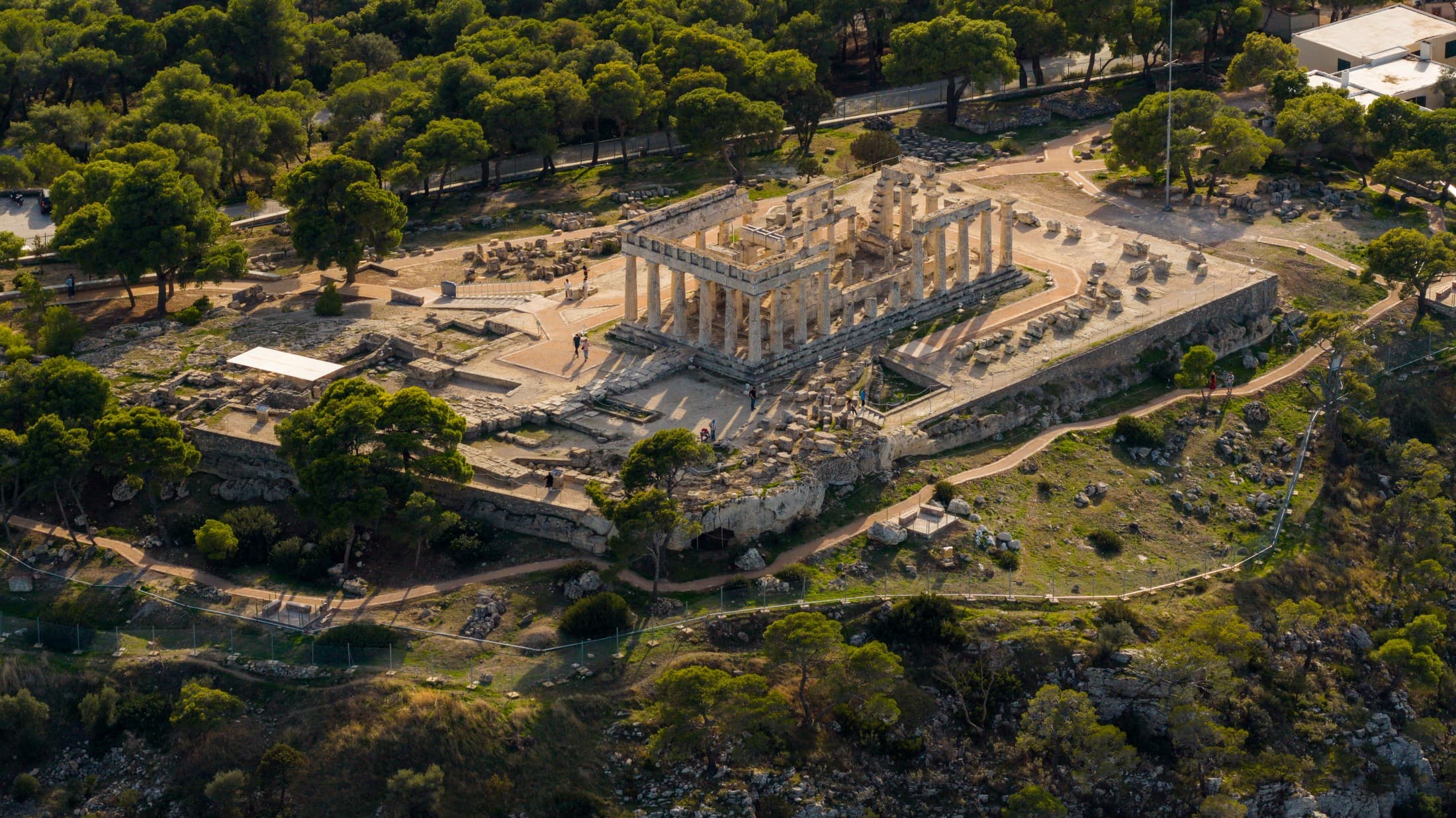
An imposing monument of the Doric order
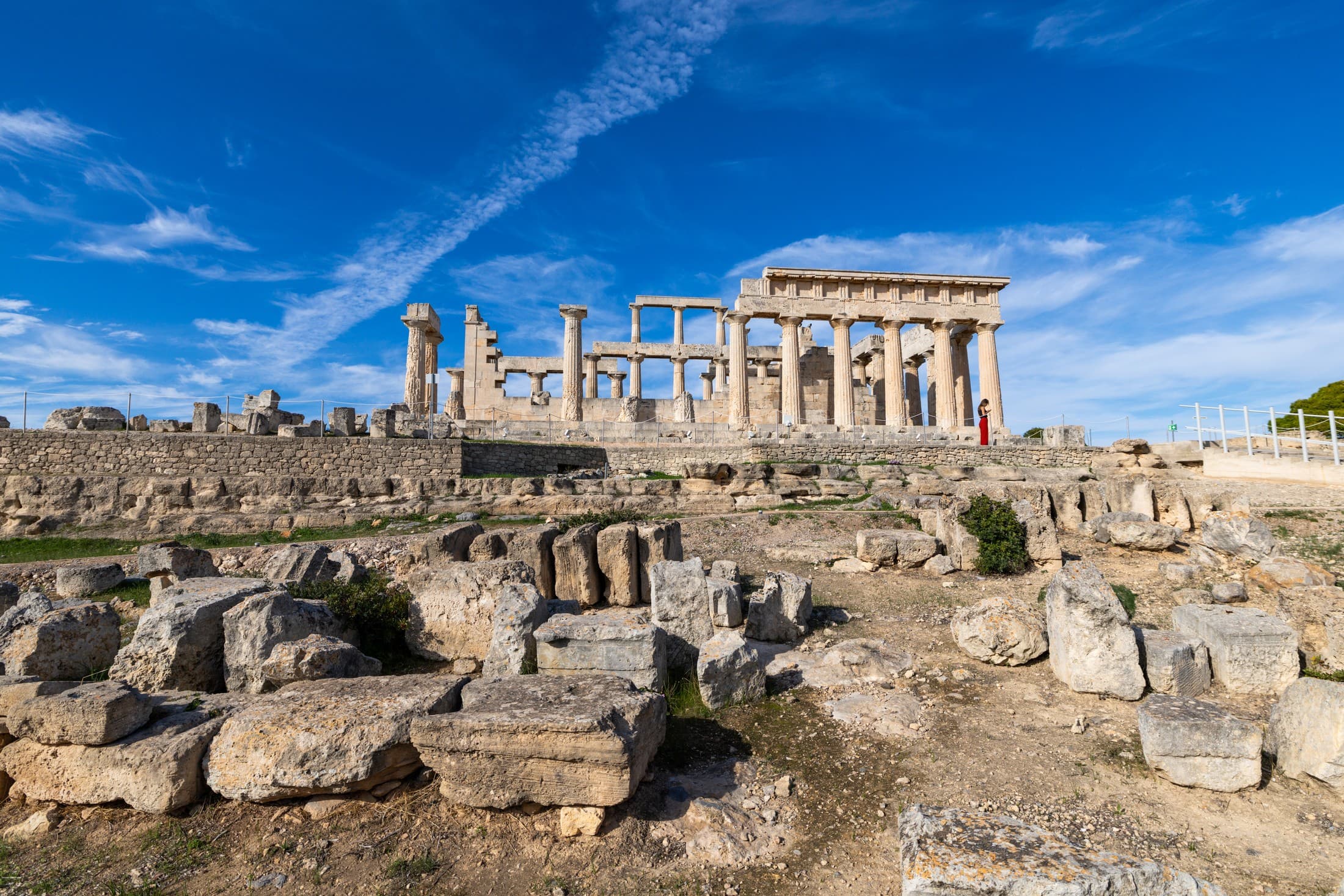
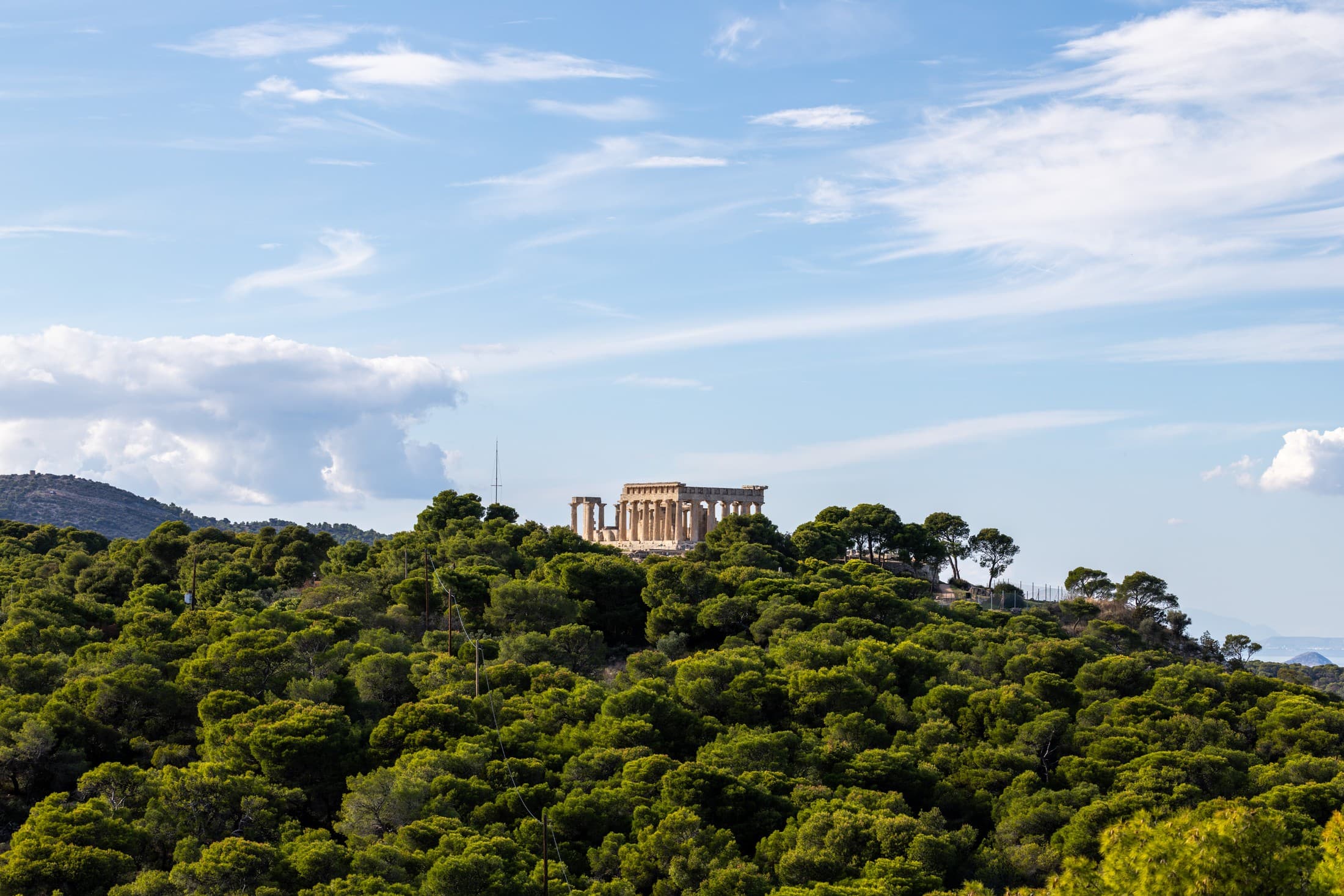
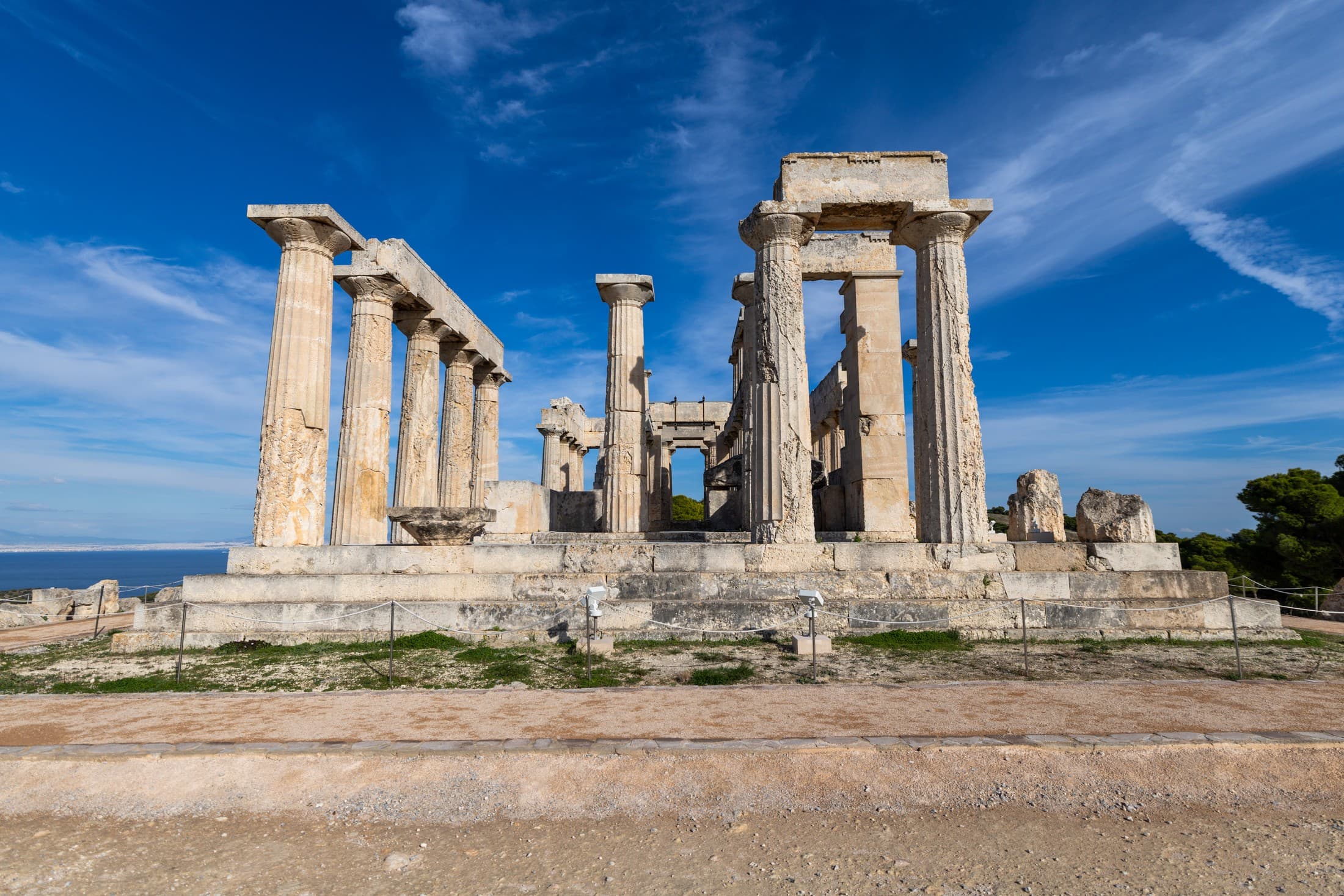
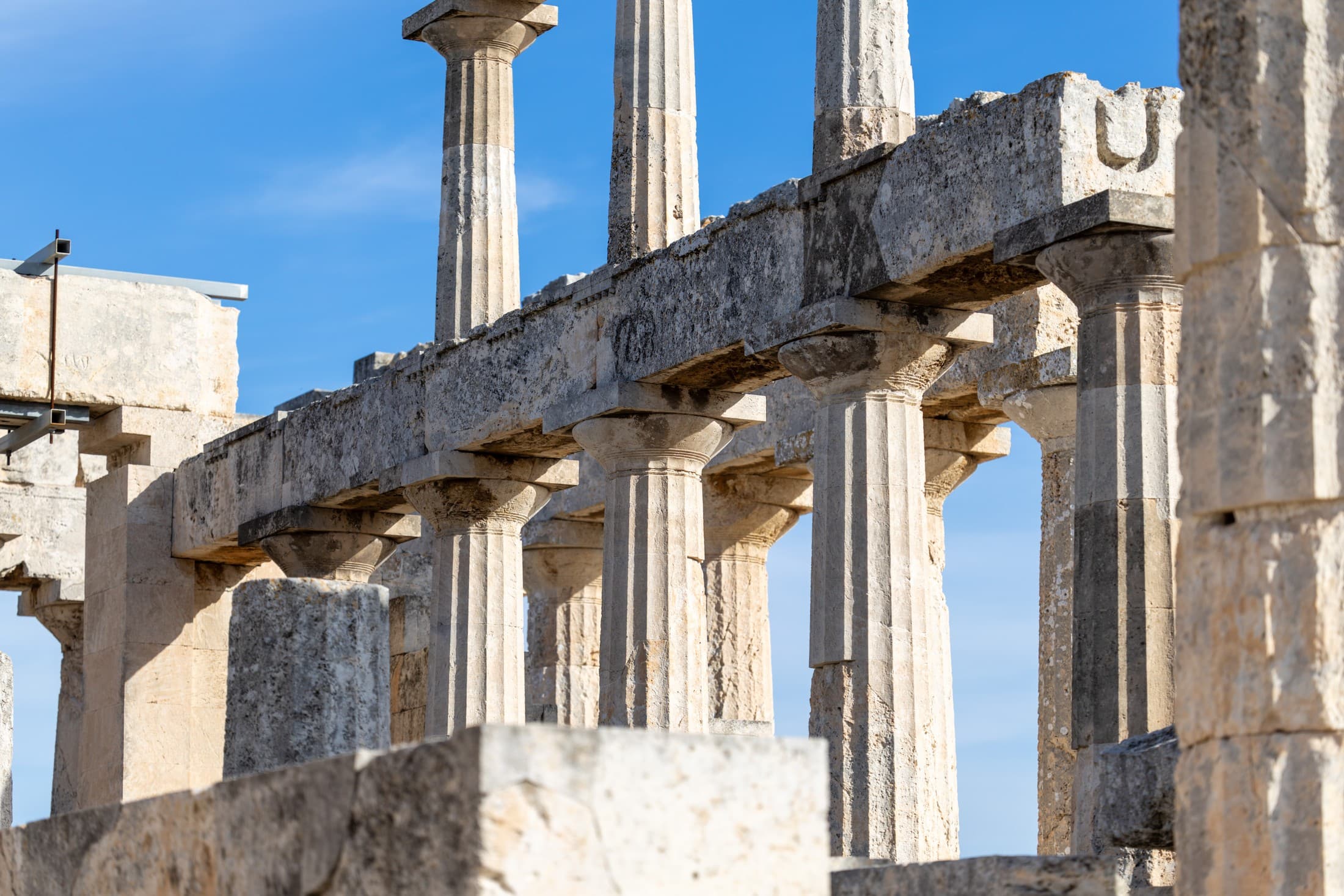
The Temple of Aphaia rises prominently at the top of a pine-covered hill, from where you can enjoy truly enchanting views over the island and the sea. Built in the north-eastern part of Aegina around 500–490 BC, it is one of Greece’s most important archaeological monuments, an outstanding example of the Doric order with imposing architecture. The site had previously been occupied by an earlier Doric temple dating to around 570–560 BC, which was destroyed by fire.
The Temple of Aphaia is exceptionally well preserved, as are certain sections of it, which are exhibited in the site’s small archaeological museum. There you will admire a large portion of the restored pediment of the temple, along with exhibits such as statues, ceramic vessels and tools from the period.
A votive inscription dated to 560 BC states that the temple was dedicated to the deity Aphaia, who was later associated with Athena. For this reason, there is also a replica of a statue of Athena, shown surrounded by warriors.
Athena is also the central figure in the mythical expeditions depicted on the temple’s two pediments: on the eastern pediment, the campaign of Heracles against Laomedon, King of Troy, and on the western pediment, that of Agamemnon against Priam. In both, Aeginetan heroes stood out: the descendants of Aeacus, son of Zeus and the nymph Aegina.
Experience a sacred place that has dominated the Aeginetan landscape for centuries, linking myth with history.
The Temple of Aphaia is exceptionally well preserved, as are certain sections of it, which are exhibited in the site’s small archaeological museum. There you will admire a large portion of the restored pediment of the temple, along with exhibits such as statues, ceramic vessels and tools from the period.
A votive inscription dated to 560 BC states that the temple was dedicated to the deity Aphaia, who was later associated with Athena. For this reason, there is also a replica of a statue of Athena, shown surrounded by warriors.
Athena is also the central figure in the mythical expeditions depicted on the temple’s two pediments: on the eastern pediment, the campaign of Heracles against Laomedon, King of Troy, and on the western pediment, that of Agamemnon against Priam. In both, Aeginetan heroes stood out: the descendants of Aeacus, son of Zeus and the nymph Aegina.
Experience a sacred place that has dominated the Aeginetan landscape for centuries, linking myth with history.