Tracing the Traditions of Salamina
There is no better way to discover the history of a place than by exploring the way of life, everyday habits, and celebrations of its people. This is exactly what the Folk Art & History Museum of the Municipality of Salamina offers. Its collection began thanks to an initiative by young locals who, in 1958, founded the Cultural Association “Euripides” and started gathering books, various artifacts, and traditional costumes from the area. The result of their efforts is now showcased in two exhibition halls within the New Town Hall–Cultural Centre of Salamina, where the museum has been housed since 1998.
Take a moment to admire the intricate details of traditional bridal costumes, the giordania (traditional necklaces) made of coral, the bolies (embroidered headscarves), and dresses with fine pleats hidden beneath the heavy fabrics of the apron and the zipouni (traditional vest).
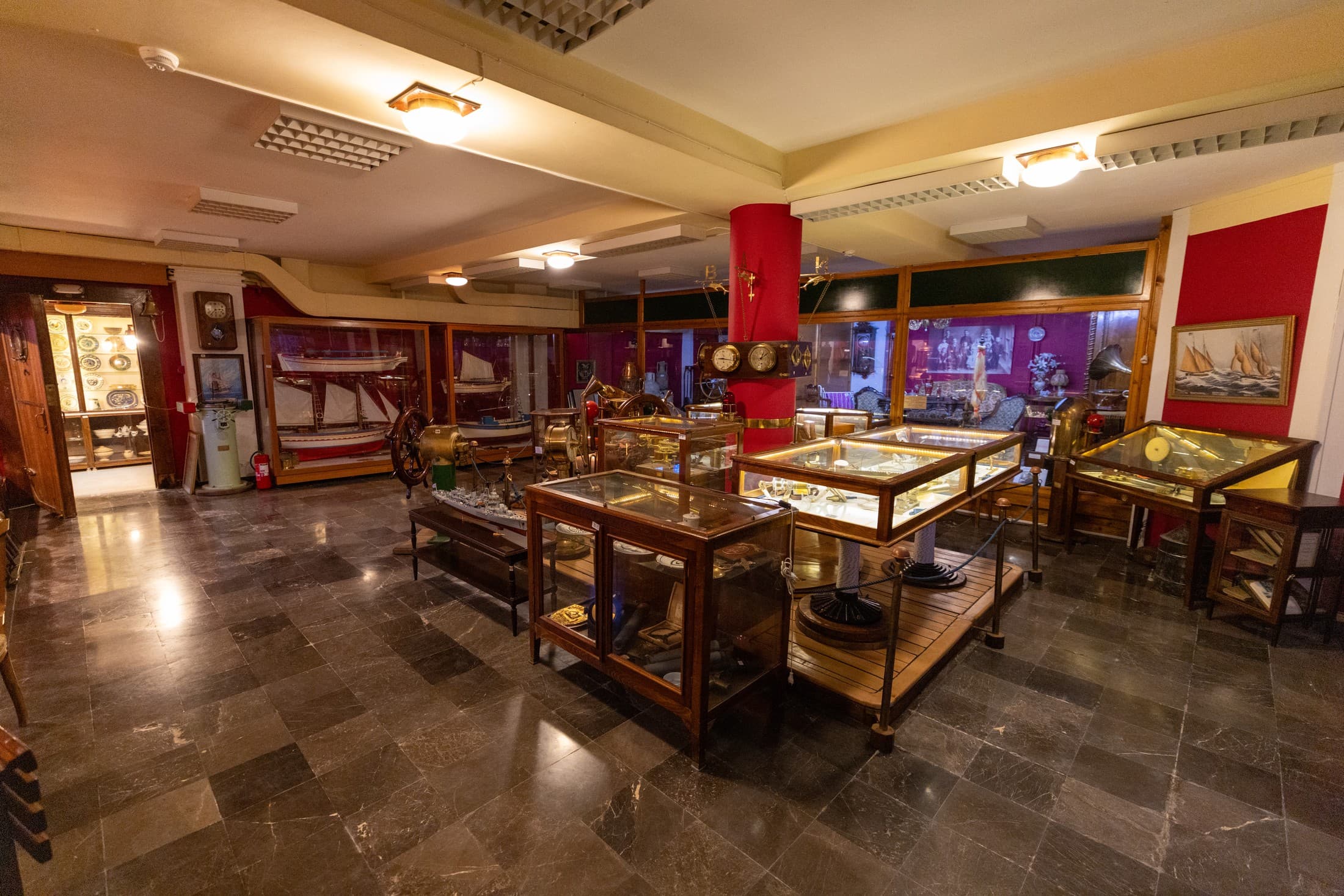
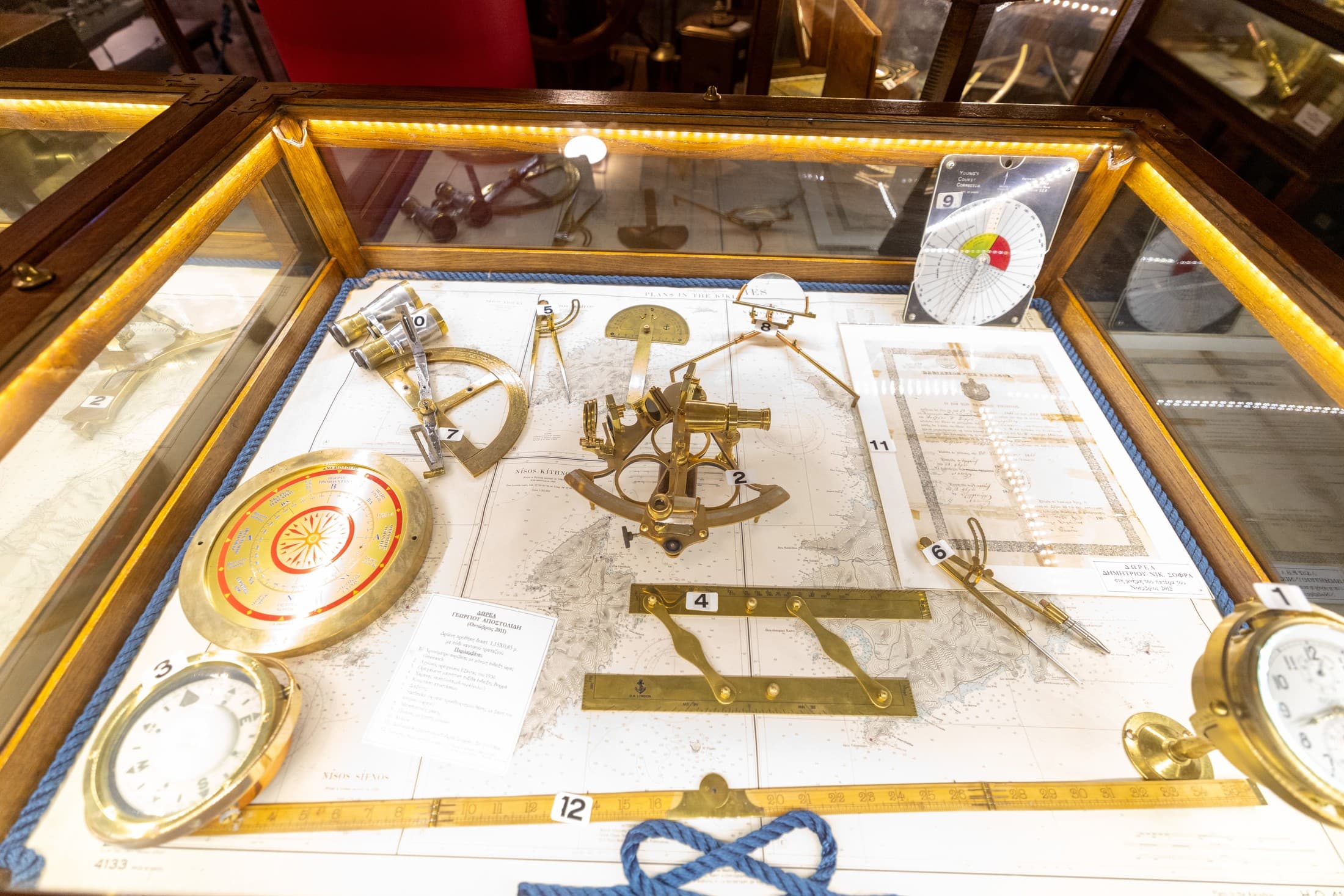
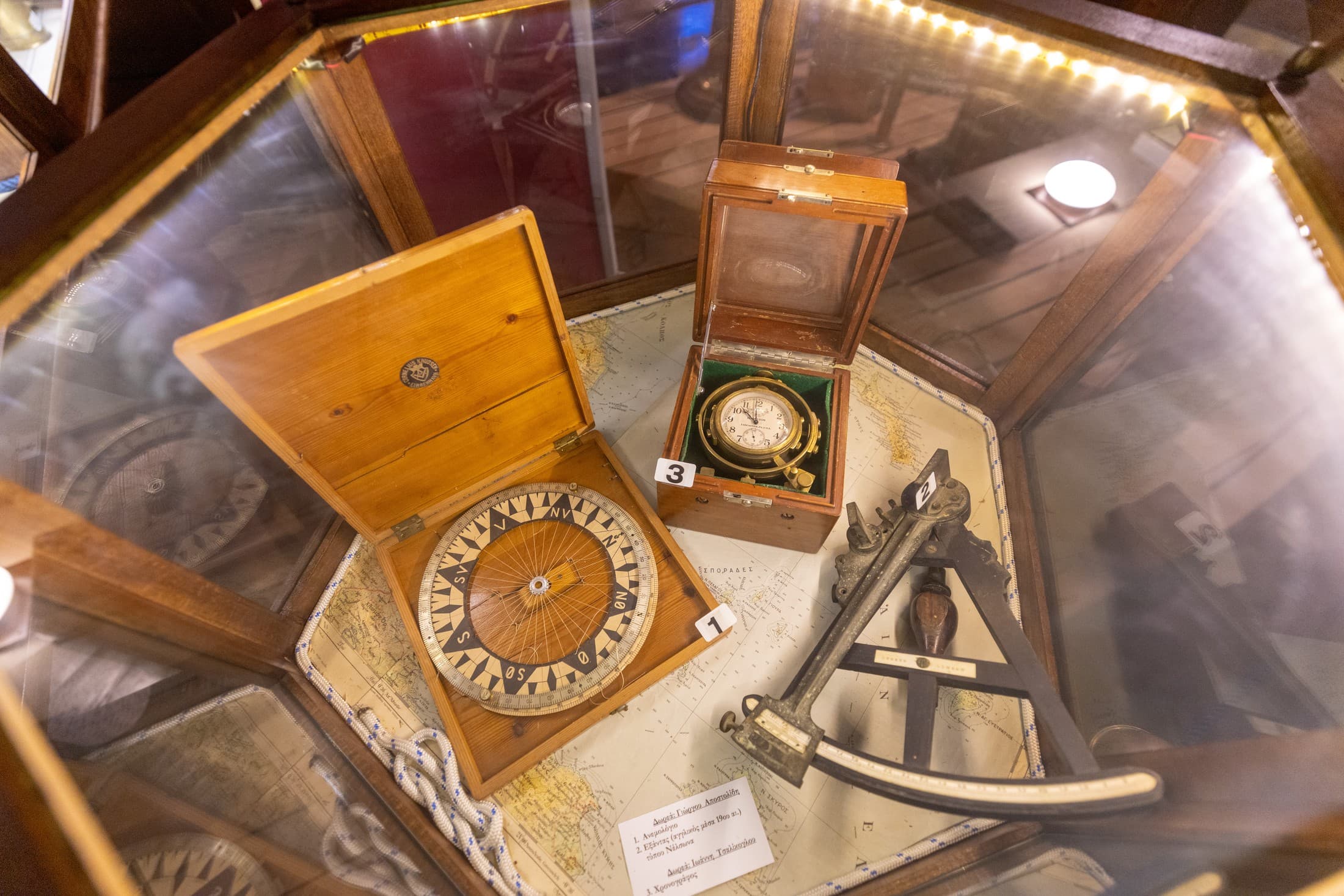
Pause in front of the yataghans and pistols from the Greek War of Independence in 1821, and marvel at the silver clasp from fermeli (the embroidered vest of fustanella) of Georgios Karaiskakis, as well as weapons used by fighters of World War II. Through ship models, such as trechantiria and trawlers, you’ll discover the deep maritime tradition of Salamina’s inhabitants, and then continue to experience how daily life unfolded two or three centuries ago.
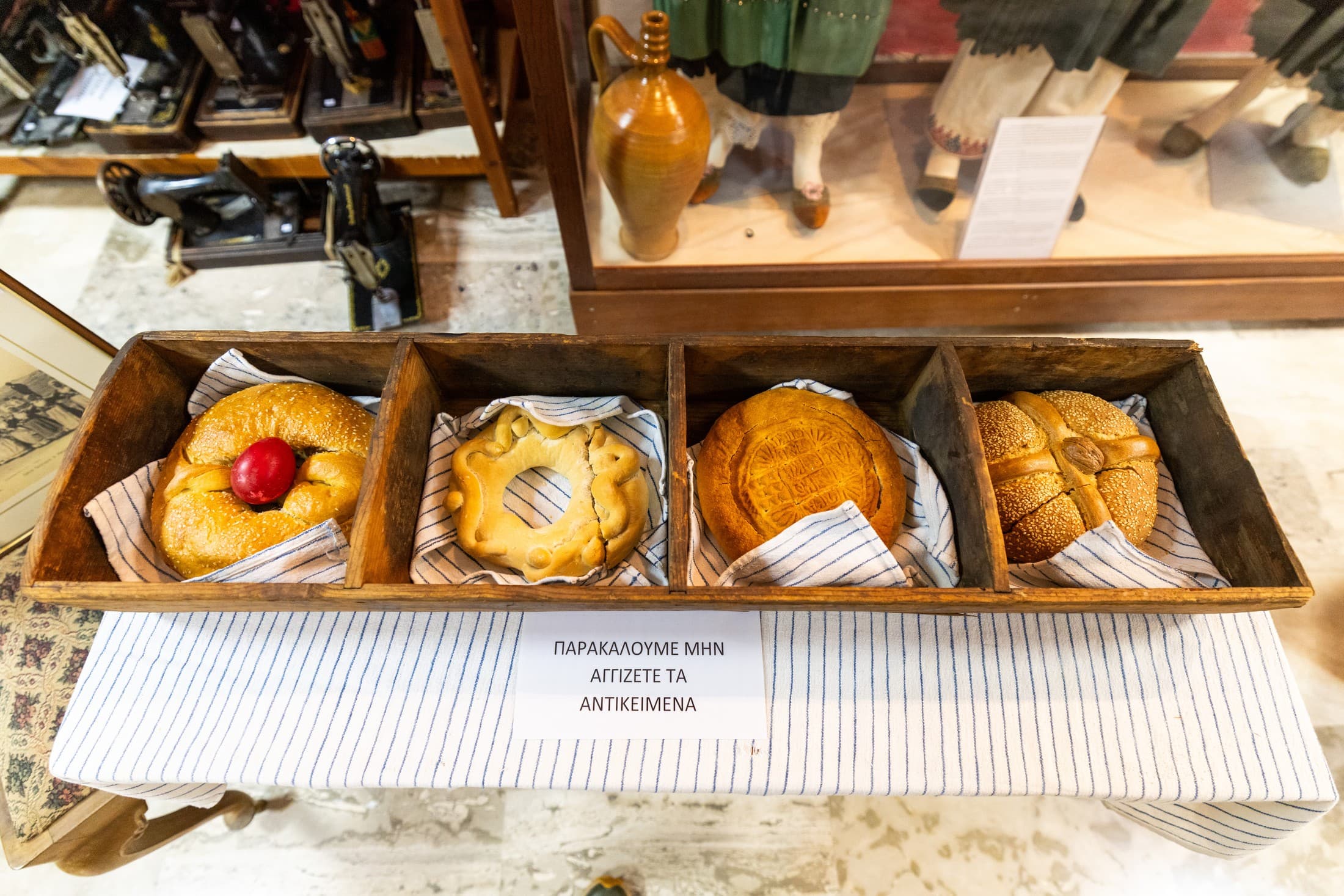
Look out for wooden cradles, kneading troughs, large basins, clay cooking pots, and rakokazana (traditional distillation equipment). Stop by the looms to observe the craftsmanship of women who worked with rhythm and patience. Finally, discover how the famous kopanelia of Salamina—a traditional lace-making technique—are created, a traditional art form that has recently been included in Greece’s National Inventory of Intangible Cultural Heritage.
Browse the terms outlined in dowry contracts—formal notarial documents—and, through old photographs, see what Salamina looked like in the mid-19th and early 20th centuries. Rediscover professions that are now disappearing, and explore collections of musical instruments and coins.
Take a moment to admire the intricate details of traditional bridal costumes, the giordania (traditional necklaces) made of coral, the bolies (embroidered headscarves), and dresses with fine pleats hidden beneath the heavy fabrics of the apron and the zipouni (traditional vest).
Pause in front of the yataghans and pistols from the Greek War of Independence in 1821, and marvel at the silver clasp from fermeli (the embroidered vest of fustanella) of Georgios Karaiskakis, as well as weapons used by fighters of World War II. Through ship models, such as trechantiria and trawlers, you’ll discover the deep maritime tradition of Salamina’s inhabitants, and then continue to experience how daily life unfolded two or three centuries ago.
Look out for wooden cradles, kneading troughs, large basins, clay cooking pots, and rakokazana (traditional distillation equipment). Stop by the looms to observe the craftsmanship of women who worked with rhythm and patience. Finally, discover how the famous kopanelia of Salamina—a traditional lace-making technique—are created, a traditional art form that has recently been included in Greece’s National Inventory of Intangible Cultural Heritage.
Browse the terms outlined in dowry contracts—formal notarial documents—and, through old photographs, see what Salamina looked like in the mid-19th and early 20th centuries. Rediscover professions that are now disappearing, and explore collections of musical instruments and coins.