The white treasure of Messolongi
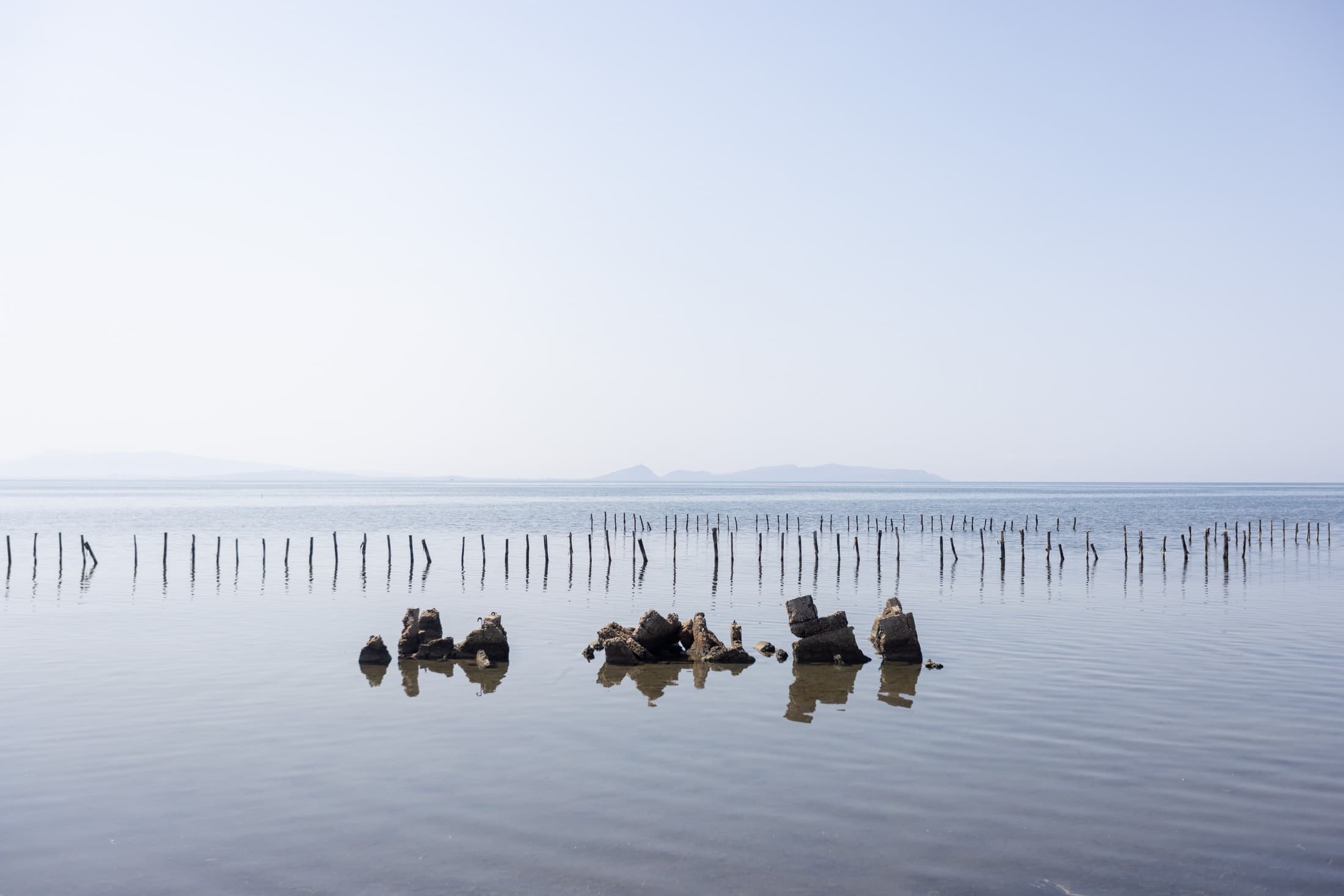
Did you know that salt has 14,000 uses in our daily lives? Have you ever seen multicoloured salt crystals? What were saltshakers from the 1800s like? The Salt Museum in Messolongi is a spectacular space that grants this white treasure its rightful place in history. Salt has been a cause for war, a source of wealth for empires, and the reason entire cities were born on the shores of salt pans. In Greece, no city is more closely tied to it than Messolongi.
Embark on a mental journey through the exhibitions of the Museum, which started operating in 2020 and continues to enrich its activities through educational programmes and artistic events. The building housing it dates back to 1946 and it originally served as accommodation for the alykarioi —the workers who travelled from Messolongi and the Ionian Islands to harvest the salt.
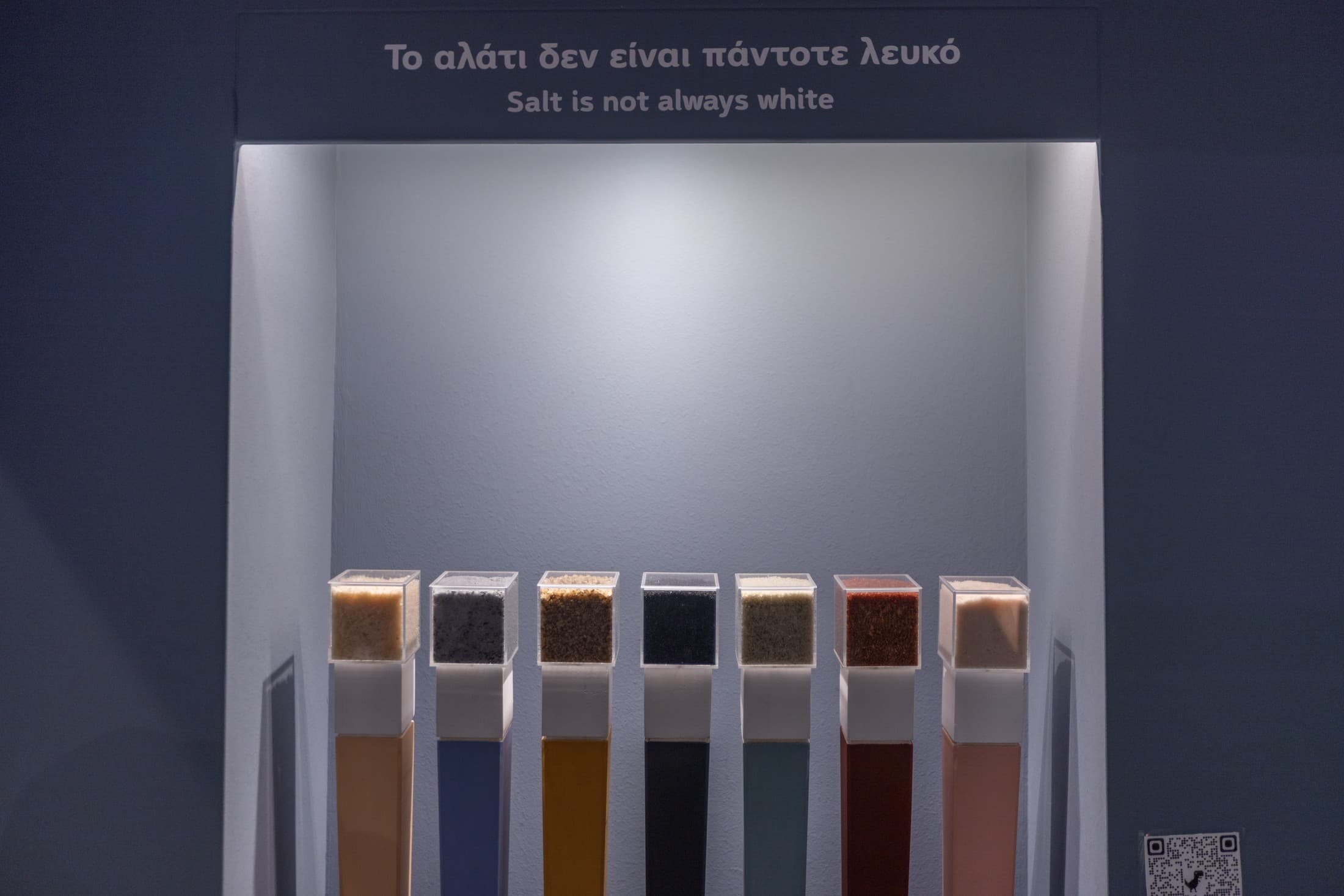
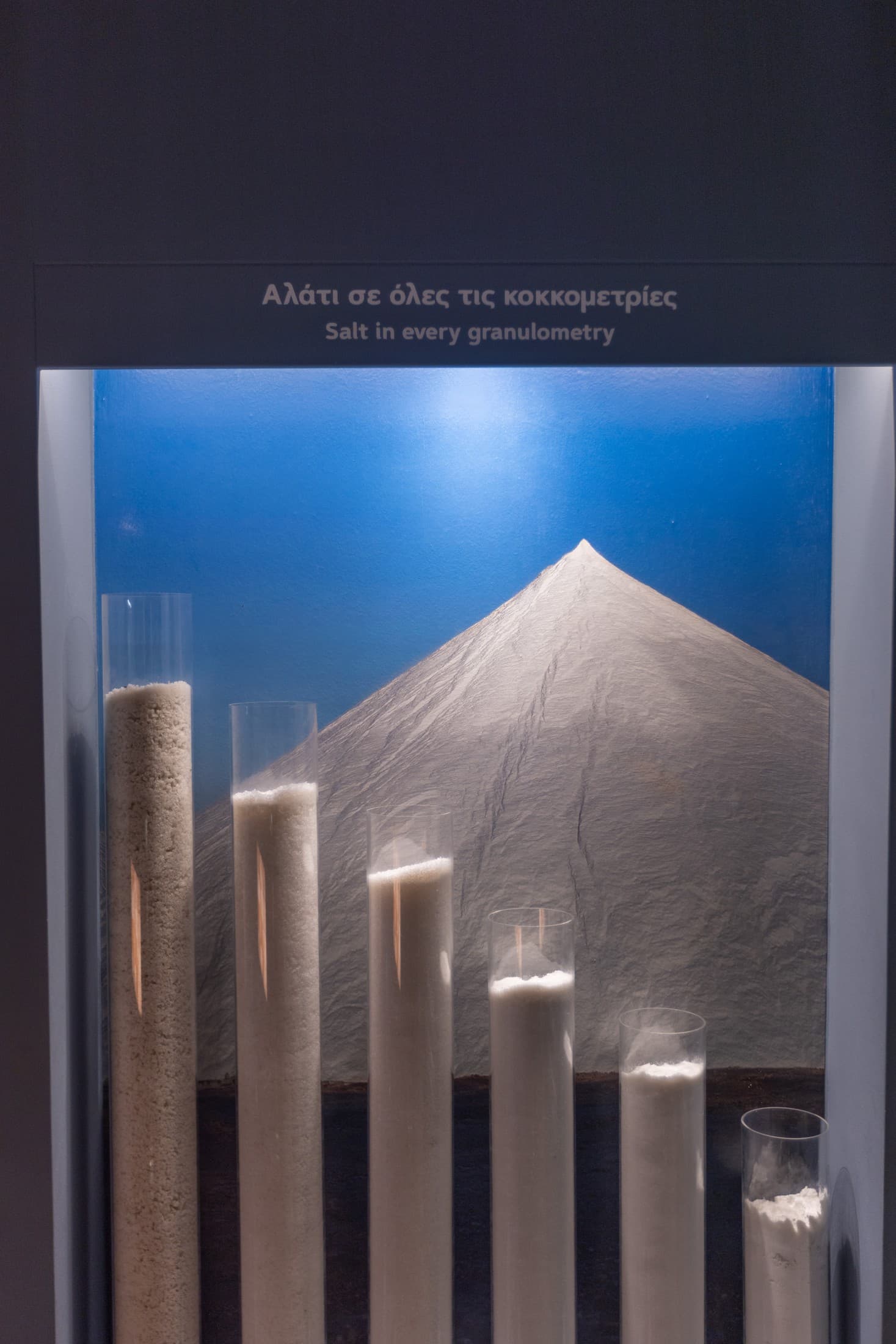
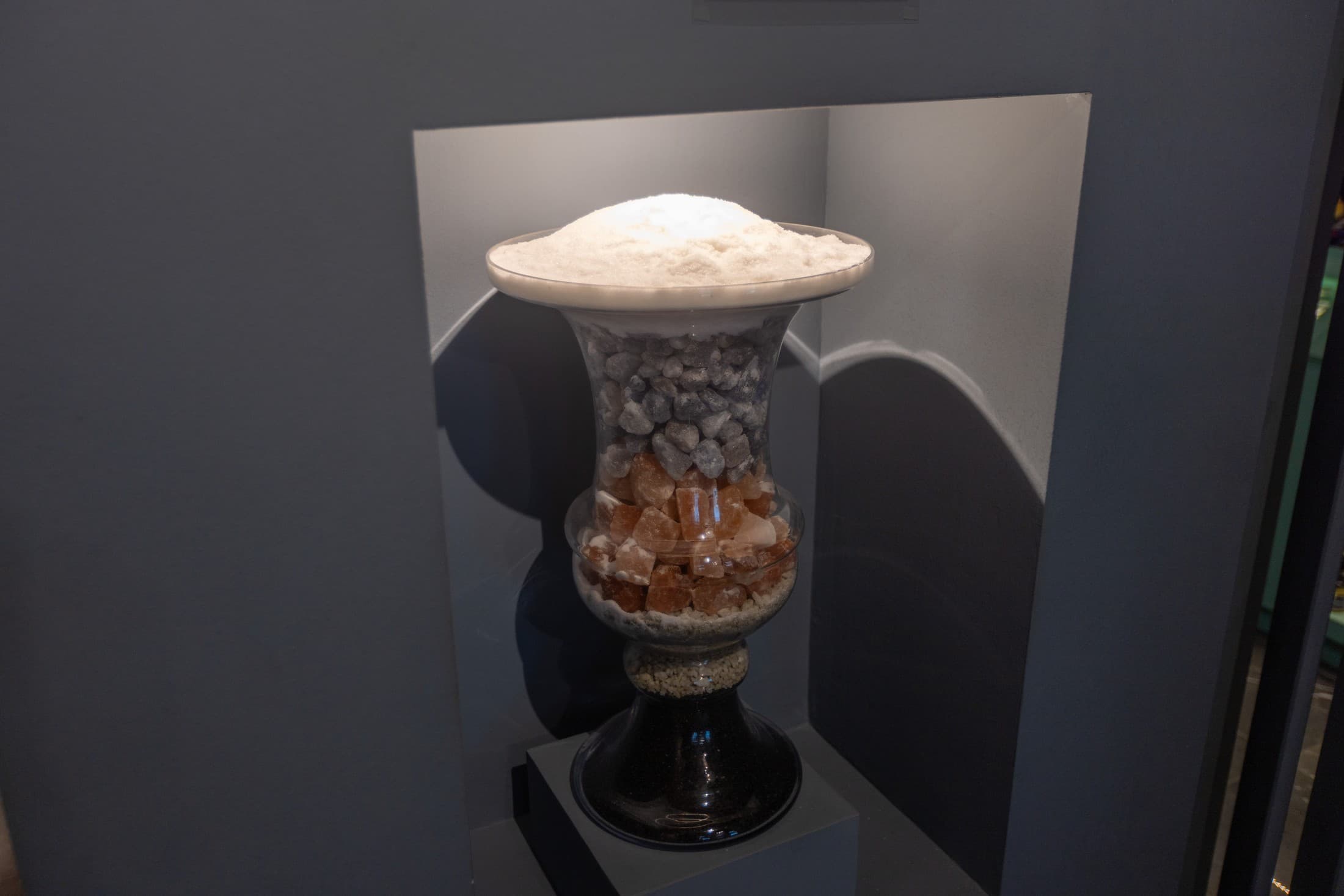
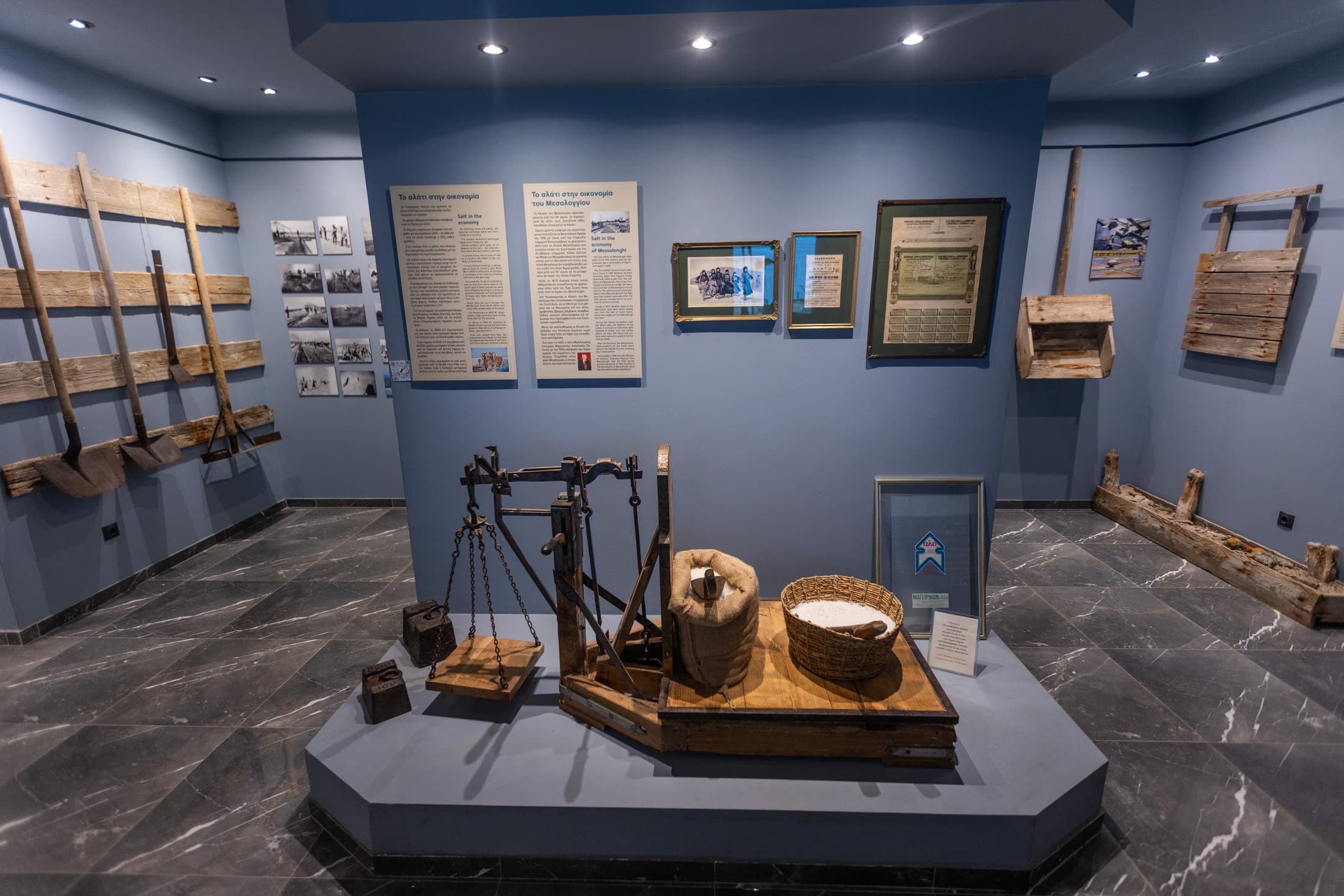
Inside, you can discover mesmerising salt crystals from around the world, learn about thousands of applications for salt, and admire a collection of 1,500 saltshakers dating from 1800 to the present day, a collection unique in Greece. Documents and video projections provide context for the exhibits, illustrating this valuable product’s impact on the global and local economy, nature, art, religion, etc.
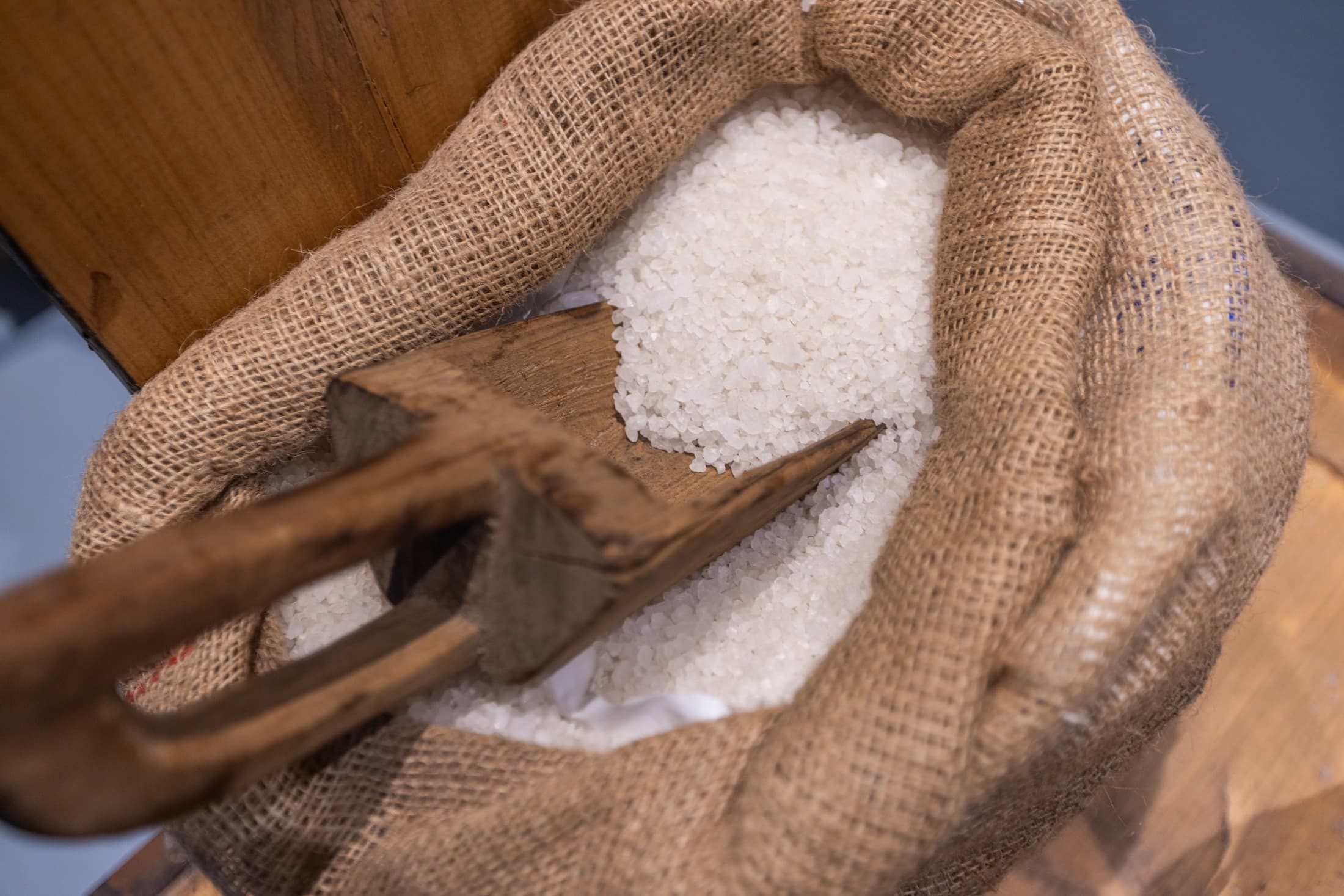
The surprises continue in the outdoor areas, where you will find old tools, an observation deck offering views of the red pans and the white mountains of salt, as well as telescopes to spot the rare birds that inhabit the salt-pan ecosystem. This visit offers an unforgettable look at the harmonious coexistence between humans and nature.
Embark on a mental journey through the exhibitions of the Museum, which started operating in 2020 and continues to enrich its activities through educational programmes and artistic events. The building housing it dates back to 1946 and it originally served as accommodation for the alykarioi —the workers who travelled from Messolongi and the Ionian Islands to harvest the salt.
Inside, you can discover mesmerising salt crystals from around the world, learn about thousands of applications for salt, and admire a collection of 1,500 saltshakers dating from 1800 to the present day, a collection unique in Greece. Documents and video projections provide context for the exhibits, illustrating this valuable product’s impact on the global and local economy, nature, art, religion, etc.
The surprises continue in the outdoor areas, where you will find old tools, an observation deck offering views of the red pans and the white mountains of salt, as well as telescopes to spot the rare birds that inhabit the salt-pan ecosystem. This visit offers an unforgettable look at the harmonious coexistence between humans and nature.