The Navel of the Earth
At the foot of Mount Parnassus, amidst the imposing Phaedriades cliffs, lies the Panhellenic sanctuary of Delphi. For centuries, Delphi served as the spiritual heart of ancient Greece, the ‘navel of the earth’, where, according to myth, the two eagles sent forth by Zeus met.
History and Myth
Worship at this site started with the veneration of the female deity of the Earth and the dragon Python. After slaying Python, Apollo established his own sanctuary. In honour of his victory, the Pythian Games were held, the second most important games after the Olympics. The earliest finds date back to the Neolithic period (4000 BC) at the Corycian Cave, while the worship of Apollo definitively prevailed in the 8th century BC.
The Delphic Amphictyony, a confederation of twelve tribes, played an important role in managing the sacred site. The period of prosperity (6th-4th century BC) brought wealth and renown, with the Pythia delivering oracles for settlements and wars. After periods of pillaging and decline, the oracle fell silent for good in AD 394 by decree of Theodosius I. The systematic Great Excavation began in 1891 by the French School of Athens, after the village of Kastri, which had been built on the ruins, was removed.
A Journey Through the Archaeological Site
The site is divided into two main sanctuaries and sports facilities:
Delphi remains a global symbol of unity to this day. The efforts of Angelos and Eva Sikelianos to revive the Delphic Ideal in the 20th century confirmed the timeless spiritual radiance of this place, which continues to attract millions of visitors as a UNESCO World Heritage Site.
History and Myth
Worship at this site started with the veneration of the female deity of the Earth and the dragon Python. After slaying Python, Apollo established his own sanctuary. In honour of his victory, the Pythian Games were held, the second most important games after the Olympics. The earliest finds date back to the Neolithic period (4000 BC) at the Corycian Cave, while the worship of Apollo definitively prevailed in the 8th century BC.
The Delphic Amphictyony, a confederation of twelve tribes, played an important role in managing the sacred site. The period of prosperity (6th-4th century BC) brought wealth and renown, with the Pythia delivering oracles for settlements and wars. After periods of pillaging and decline, the oracle fell silent for good in AD 394 by decree of Theodosius I. The systematic Great Excavation began in 1891 by the French School of Athens, after the village of Kastri, which had been built on the ruins, was removed.
A Journey Through the Archaeological Site
The site is divided into two main sanctuaries and sports facilities:
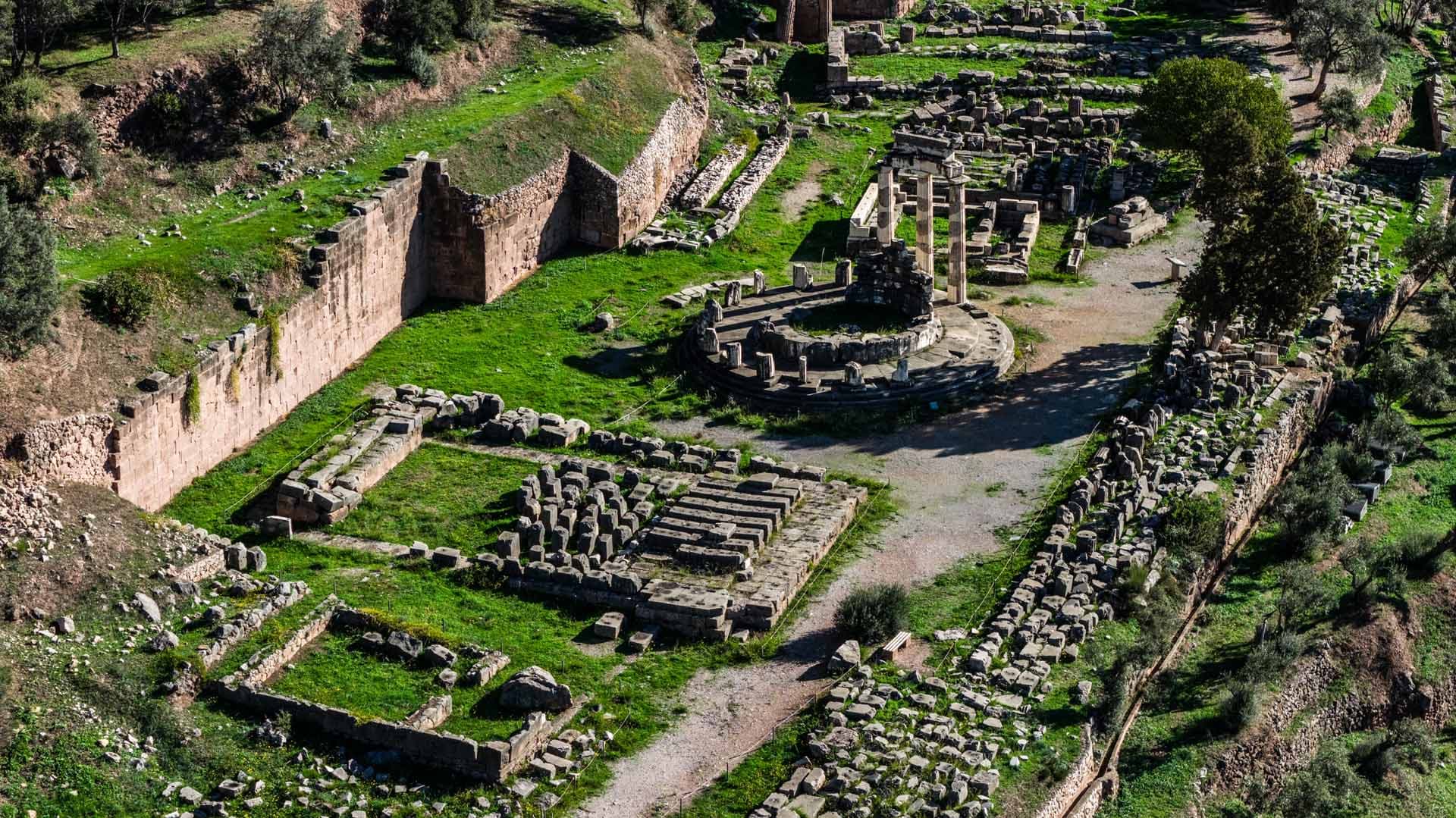
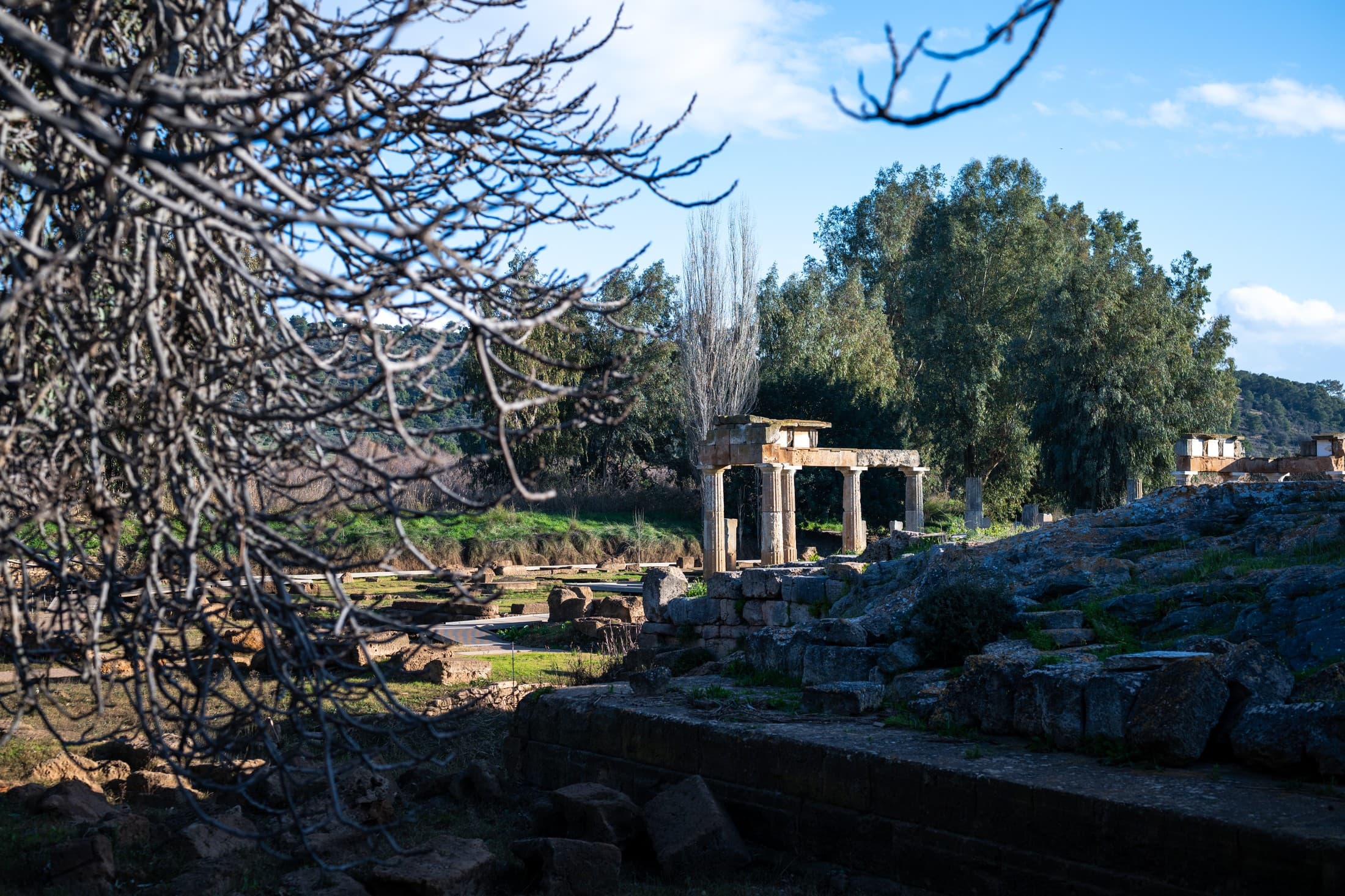
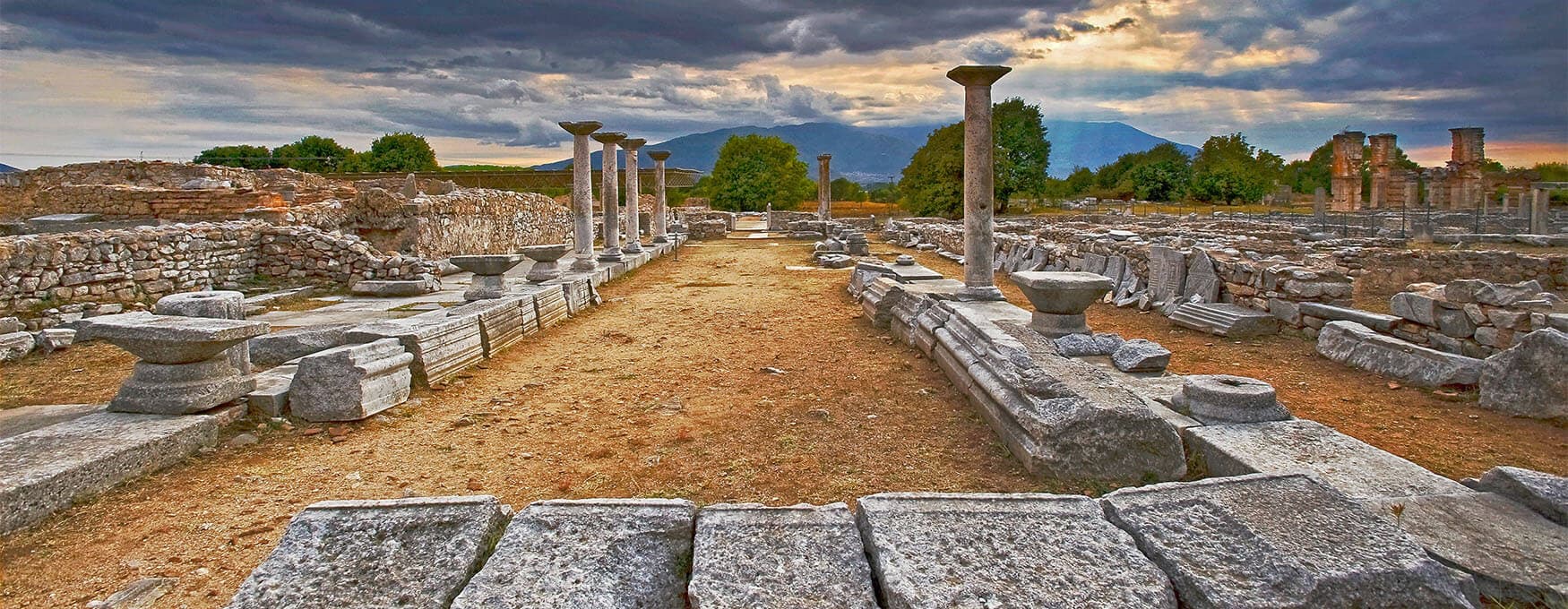
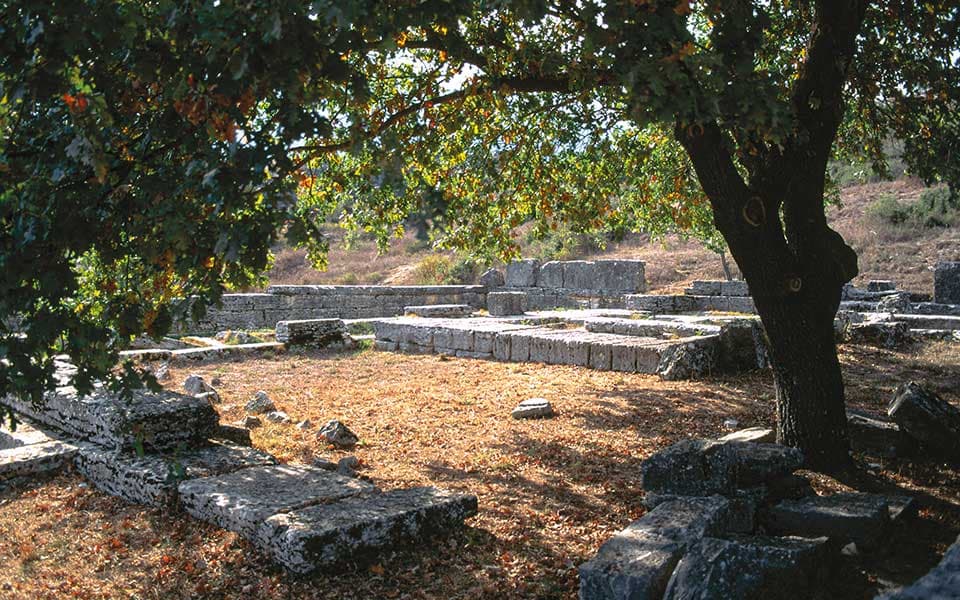
- The Sanctuary of Athena Pronaia: This was the first stop for those arriving from Athens. Here, the renowned Tholos, a circular masterpiece of a building, and the ruins of the temples dedicated to the goddess stand proudly. Within the site, altars dedicated to other deities and the Treasury of the Massaliots have been preserved.
- The Gymnasium and the Castalian Spring: Before entering the oracle, visitors would pass through the Gymnasium for exercise and the sacred Castalian Spring for ritual purification.
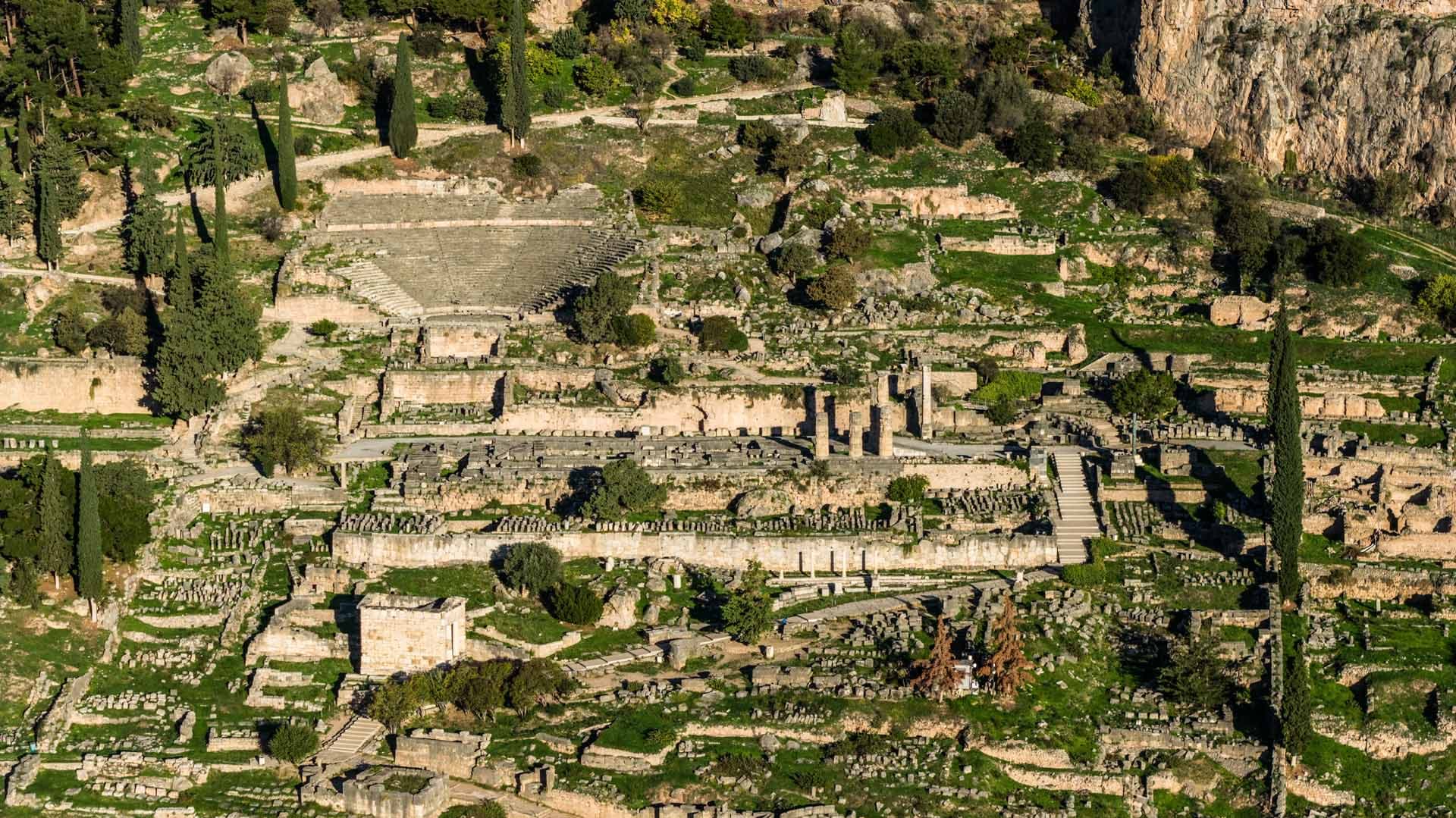
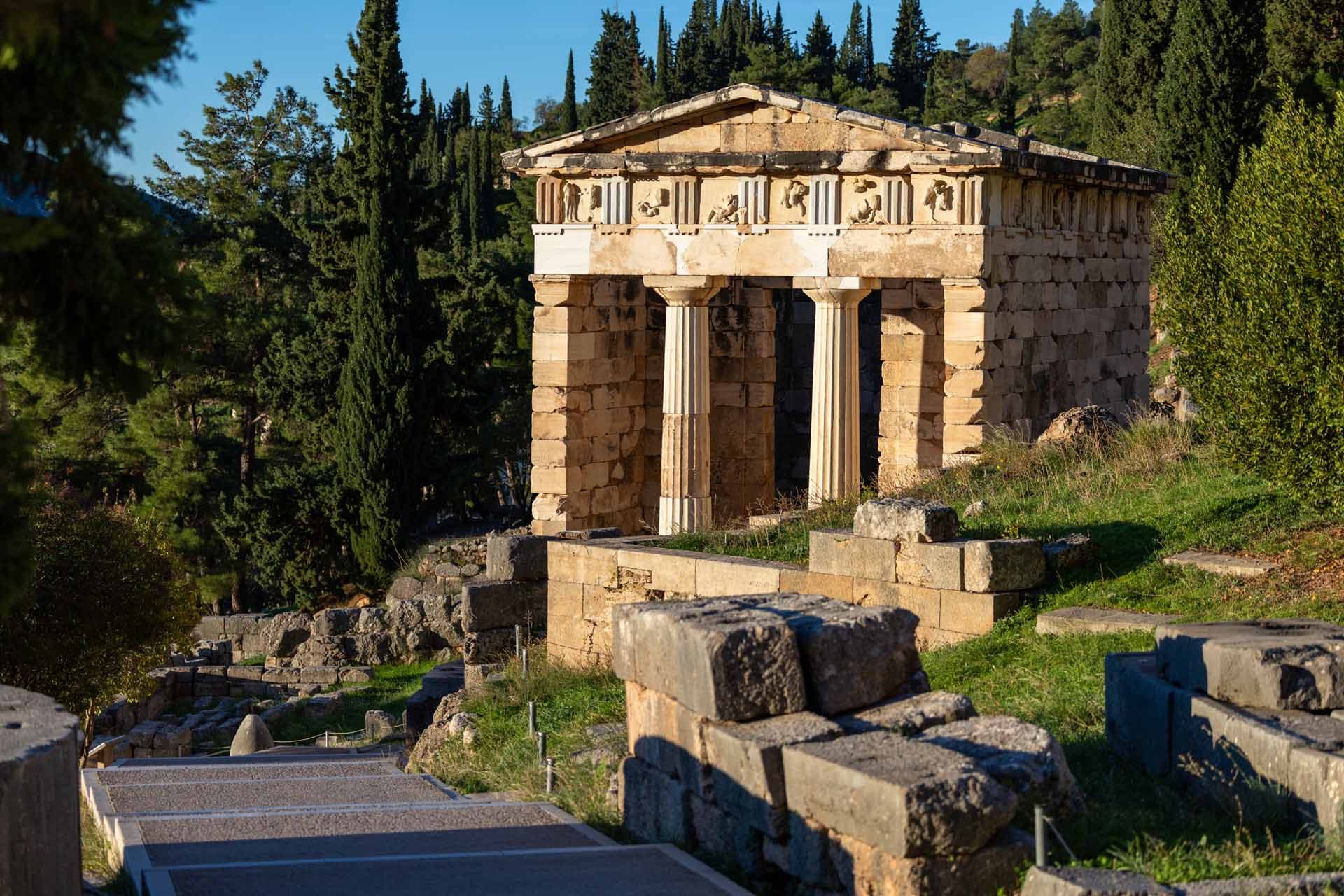
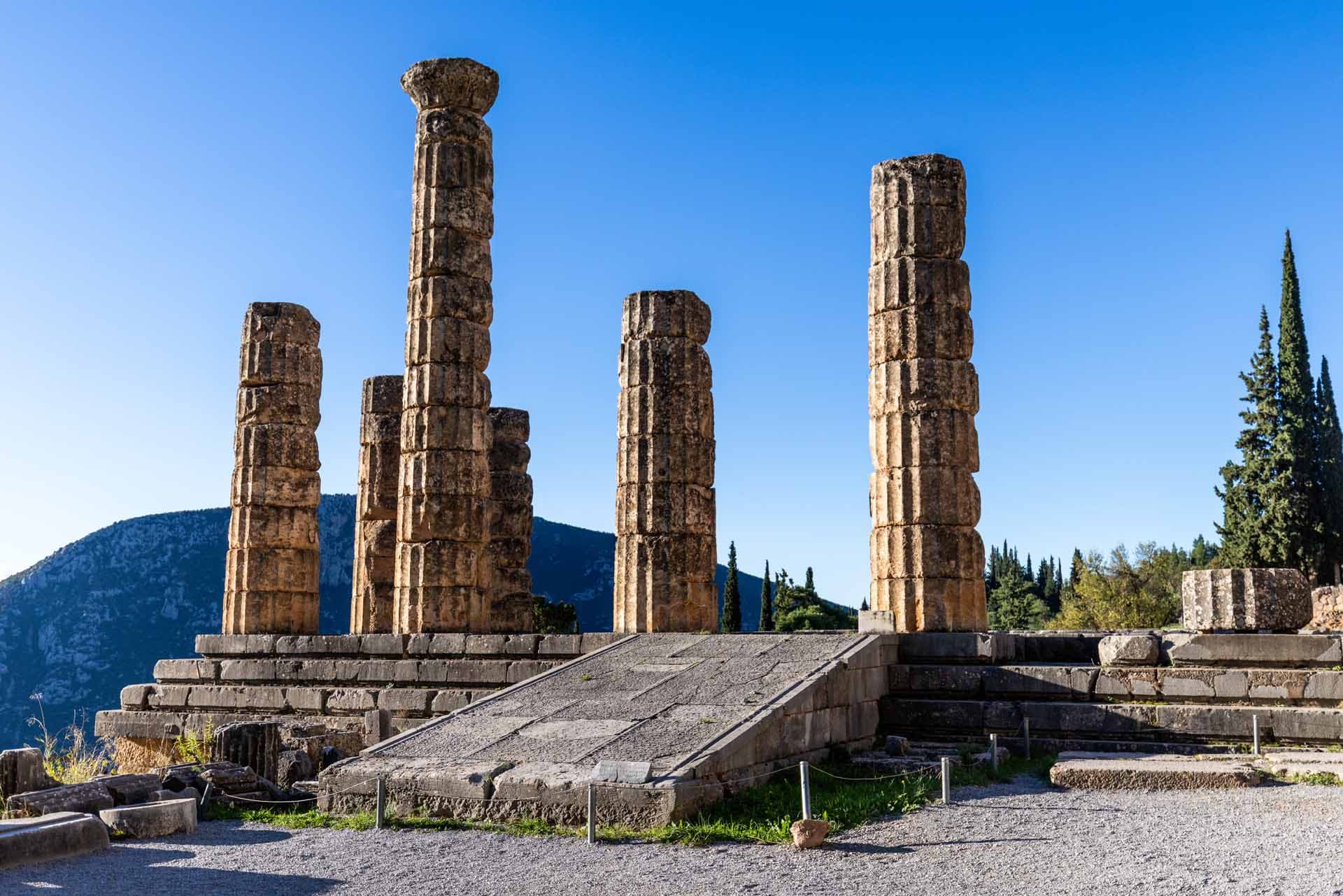
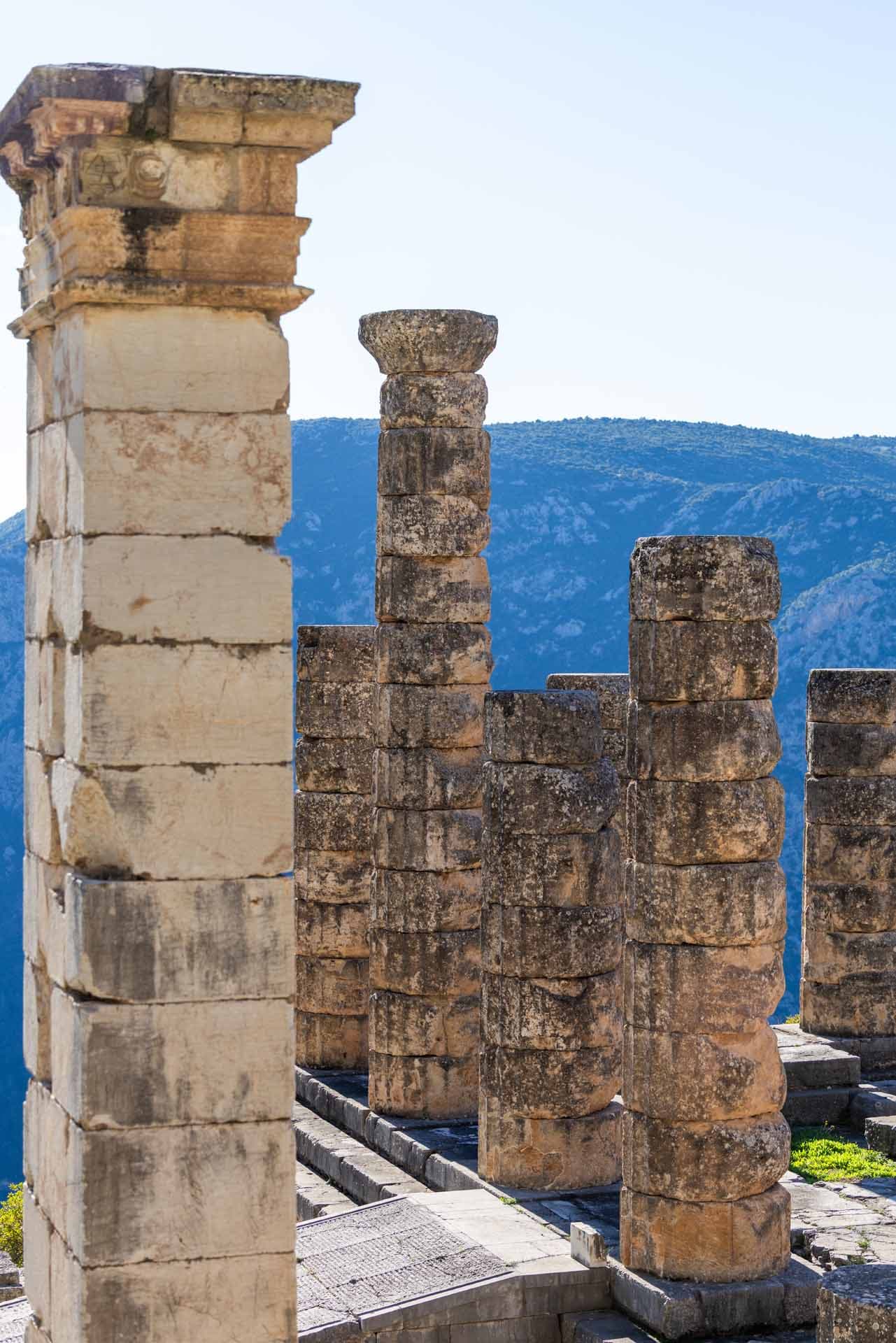
- The Sanctuary of Apollo: This is the heart of the site. The Sacred Way ascends amidst the treasuries (small buildings dedicated as offerings by various cities), the most impressive of which is the restored Treasury of the Athenians. At the centre stands the magnificent Temple of Apollo, which housed the adyton (inner sanctum) and the omphalos marble monument.
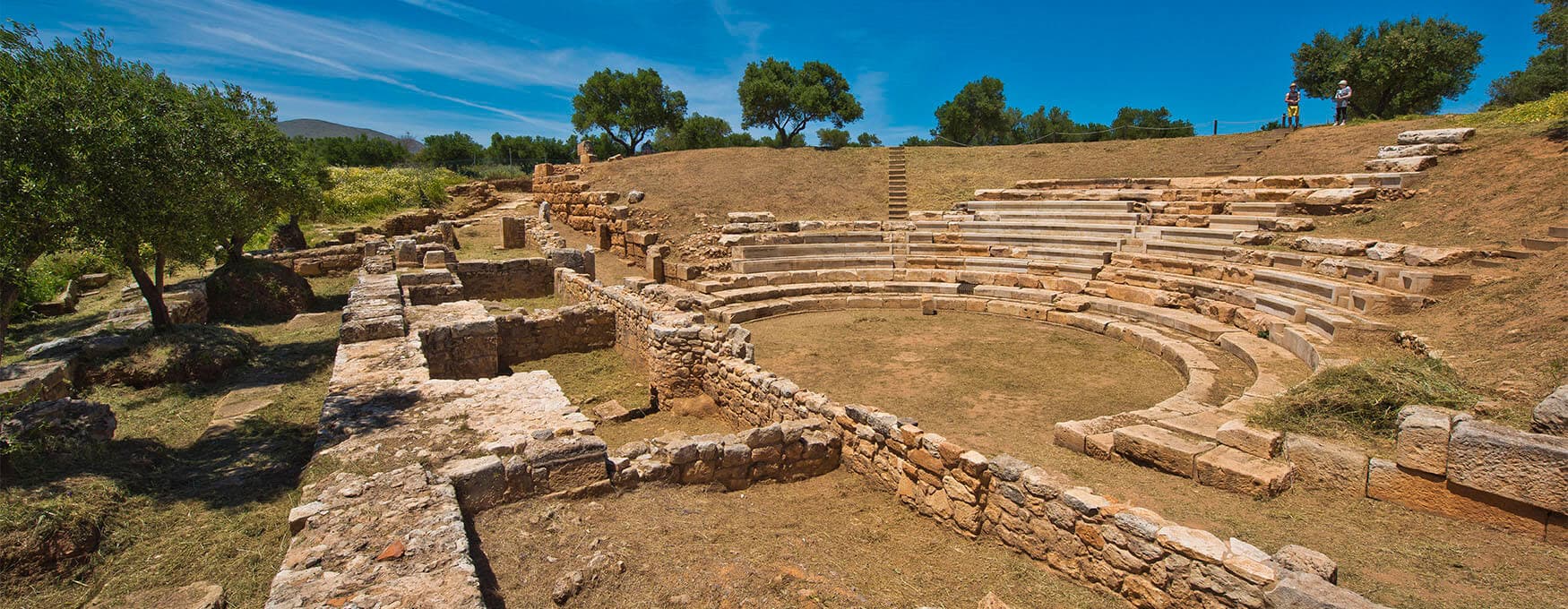
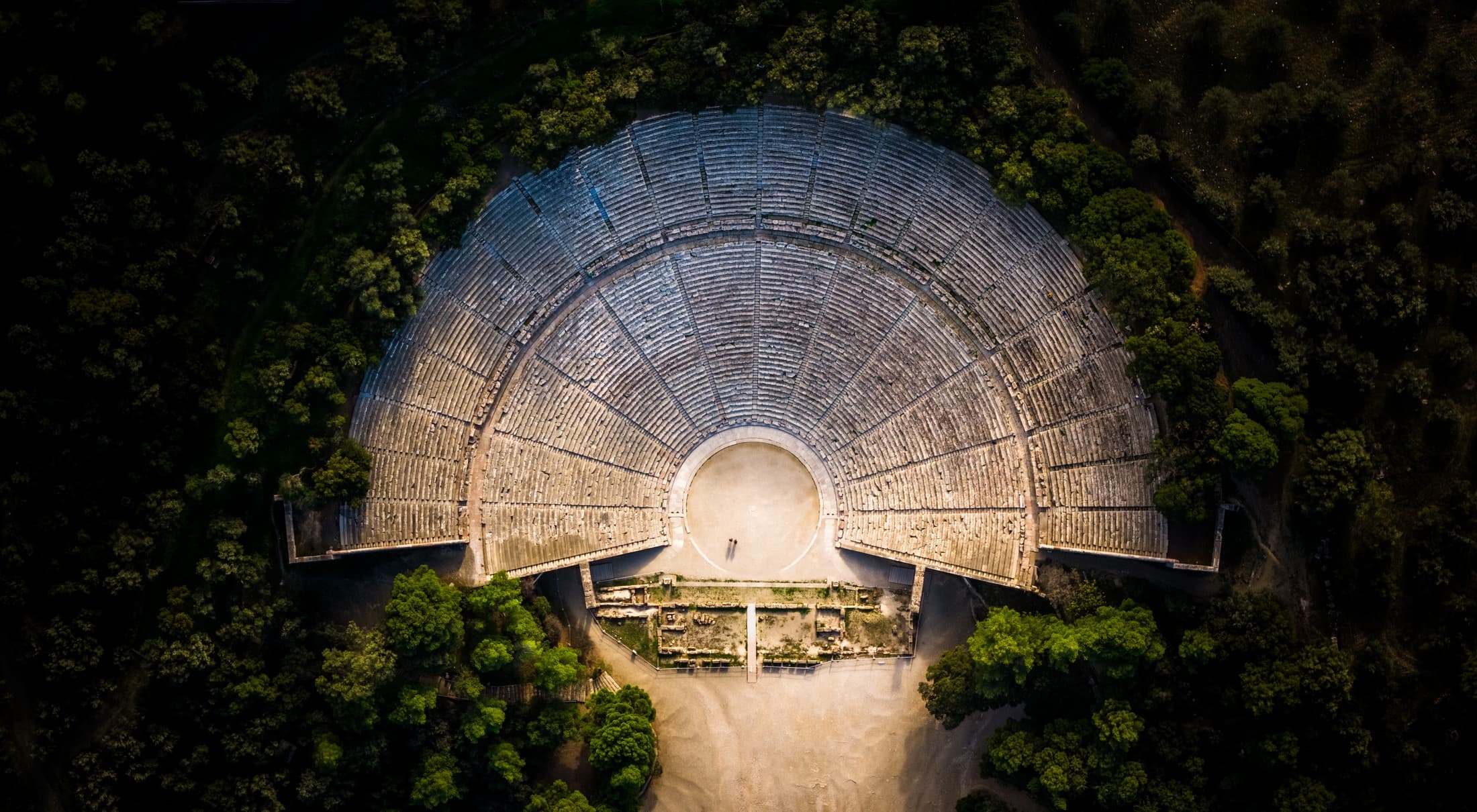
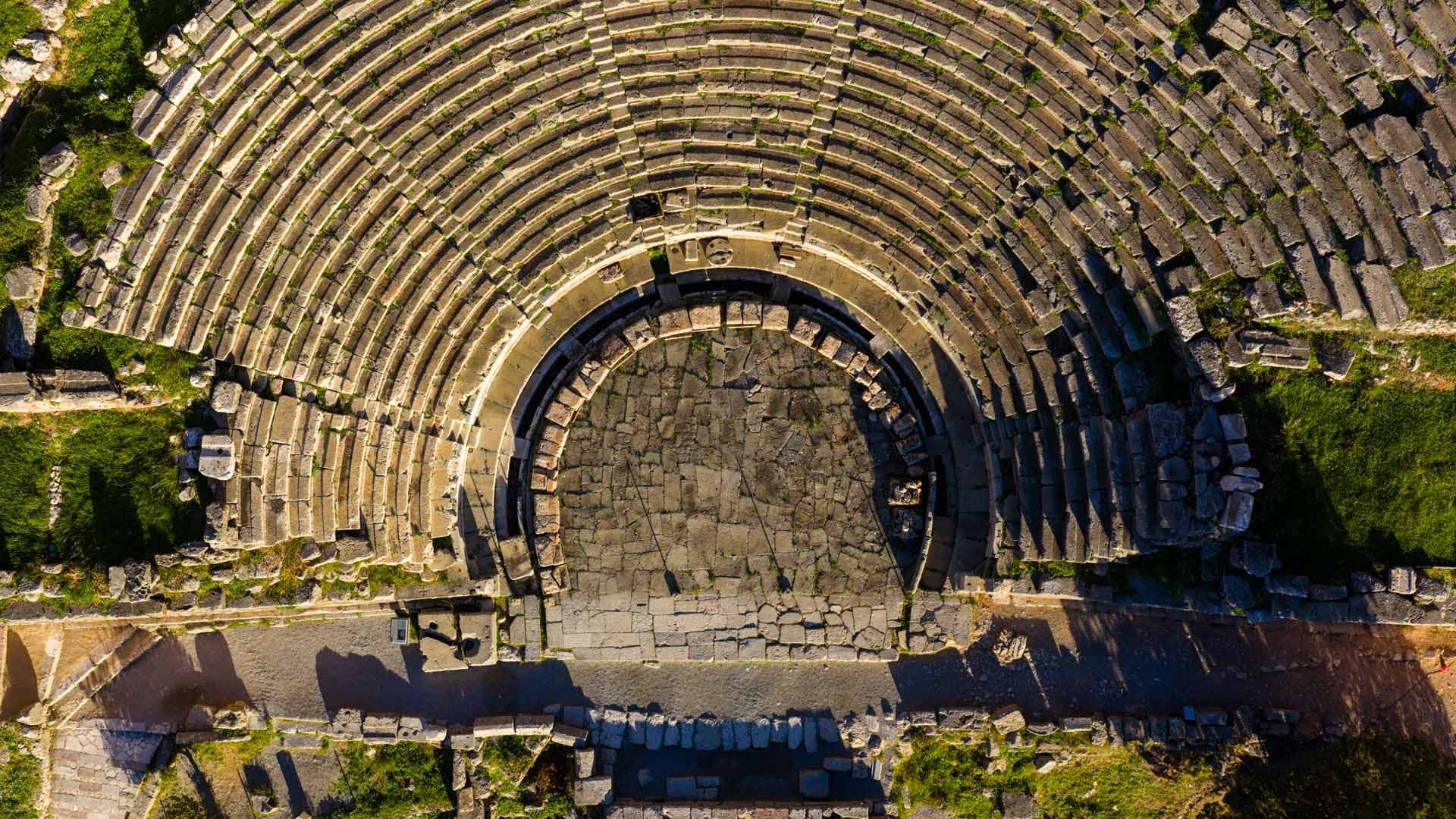
- Theatre and Stadium: Situated higher than the temple, the theatre hosted musical contests, while the stadium, perched atop the hill, was the venue for the athletic contests of the Pythian Games.
Delphi remains a global symbol of unity to this day. The efforts of Angelos and Eva Sikelianos to revive the Delphic Ideal in the 20th century confirmed the timeless spiritual radiance of this place, which continues to attract millions of visitors as a UNESCO World Heritage Site.