The Retreat of the Great Tragedian
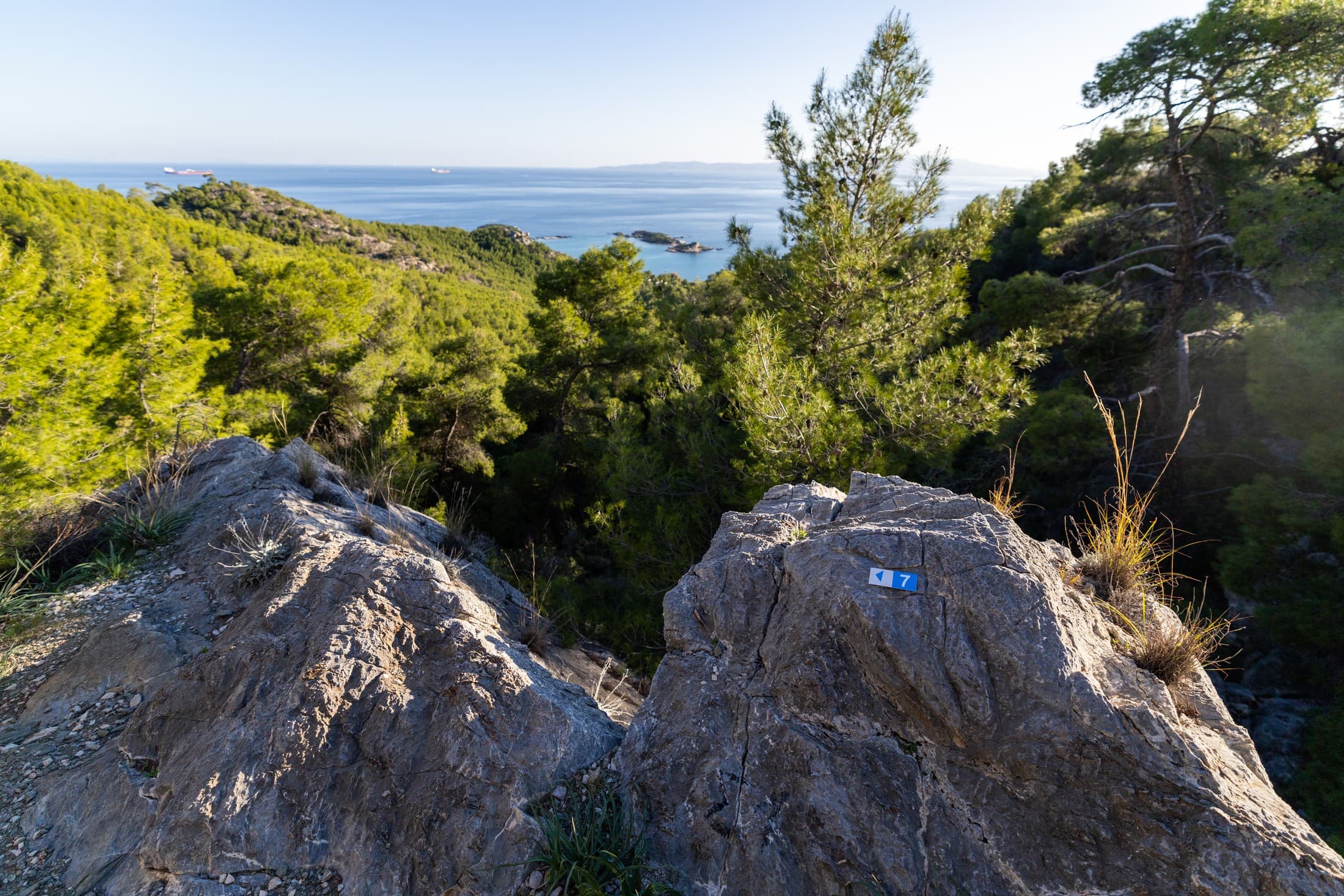
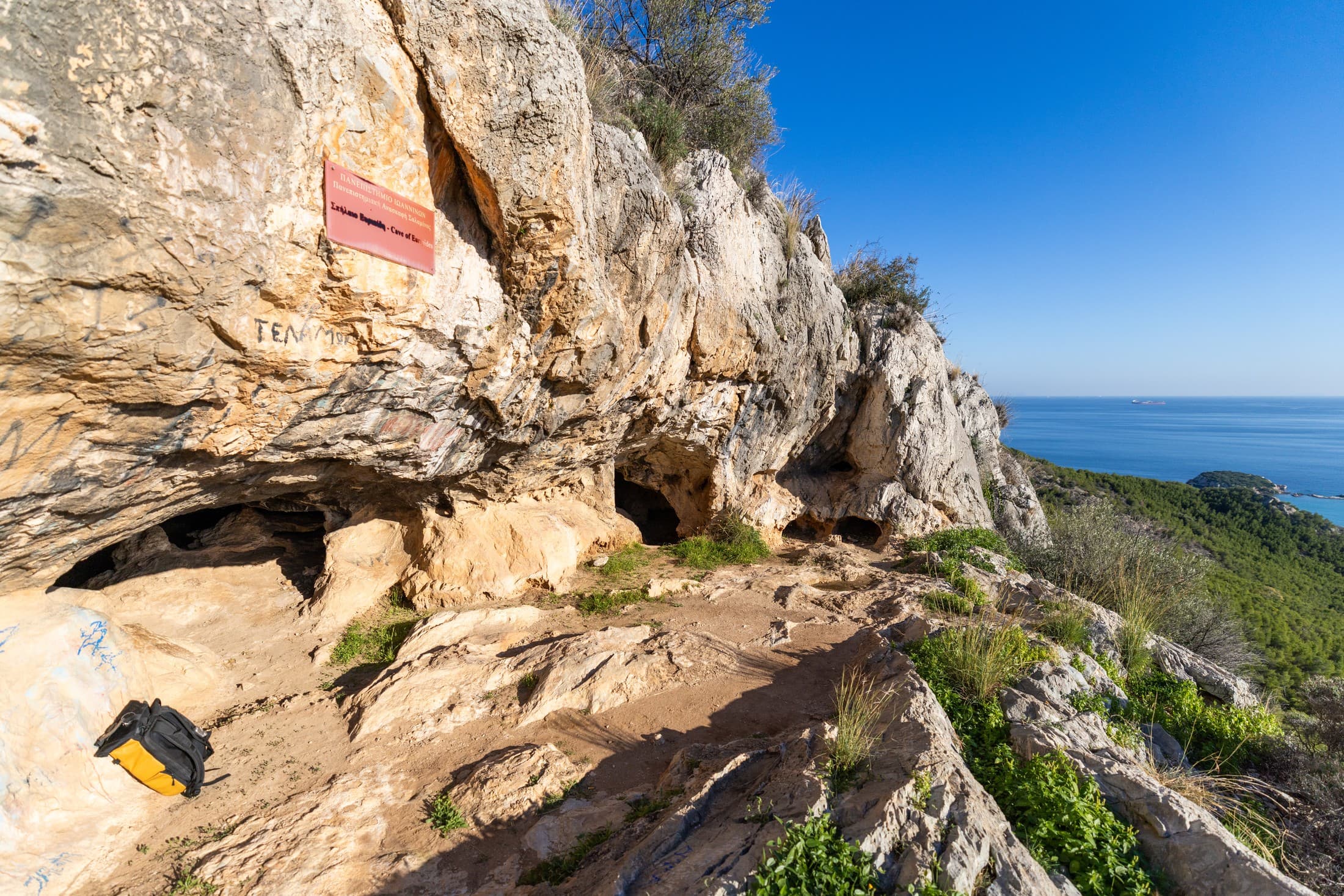
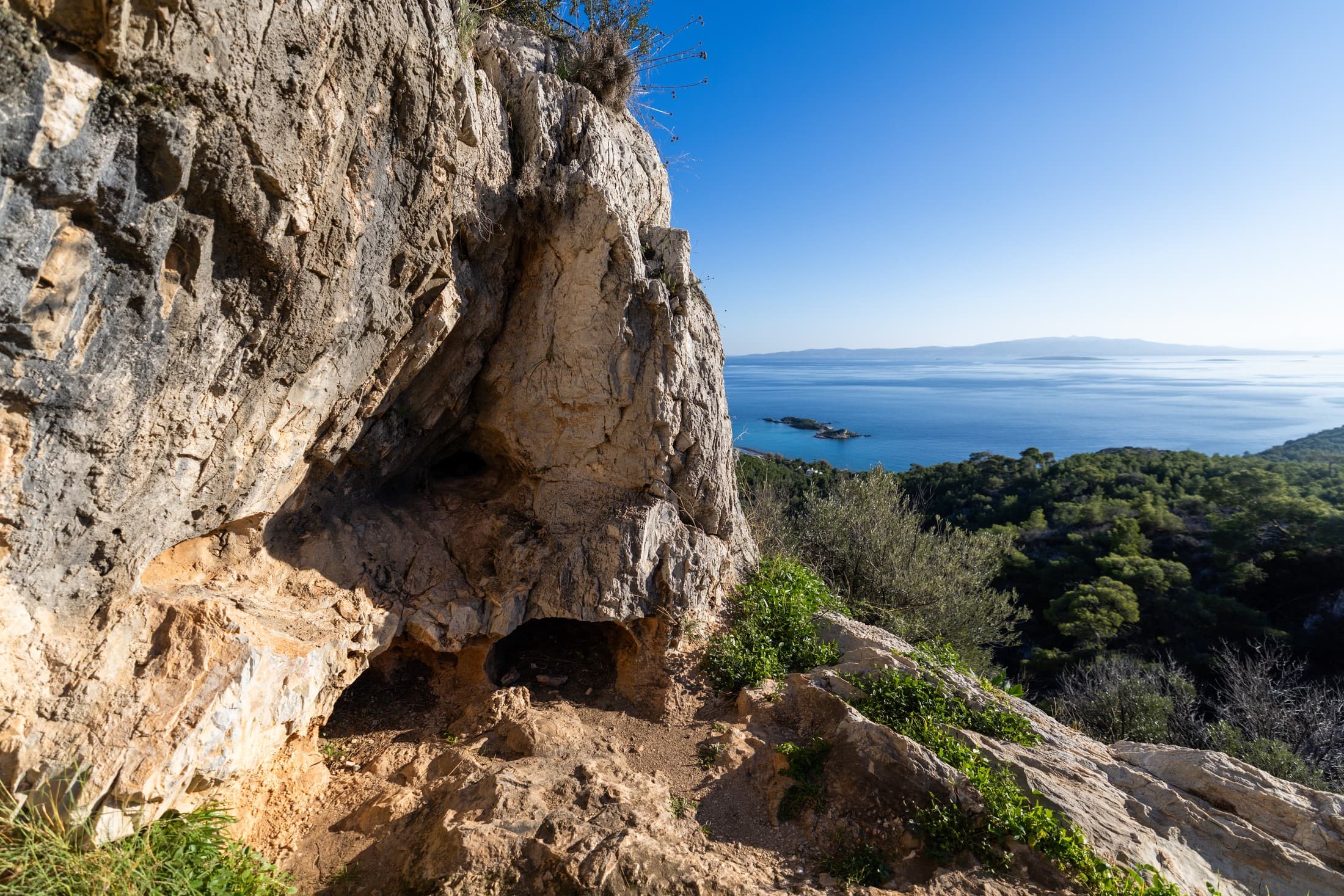
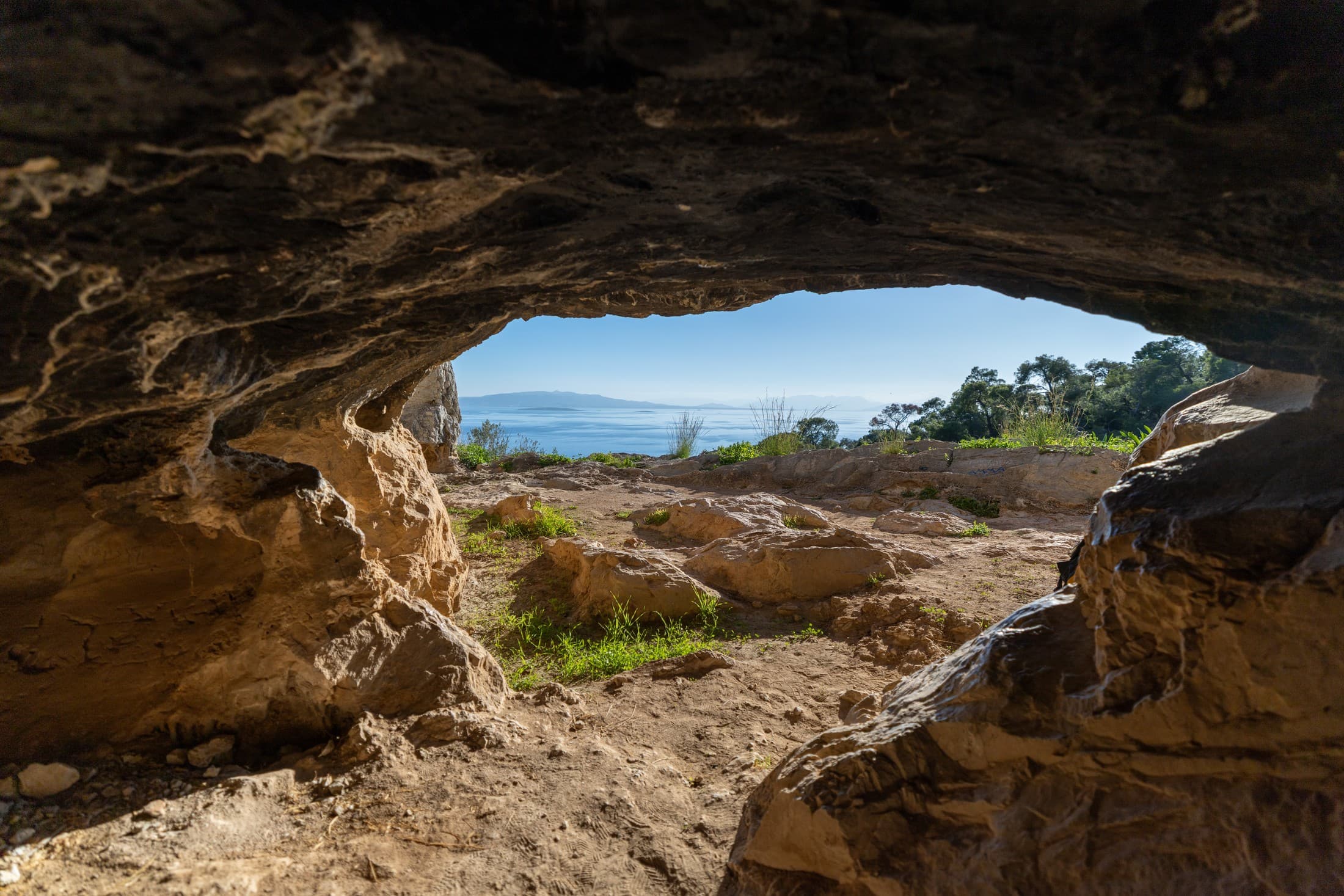
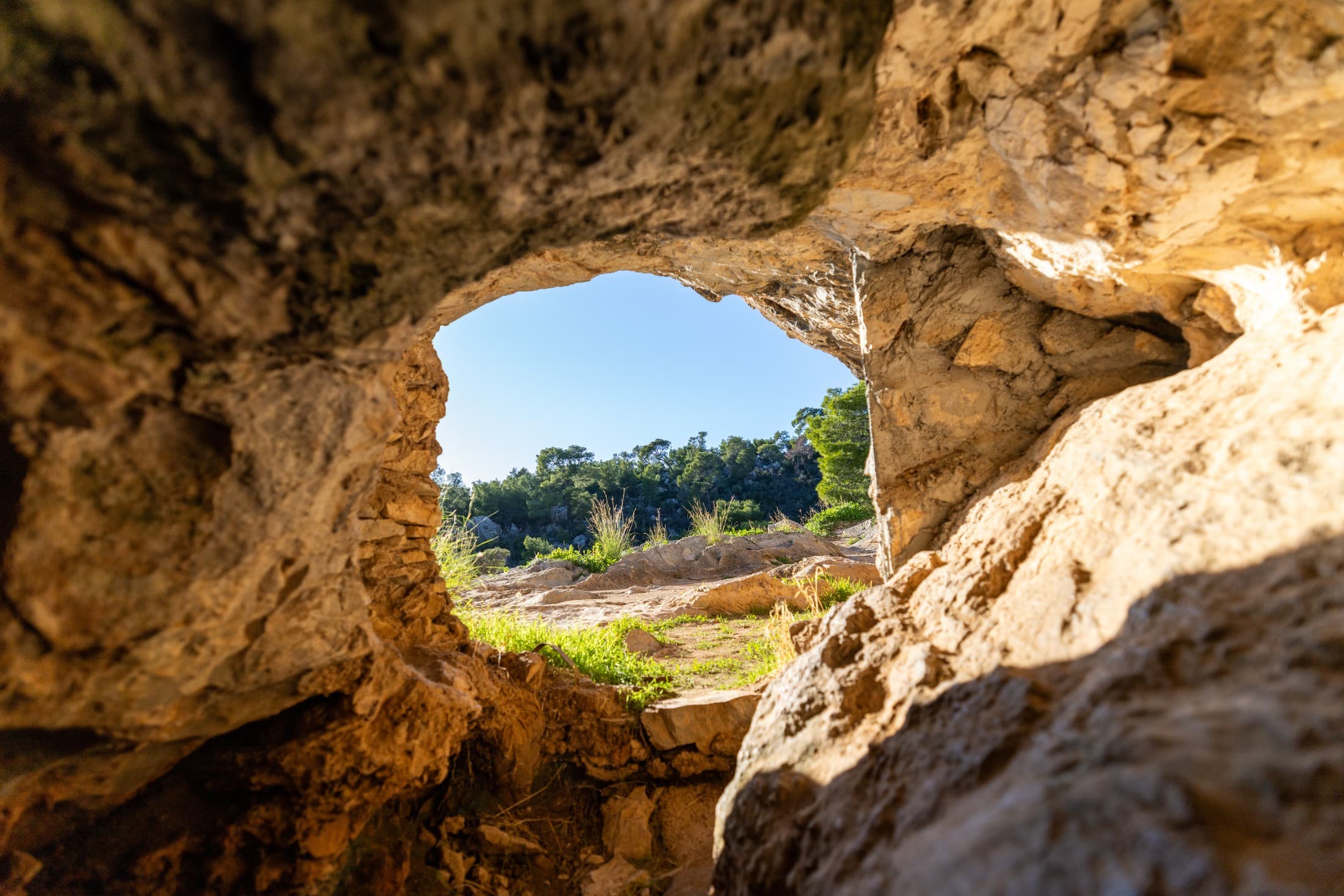
Hidden on the southern side of Salamina, above Peristeria Bay and offering panoramic views over the Saronic Gulf, Aegina, Methana, and Trizina, the Cave of Euripides transports visitors into the world of ancient Greek tragedy. According to ancient sources, the great tragedian would retreat here, to his secluded sanctuary, to reflect and compose his works.
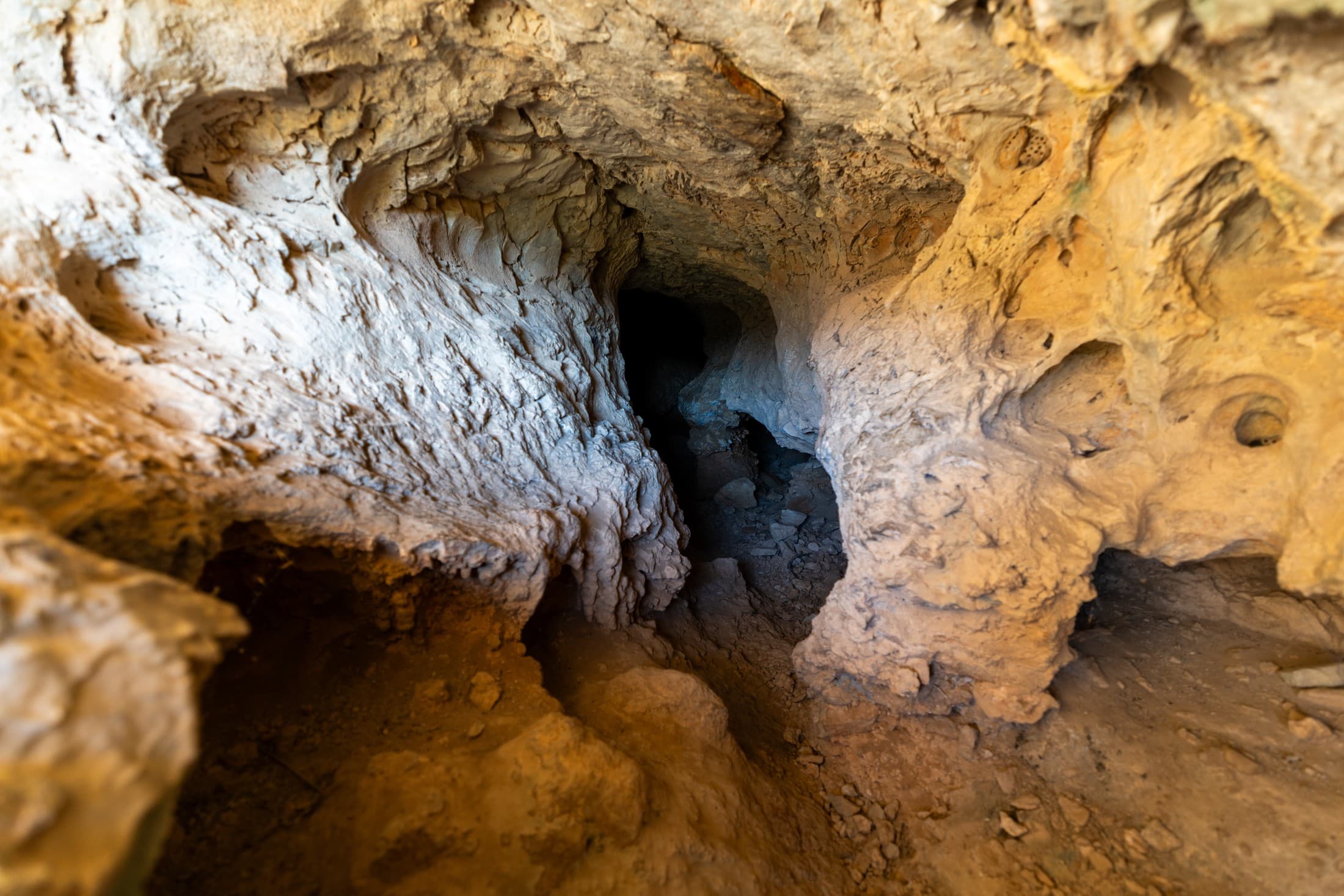
Access to the interior of the cave is not permitted; however, it is known to extend approximately 47 metres in length and to be divided by stalactite formations into ten small chambers. These are connected by narrow passages and low ceilings, creating an atmosphere of contemplation and mysticism. As early as the 2nd century AD, the Roman scholar Aulus Gellius recorded visiting a dark and eerie cave on Salamis where, according to tradition, Euripides wrote his tragedies.
Excavations carried out in the 1990s confirmed the cave’s continuous use over time, revealing finds from various historical periods, from the Neolithic era to the Roman period and the Frankish era. Among these are Neolithic stone tools made of flint and obsidian, a short Mycenaean bronze sword, a luxurious Roman skyphos decorated with relief Dionysian scenes, jewellery, pottery fragments, coins, and ritual objects.
Of particular interest is a fragment of a 5th-century BC vessel bearing the first letters of Euripides’ name inscribed in reverse.
Today, most of these artifacts are displayed at the Archaeological Museum of Salamina.
Access to the interior of the cave is not permitted; however, it is known to extend approximately 47 metres in length and to be divided by stalactite formations into ten small chambers. These are connected by narrow passages and low ceilings, creating an atmosphere of contemplation and mysticism. As early as the 2nd century AD, the Roman scholar Aulus Gellius recorded visiting a dark and eerie cave on Salamis where, according to tradition, Euripides wrote his tragedies.
Excavations carried out in the 1990s confirmed the cave’s continuous use over time, revealing finds from various historical periods, from the Neolithic era to the Roman period and the Frankish era. Among these are Neolithic stone tools made of flint and obsidian, a short Mycenaean bronze sword, a luxurious Roman skyphos decorated with relief Dionysian scenes, jewellery, pottery fragments, coins, and ritual objects.
Of particular interest is a fragment of a 5th-century BC vessel bearing the first letters of Euripides’ name inscribed in reverse.
Today, most of these artifacts are displayed at the Archaeological Museum of Salamina.