Two exceptional caves on Kasos
Amongst Kasos' most remarkable sights are two caves: Ellinokamara and the Selai or Stylokamara cave.
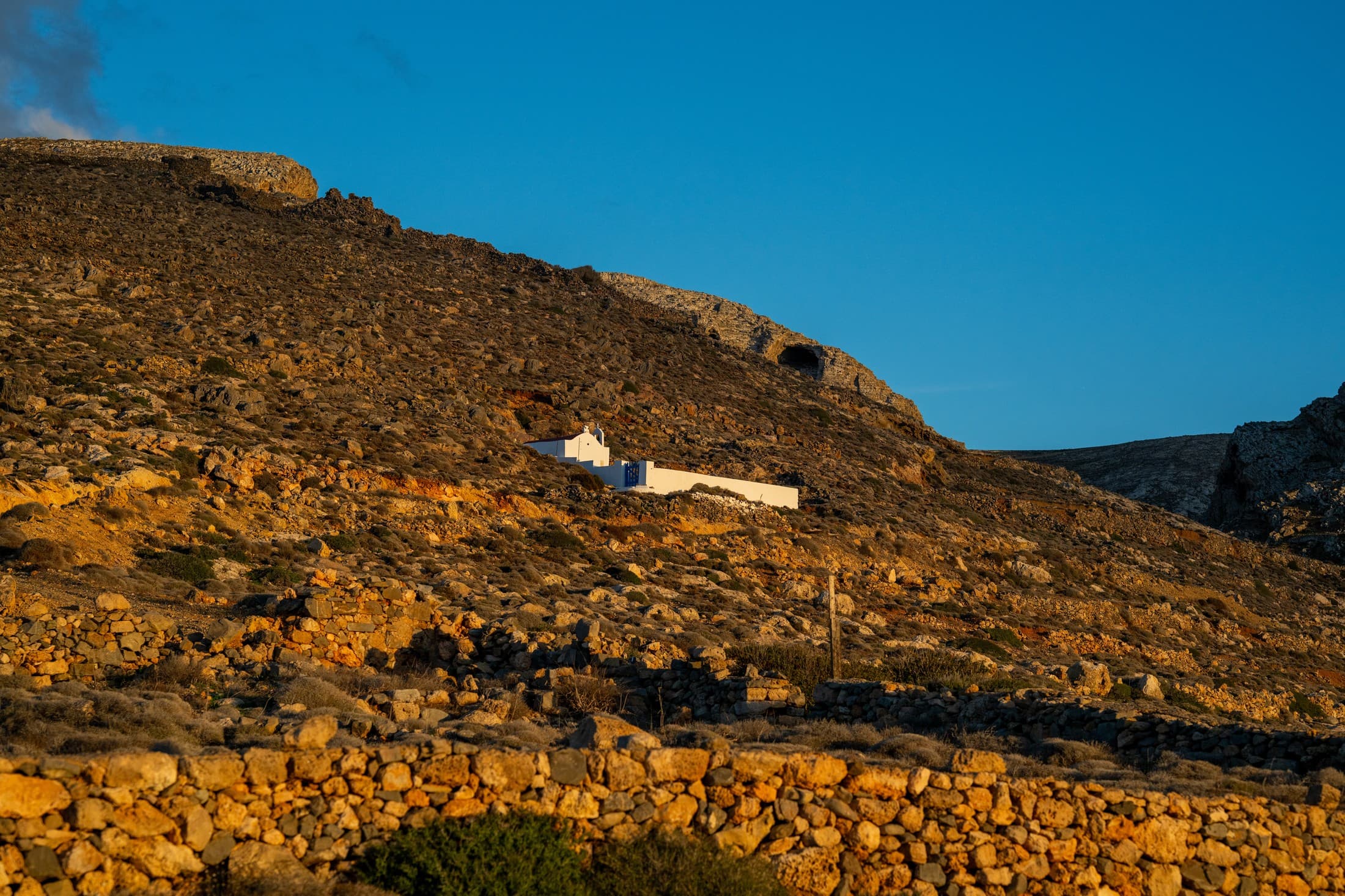
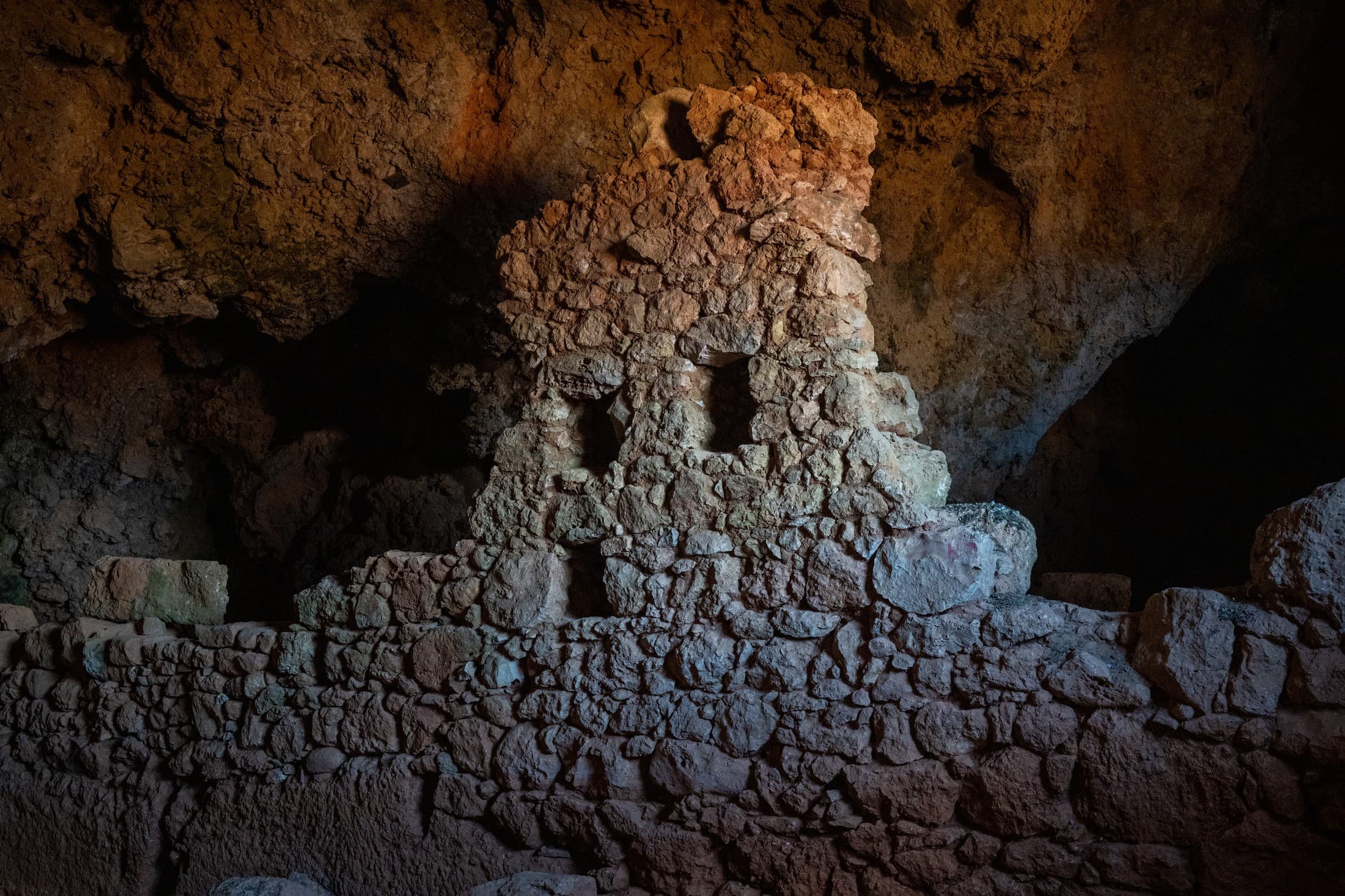
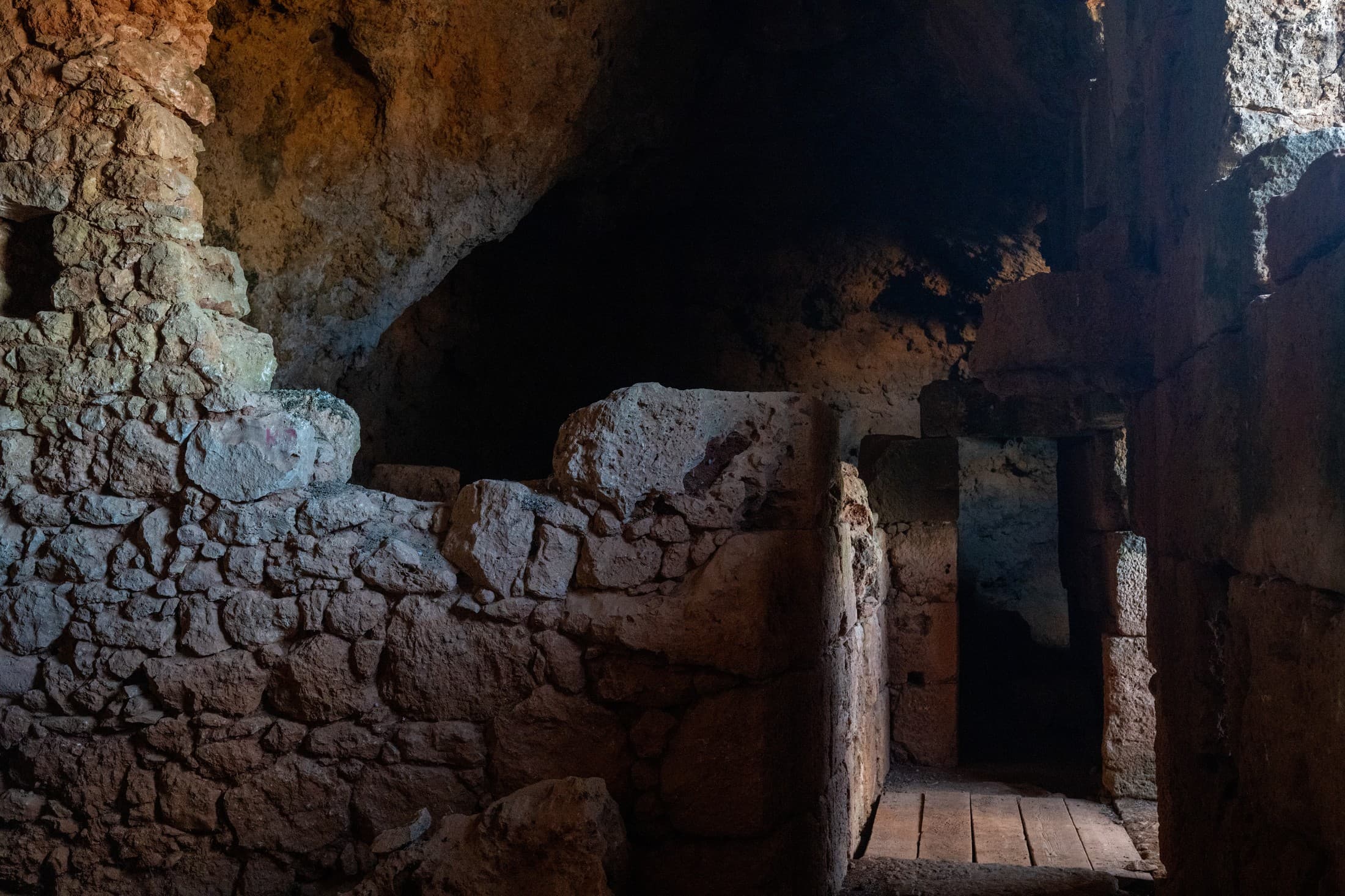
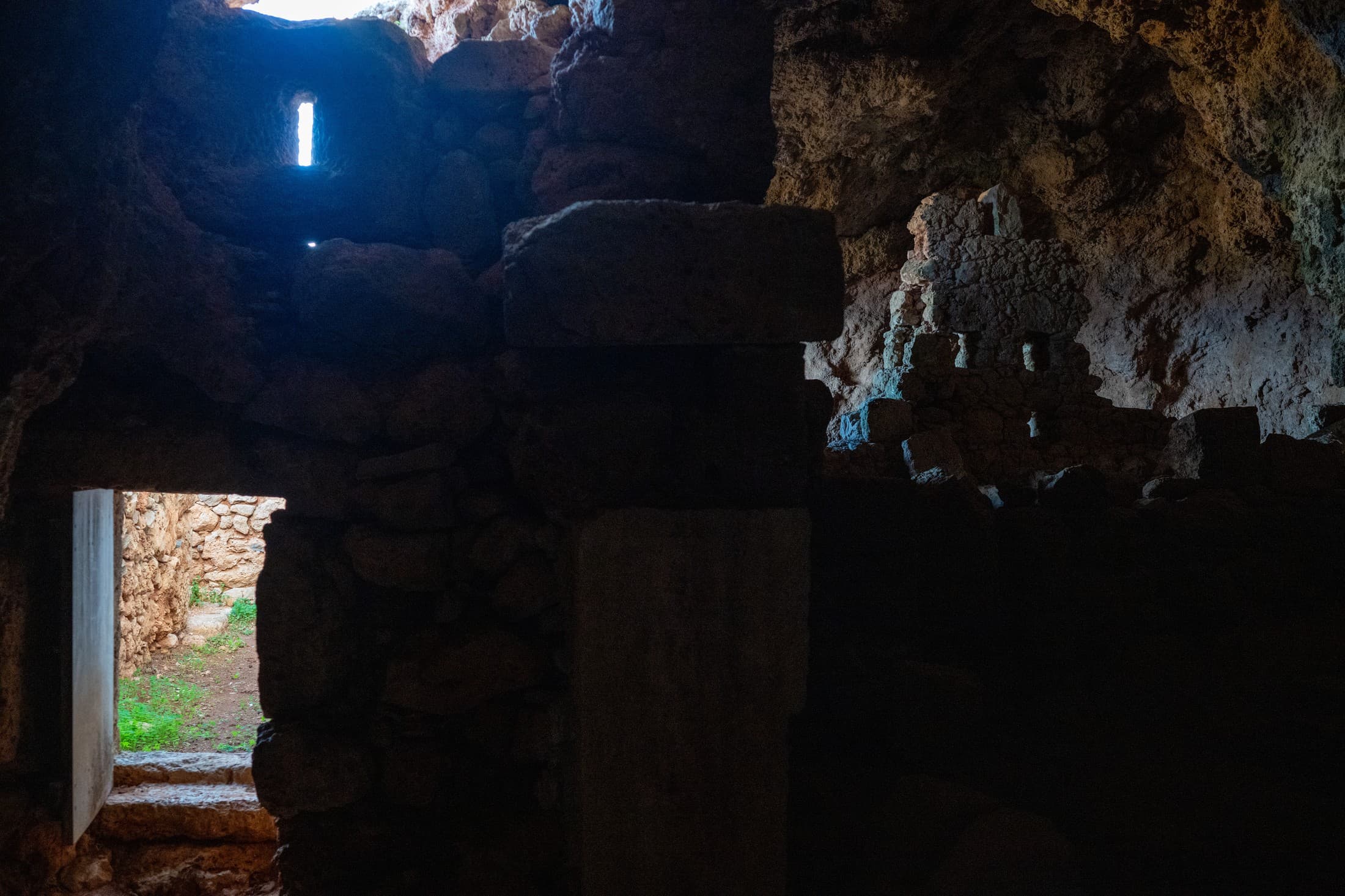
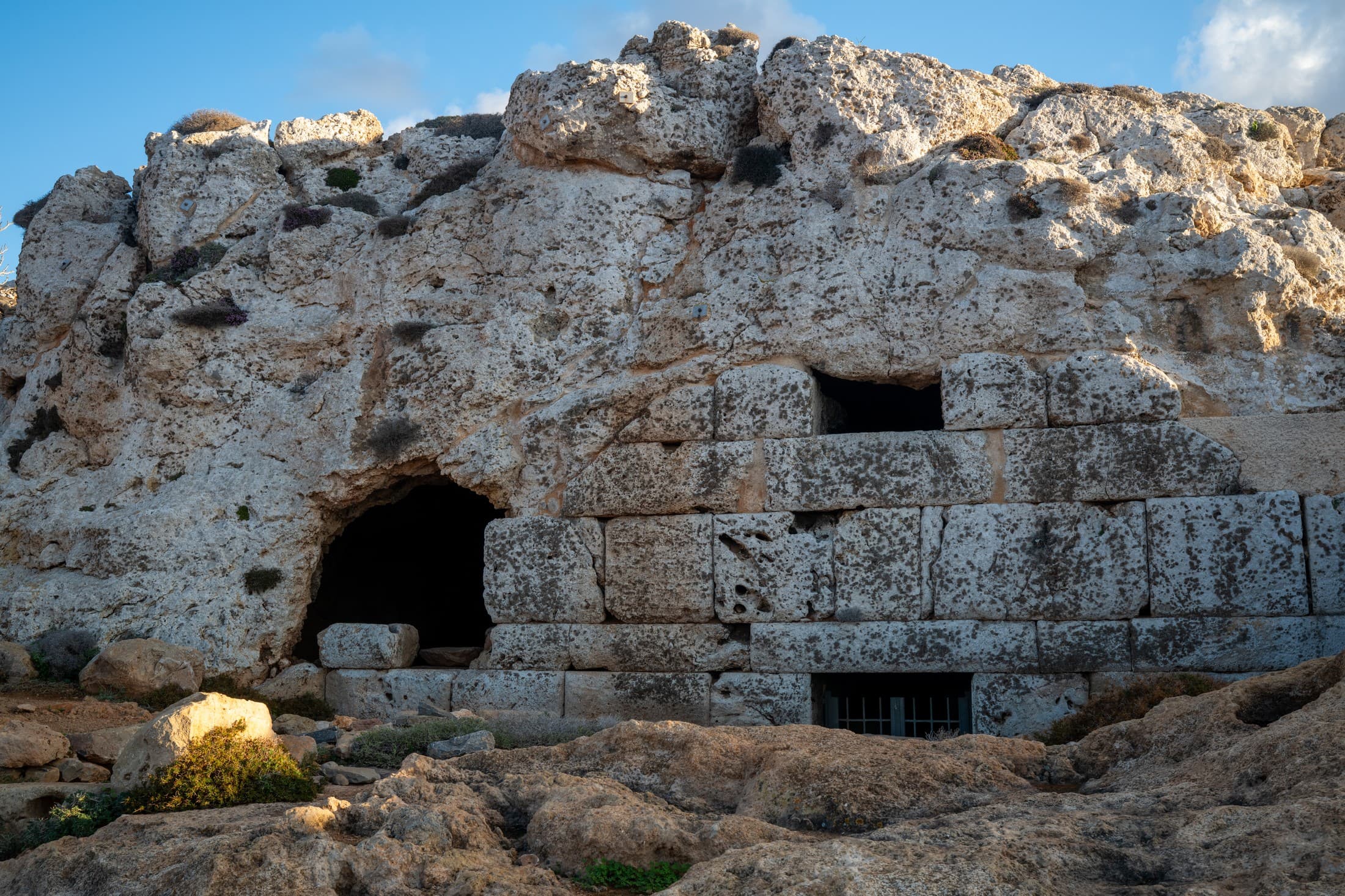
Ellinokamara is situated at an elevation of 125m near the hamlet of Agia Marina, west of the road to Paradeisi and Agiasma, past the church of Agios Fanourios. A gently sloping, paved path approximately 300m long provides easy access. The cave immediately captures the eye, as its natural opening was blocked in antiquity with a monumental wall of 41 large hewn stones — a unique archaeological feature in the Greek world. Excavations carried out between 1986 and 1990 within the cave revealed hearths with traces of fire, locations for large storage jars, niches probably for oil lamps, and numerous ceramic fragments dating from the 5th to the 3rd century BC. The finds indicate that the cave was used as a dwelling or refuge as early as the Bronze Age, and later possibly as a sanctuary, perhaps associated with water collection.
Just 2km south-west lies Selai cave, also known as Stylokamara. Access is by a rugged path, with an old lime kiln marking the entrance. The cave is approximately 30m deep and 8m wide. Inside, it boasts rich stalactite and stalagmite formations that often resemble natural columns or arches — hence its name (from stylos, meaning column, and kamara, meaning arch). From the cave entrance, unobstructed panoramic views extend towards Agios Konstantinos, Antiperatos, and the Armathia islets.
Ellinokamara is situated at an elevation of 125m near the hamlet of Agia Marina, west of the road to Paradeisi and Agiasma, past the church of Agios Fanourios. A gently sloping, paved path approximately 300m long provides easy access. The cave immediately captures the eye, as its natural opening was blocked in antiquity with a monumental wall of 41 large hewn stones — a unique archaeological feature in the Greek world. Excavations carried out between 1986 and 1990 within the cave revealed hearths with traces of fire, locations for large storage jars, niches probably for oil lamps, and numerous ceramic fragments dating from the 5th to the 3rd century BC. The finds indicate that the cave was used as a dwelling or refuge as early as the Bronze Age, and later possibly as a sanctuary, perhaps associated with water collection.
Just 2km south-west lies Selai cave, also known as Stylokamara. Access is by a rugged path, with an old lime kiln marking the entrance. The cave is approximately 30m deep and 8m wide. Inside, it boasts rich stalactite and stalagmite formations that often resemble natural columns or arches — hence its name (from stylos, meaning column, and kamara, meaning arch). From the cave entrance, unobstructed panoramic views extend towards Agios Konstantinos, Antiperatos, and the Armathia islets.