The medieval neighbourhood that became the soul of the Hora
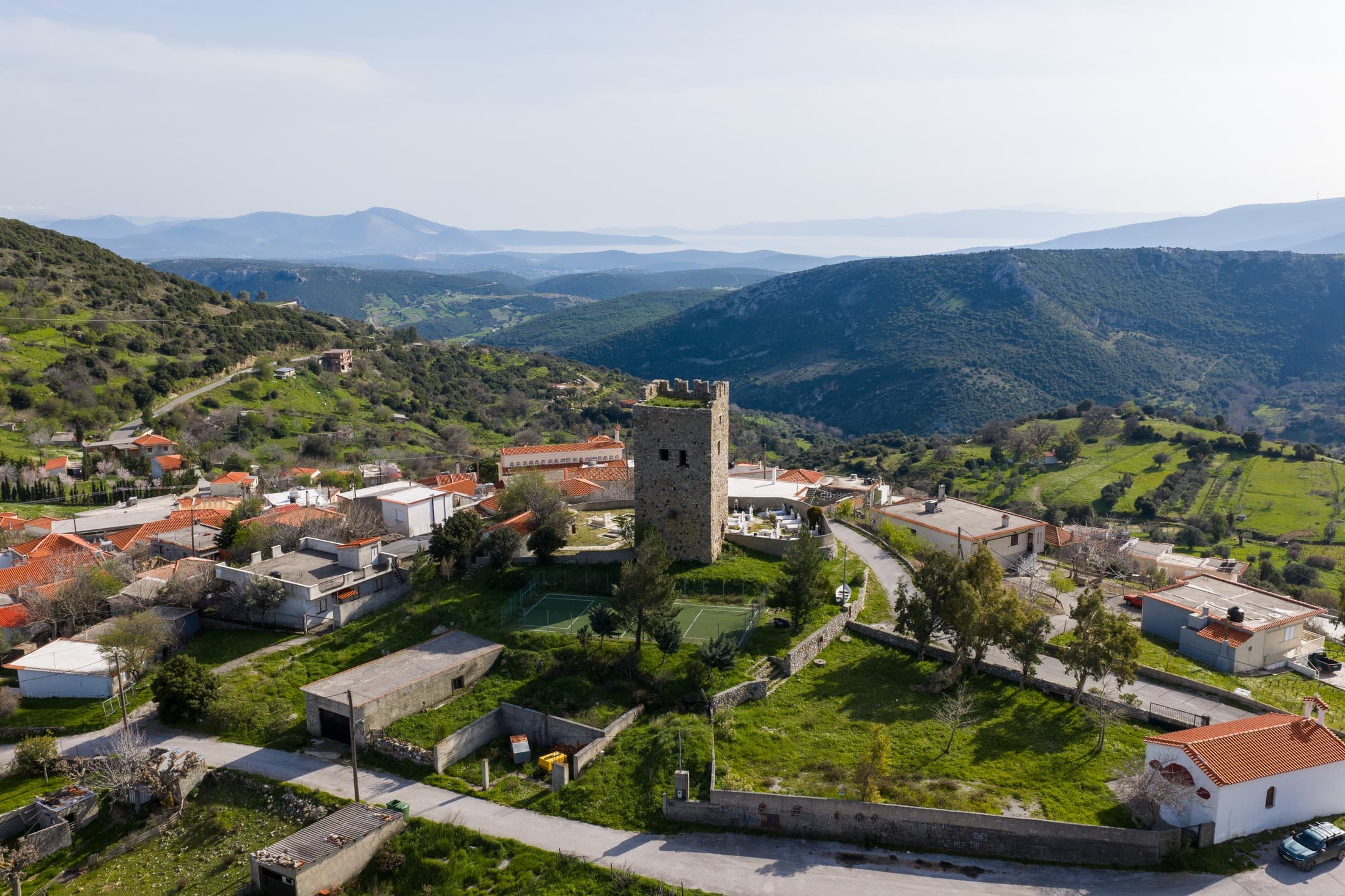
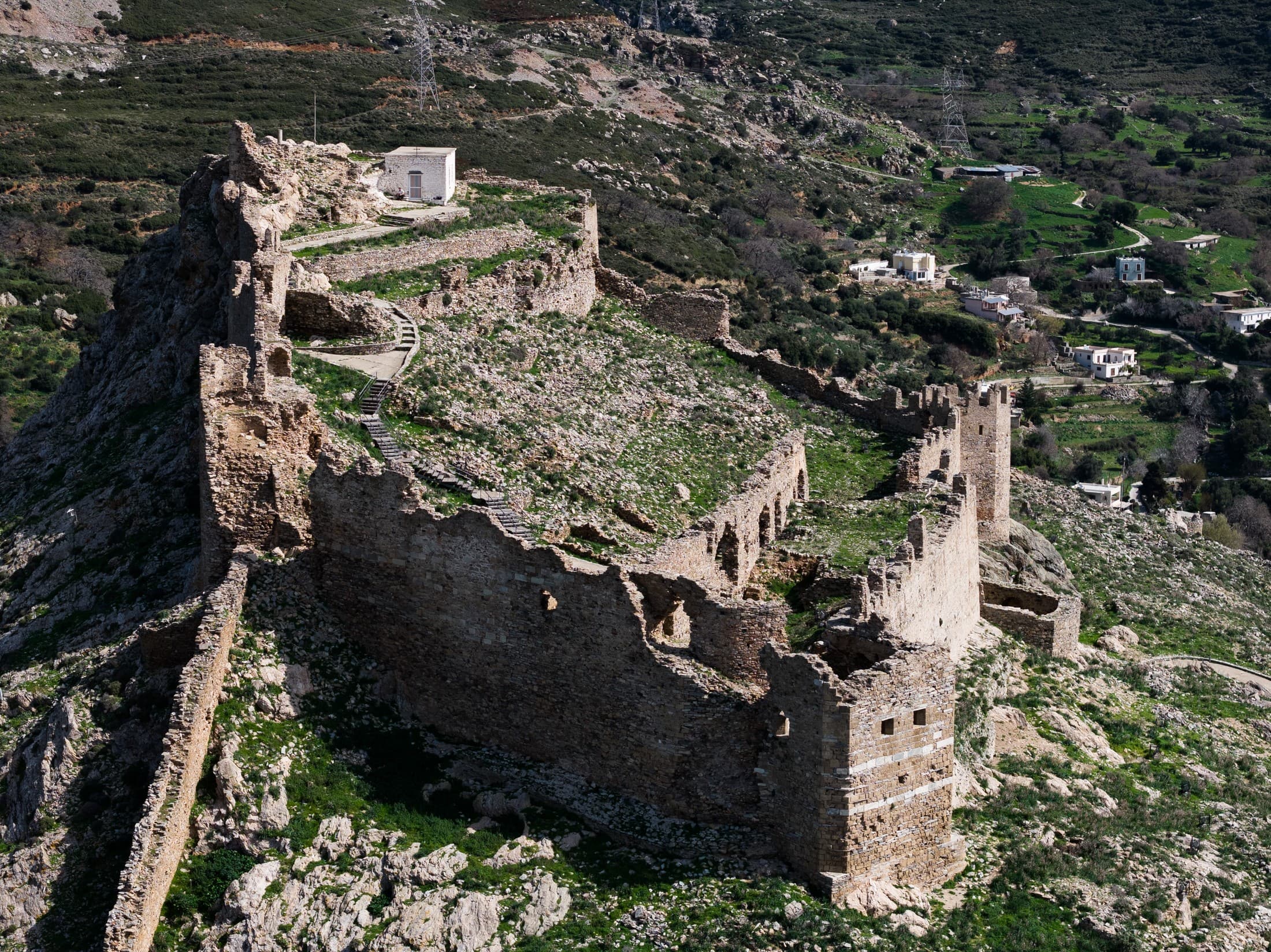
At the heart of the Hora lies a living medieval settlement: Kastro (Castle), one of the finest and best-preserved examples of medieval residential architecture in the Cyclades. It was built around AD 1440 by the Venetian nobleman Giovanni Loredano, following his marriage to Maria Sommaripa, with the purpose of protecting the inhabitants from the frequent pirate raids that plagued the Aegean Sea at the time.
Unlike other island fortresses, the Castle of Antiparos was not a military stronghold but a fortified hamlet. The houses were built side by side to form a square perimeter, with a shared inner courtyard and a central tower in the middle, which served as an observatory and a final refuge in case of attack. Originally, it comprised 24 two-storey houses built from volcanic stone and lime, with small windows for defensive purposes and wooden ladders connecting the storeys.
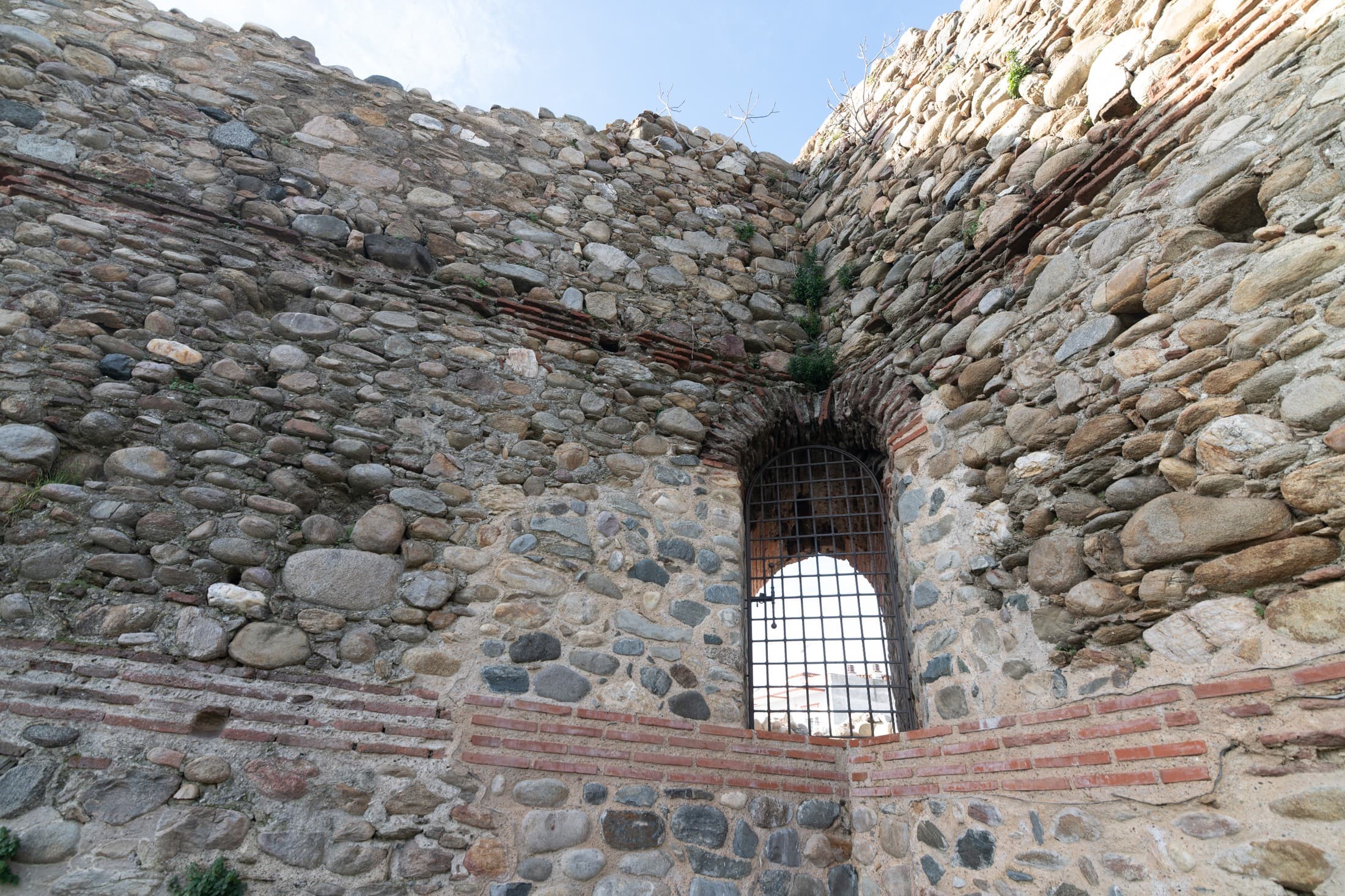
The sole entrance to the complex, with its characteristic Gothic arch, is located in the southern section and survives to this day. The narrow cobbled streets leading inside create a small labyrinth where traces of the original 15th-century structure can be discerned: the vaults, the stone-built arches, the wooden beams, and the inner courtyards.
Over the centuries, the Castle has evolved into the core of the present-day Hora. The hamlet remains inhabited, so it is suggested that you wander through with respect, while shops, cafés, and small galleries have developed around it, breathing life into the historical surroundings. The monument bears silent witness to an era where the fear of pirates coexisted with the community's need for security and cohesion.
Wander through the Castle early in the morning or just before sunset to see how the light paints the whitewashed walls. In the Hora square, try some local wine or a traditional fig preserve before continuing towards the harbour or the Cave of Saint John Spiliotis.
Unlike other island fortresses, the Castle of Antiparos was not a military stronghold but a fortified hamlet. The houses were built side by side to form a square perimeter, with a shared inner courtyard and a central tower in the middle, which served as an observatory and a final refuge in case of attack. Originally, it comprised 24 two-storey houses built from volcanic stone and lime, with small windows for defensive purposes and wooden ladders connecting the storeys.
The sole entrance to the complex, with its characteristic Gothic arch, is located in the southern section and survives to this day. The narrow cobbled streets leading inside create a small labyrinth where traces of the original 15th-century structure can be discerned: the vaults, the stone-built arches, the wooden beams, and the inner courtyards.
Over the centuries, the Castle has evolved into the core of the present-day Hora. The hamlet remains inhabited, so it is suggested that you wander through with respect, while shops, cafés, and small galleries have developed around it, breathing life into the historical surroundings. The monument bears silent witness to an era where the fear of pirates coexisted with the community's need for security and cohesion.
Wander through the Castle early in the morning or just before sunset to see how the light paints the whitewashed walls. In the Hora square, try some local wine or a traditional fig preserve before continuing towards the harbour or the Cave of Saint John Spiliotis.