A medieval settlement in the Aegean
For the travel writer and poet Lawrence Durrell, Patmos was ‘more an idea than a place, a symbol rather than an island’. The Briton urged his readers to follow the path leading to the Monastery of Saint John the Theologian (11th century AD), to slip into the library hidden in its depths and discover its treasures: more than 1,200 manuscripts and 3,000 early printed books—precious testimonies of Byzantine and post-Byzantine literature. He then asked them to cast their gaze across the horizon.
Follow his advice and then wander down to the Historical Centre of Chora, which together with the Monastery of Saint John the Theologian and the Cave of the Apocalypse is a UNESCO World Heritage Site. The settlement developed around the fortified monastery founded in 1088 by Saint Christodoulos. The first houses were built alongside the Monastery, which offered protection during an era of frequent pirate raids in the Aegean.
As you walk, you will see that Chora evolved over time into a unique blend of architectural tradition, influenced by Cretan and Constantinopolitan settlers and master builders from Asia Minor. Traverse narrow cobbled alleys and archways leading to small squares or quiet courtyards with whitewashed houses. You will see images reminiscent of the Cycladic aesthetic, yet bearing a strong medieval character.
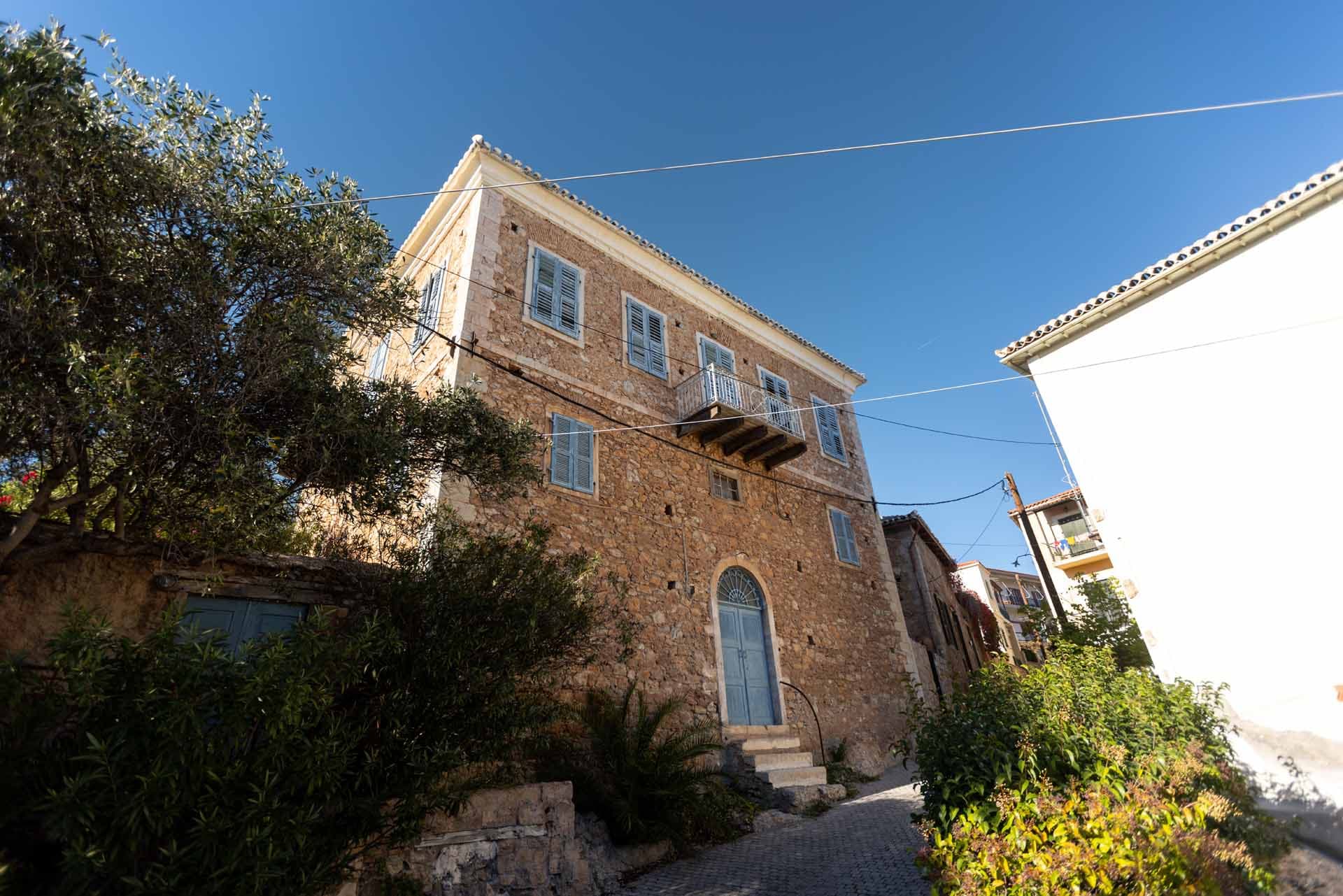
From the 16th to the 18th century, when Patmos experienced an economic boom due to trade and shipping, Chora was enriched with the mansions of captains and wealthy families, featuring high stone walls, heavy wooden doors, and internal courtyards. One of these is the 17th-century Simantiri Mansion, with its unique furniture and embroidery. Visit also the Nikolaidi Mansion to see how the people of Patmos lived in the past, with rainwater cisterns, a kitchen with its original oven, a private chapel, and the ambataros—a wooden storage space decorated with folk art imagery.
Follow his advice and then wander down to the Historical Centre of Chora, which together with the Monastery of Saint John the Theologian and the Cave of the Apocalypse is a UNESCO World Heritage Site. The settlement developed around the fortified monastery founded in 1088 by Saint Christodoulos. The first houses were built alongside the Monastery, which offered protection during an era of frequent pirate raids in the Aegean.
As you walk, you will see that Chora evolved over time into a unique blend of architectural tradition, influenced by Cretan and Constantinopolitan settlers and master builders from Asia Minor. Traverse narrow cobbled alleys and archways leading to small squares or quiet courtyards with whitewashed houses. You will see images reminiscent of the Cycladic aesthetic, yet bearing a strong medieval character.
From the 16th to the 18th century, when Patmos experienced an economic boom due to trade and shipping, Chora was enriched with the mansions of captains and wealthy families, featuring high stone walls, heavy wooden doors, and internal courtyards. One of these is the 17th-century Simantiri Mansion, with its unique furniture and embroidery. Visit also the Nikolaidi Mansion to see how the people of Patmos lived in the past, with rainwater cisterns, a kitchen with its original oven, a private chapel, and the ambataros—a wooden storage space decorated with folk art imagery.