Music, song, and shared heritage at the island's panigyria
The unique geography of the hamlet of Olympos, in northern Karpathos, and its long isolation from the rest of the island —largely maintained until the 20th century— allowed the community to form and preserve its own identity and traditions. Among these is the famous Olympitiko Glenti (Olympos Feast), a custom inscribed on the National Inventory of Intangible Cultural Heritage of Greece.
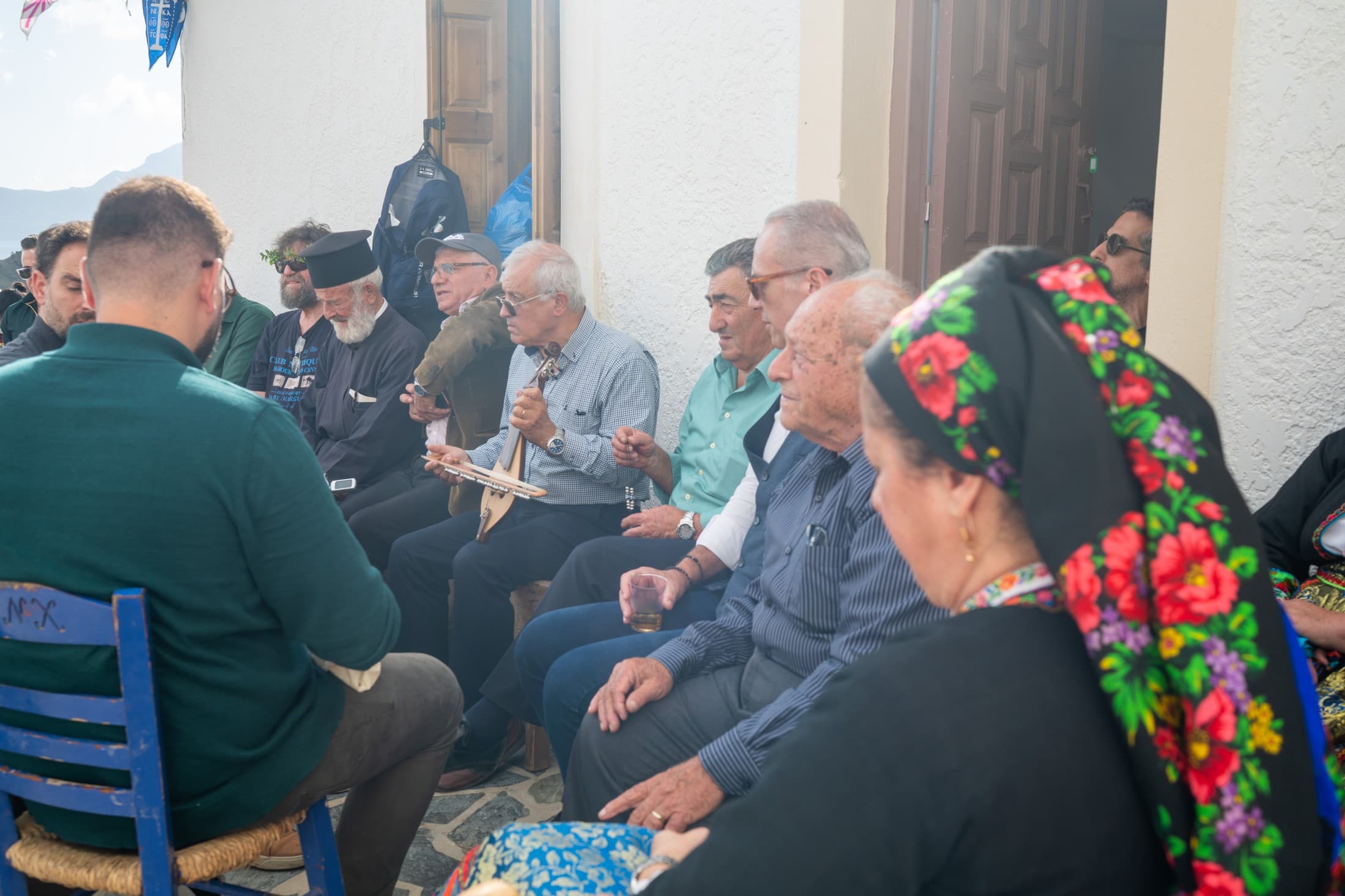
It is organised around a small male parea (gathering) of revellers who are intimately familiar with the unwritten rules of the ritual. At the centre are the instrument players, with lyres, lutes and bagpipes, while seated around them are the singers and the revellers. Women and other participants stand around the periphery.
The revelry commences as the company gathers around the musicians, the singing beginning, often with a traditional song. A musical and poetic dialogue then develops between the revellers through various types of songs, such as the so-called syrmatika and improvised mantinades (rhyming couplets) in fifteen-syllable verse.
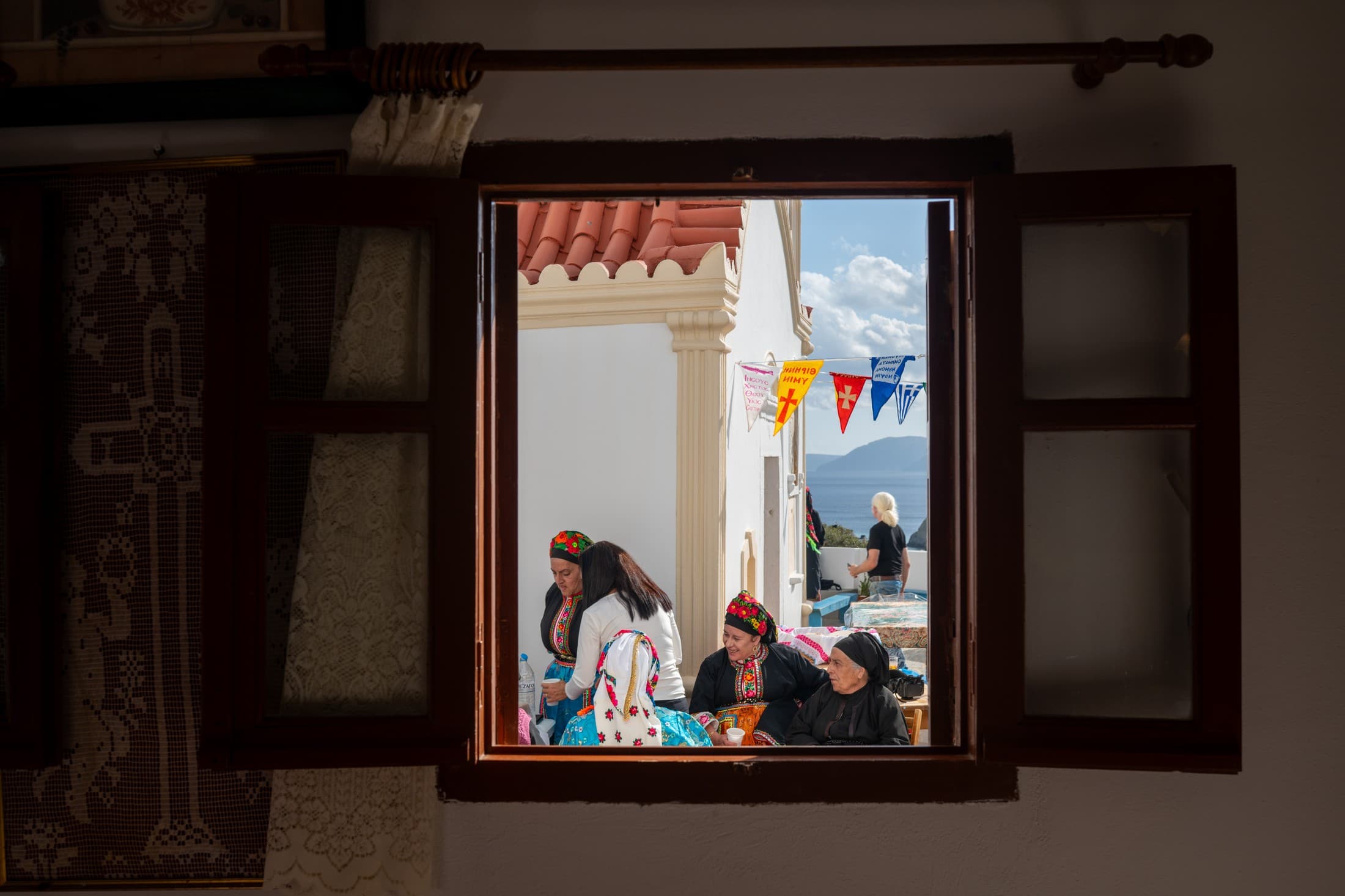
The Olympitiko Glenti, one might say, represents a distinct form of the Karpathos Glenti, which has also been inscribed on the National Inventory of Intangible Cultural Heritage of Greece. Characteristic examples include festivals such as that of Agios Panteleimon (26–28 July), where large communal tables are laid out and traditional pilaf with meat is served before the feast begins with music and dance, as well as that of Agios Ioannis in Vroukounda (29 August). There, the festival begins with the so-called "seated revel" and syrmatika songs, continues with mantinades that the whole group repeats, and culminates in traditional dances, such as the slow "kato choros" around the festival area.
It is organised around a small male parea (gathering) of revellers who are intimately familiar with the unwritten rules of the ritual. At the centre are the instrument players, with lyres, lutes and bagpipes, while seated around them are the singers and the revellers. Women and other participants stand around the periphery.
The revelry commences as the company gathers around the musicians, the singing beginning, often with a traditional song. A musical and poetic dialogue then develops between the revellers through various types of songs, such as the so-called syrmatika and improvised mantinades (rhyming couplets) in fifteen-syllable verse.
The Olympitiko Glenti, one might say, represents a distinct form of the Karpathos Glenti, which has also been inscribed on the National Inventory of Intangible Cultural Heritage of Greece. Characteristic examples include festivals such as that of Agios Panteleimon (26–28 July), where large communal tables are laid out and traditional pilaf with meat is served before the feast begins with music and dance, as well as that of Agios Ioannis in Vroukounda (29 August). There, the festival begins with the so-called "seated revel" and syrmatika songs, continues with mantinades that the whole group repeats, and culminates in traditional dances, such as the slow "kato choros" around the festival area.