Five days of celebration and tradition
Why does a chapel that officially celebrates on 5 February hold its panigyri in the heart of August? And why does the celebration last almost an entire week? This is the case the chapel of Agia Agathi, 2 km from the town of Aitoliko, at the foot of Mt Arakynthos, which was built in the early years following the Greek War of Independence.
It is one of the most vibrant and beloved panigyria of Messolongi and since 2020 has been included in the National Inventory of Intangible Cultural Heritage.
Although several theories exist regarding its origins, the most widely accepted connects it to the gathering of the chieftains of Northwestern Greece. The gathering was convened by Alexandros Mavrokordatos on 23 August 1824, at the monastery of Psili Panagia, higher up the mountain, with the aim of reconciling political and military forces. The meeting concluded successfully, followed by a joint march to Aitoliko and a celebratory feast.
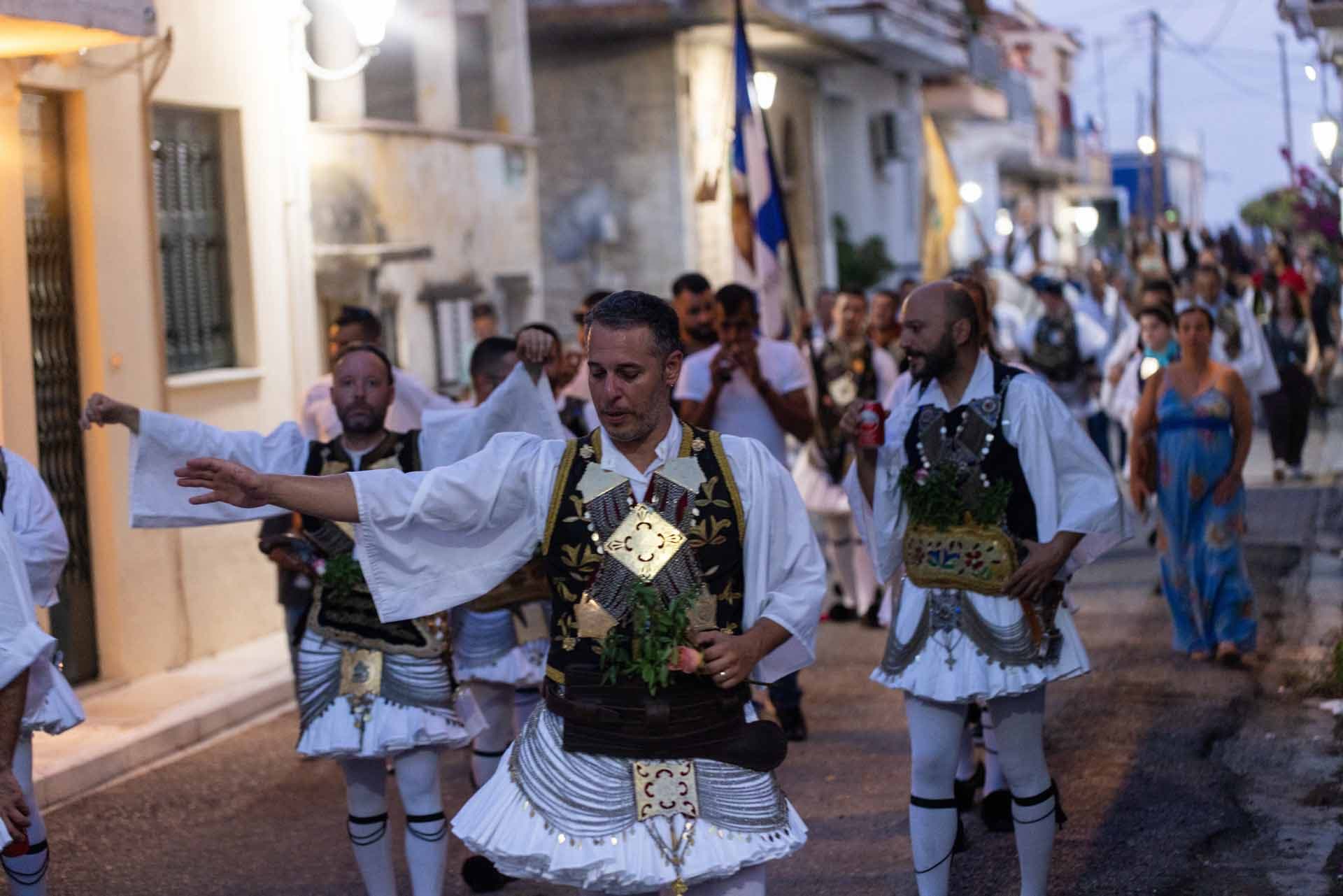
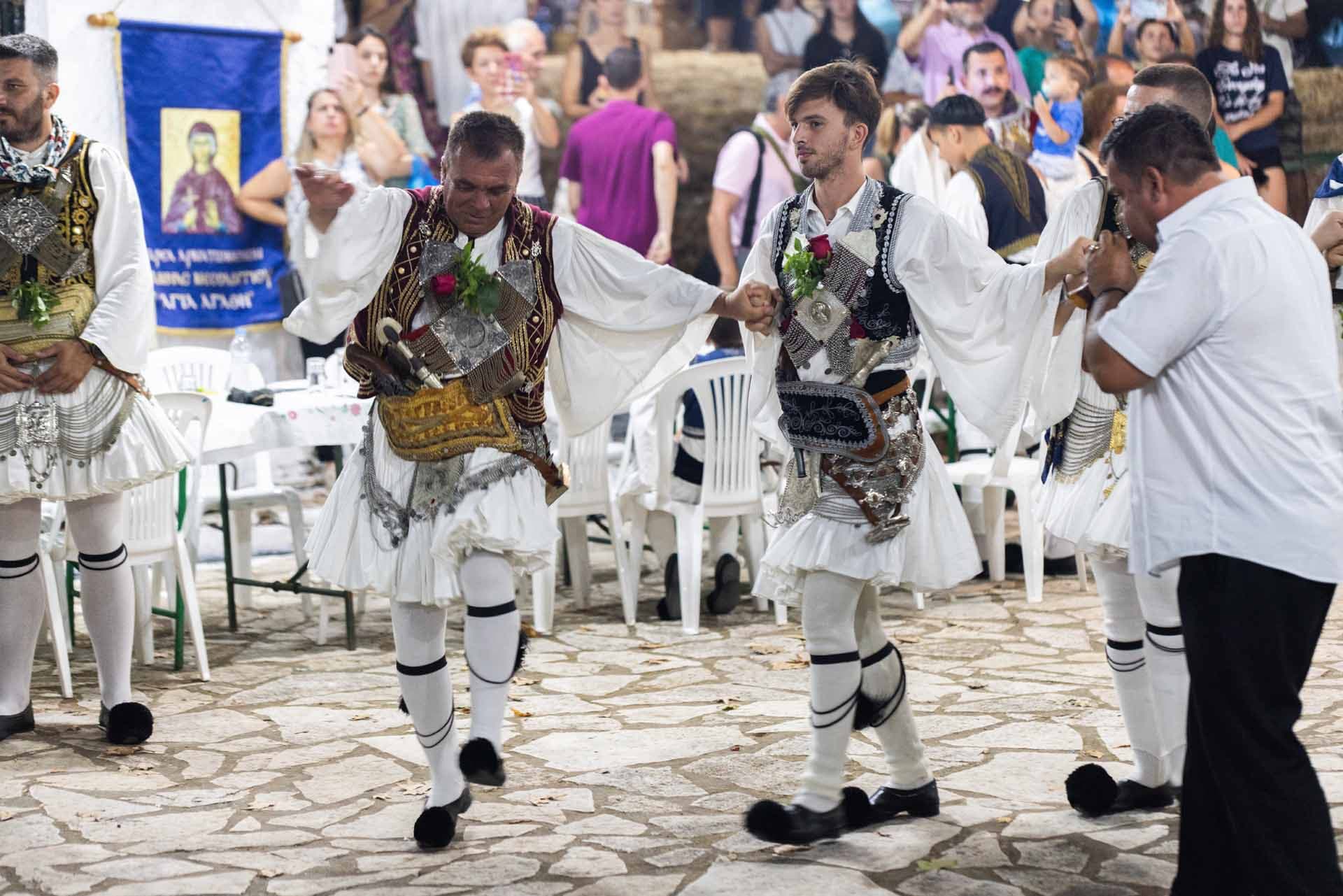
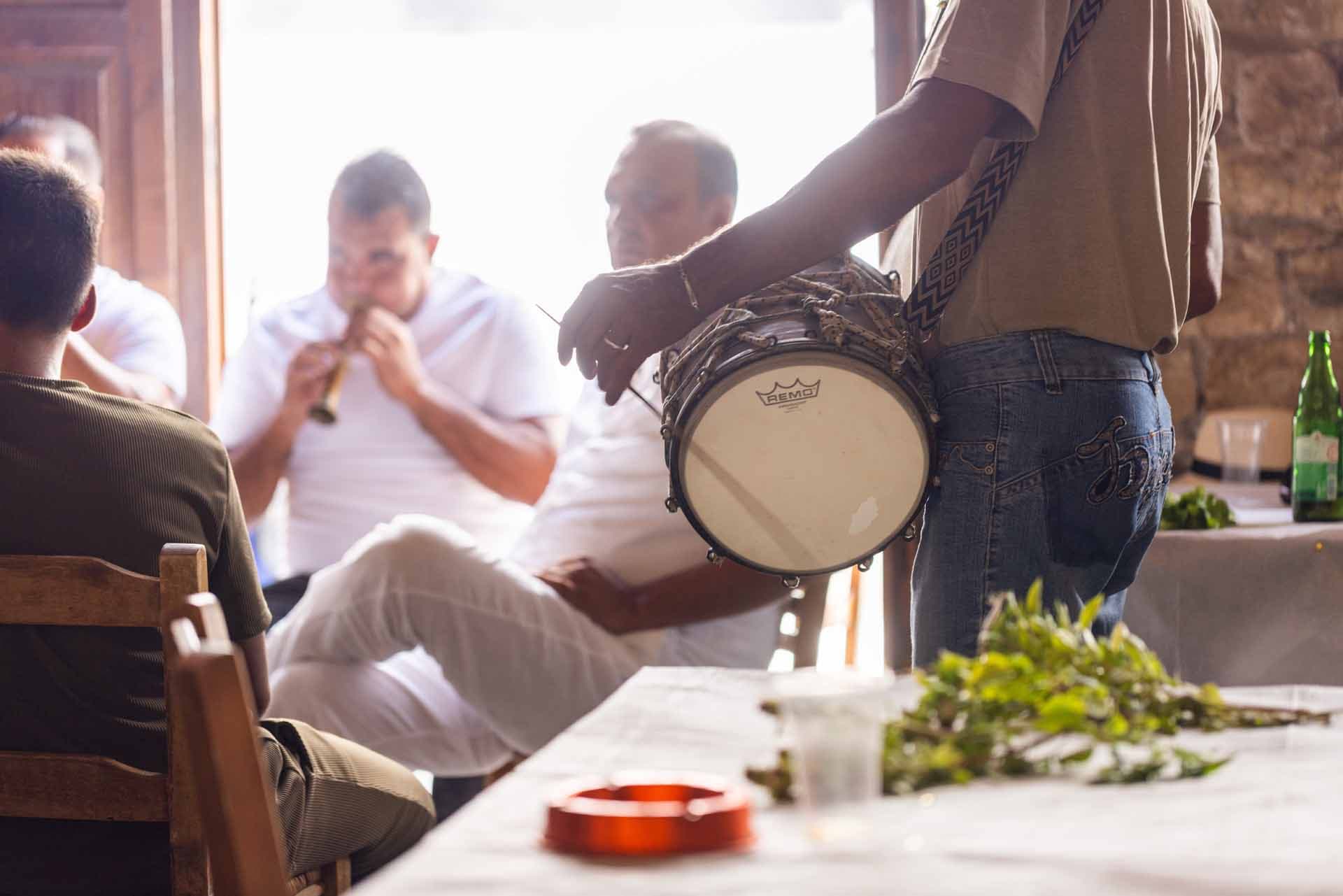
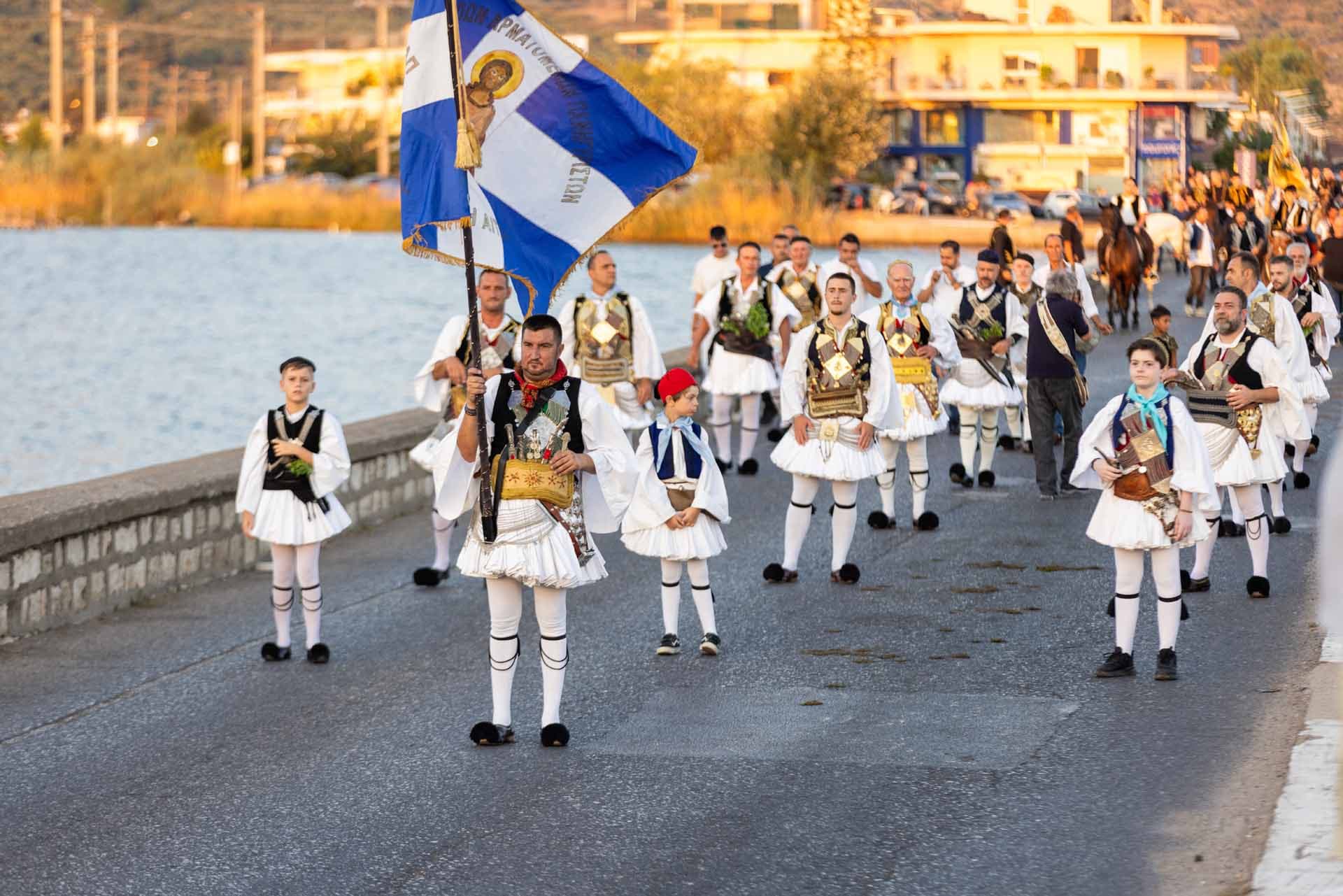
Today the position of the chieftains is held by armed participants, on horseback or on foot. They are divided into groups, just like the old kleftes' daifades (bands of klepht fighters), each led by the captain. Each group is accompanied by its own musicians, players of zurnas, davuls and pipes, who are also organised in pairs known as zygies.
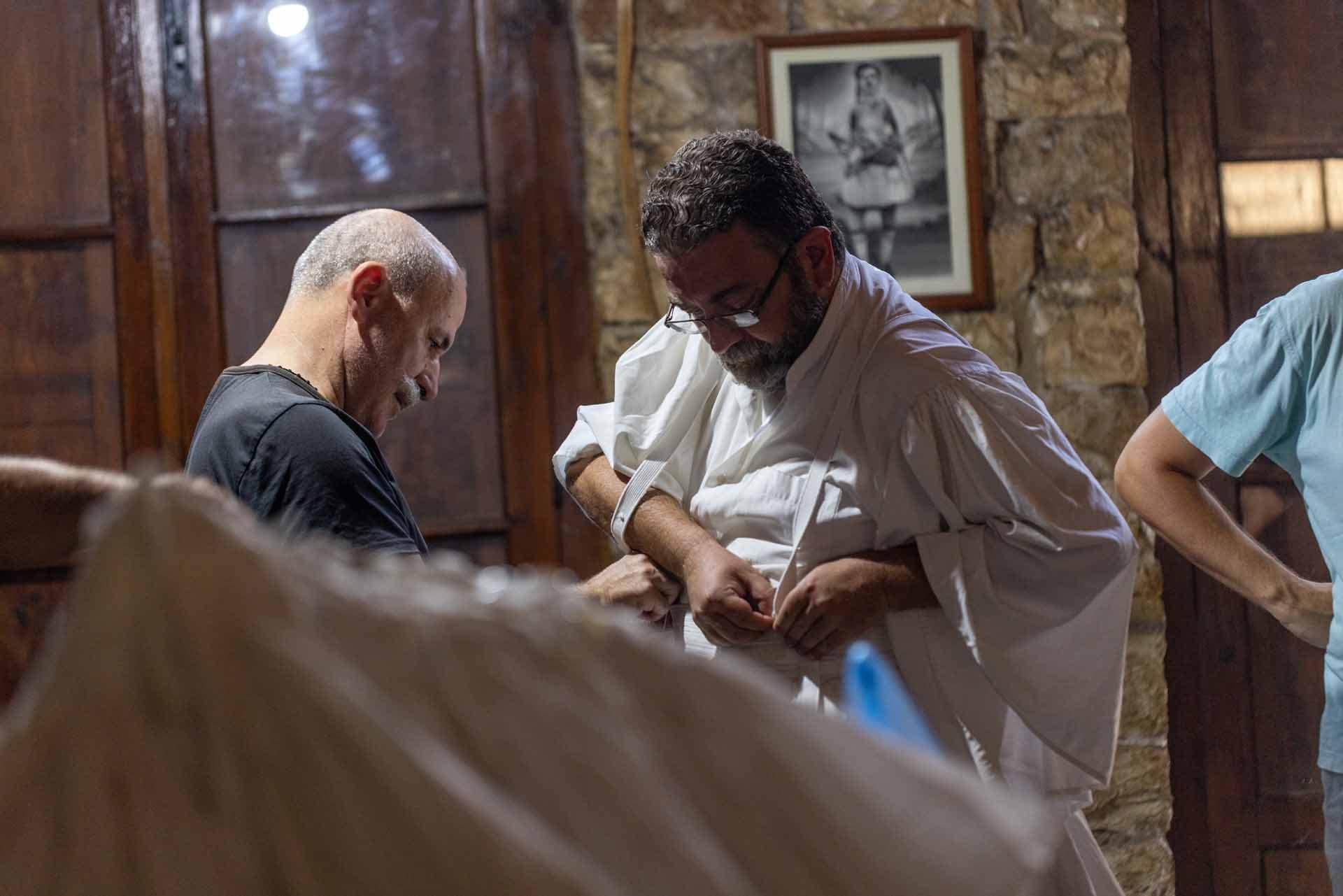
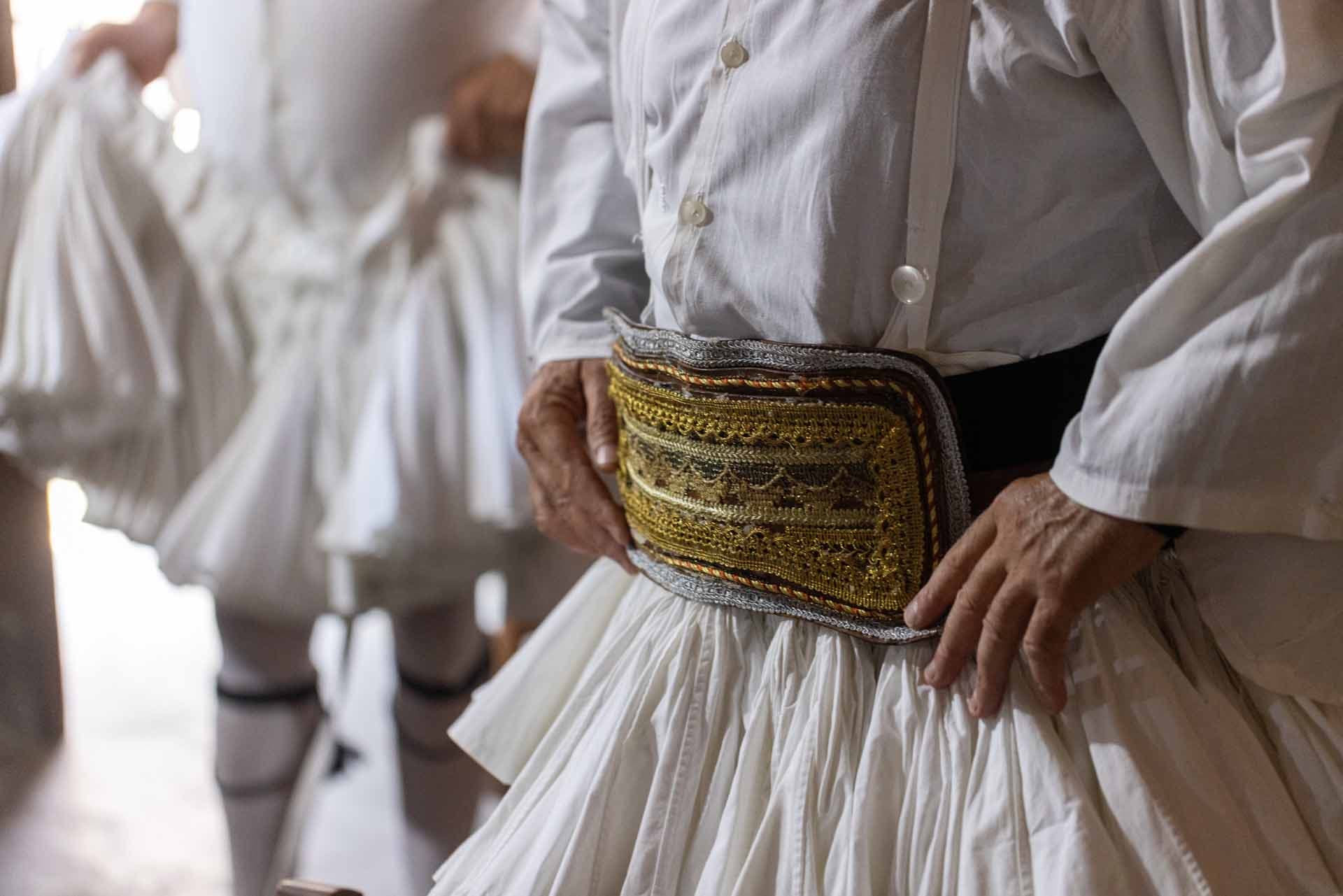
Preparations start on 15 August with the participants preparing their costumes as well as food and drink supplies, celebrating endlessly around the chapel. These all-night feasts, after all, are the ones that make this panigyri stand out. Pilgrimages and memorial prayers remain integral to the ritual. The highlights, however, are the bandonades (promenades with musical instruments), the gathering of the members of each group from house to house on 21 August, when all the residents of Aitoliko offer treats from their doorsteps, the reception of the armed men from the village of Stamna on 22 August, arriving in an impressive phalanx formation, and on 23 August the parade of the armed men, followed by dancing in the central square.
It is one of the most vibrant and beloved panigyria of Messolongi and since 2020 has been included in the National Inventory of Intangible Cultural Heritage.
Although several theories exist regarding its origins, the most widely accepted connects it to the gathering of the chieftains of Northwestern Greece. The gathering was convened by Alexandros Mavrokordatos on 23 August 1824, at the monastery of Psili Panagia, higher up the mountain, with the aim of reconciling political and military forces. The meeting concluded successfully, followed by a joint march to Aitoliko and a celebratory feast.
Today the position of the chieftains is held by armed participants, on horseback or on foot. They are divided into groups, just like the old kleftes' daifades (bands of klepht fighters), each led by the captain. Each group is accompanied by its own musicians, players of zurnas, davuls and pipes, who are also organised in pairs known as zygies.
Preparations start on 15 August with the participants preparing their costumes as well as food and drink supplies, celebrating endlessly around the chapel. These all-night feasts, after all, are the ones that make this panigyri stand out. Pilgrimages and memorial prayers remain integral to the ritual. The highlights, however, are the bandonades (promenades with musical instruments), the gathering of the members of each group from house to house on 21 August, when all the residents of Aitoliko offer treats from their doorsteps, the reception of the armed men from the village of Stamna on 22 August, arriving in an impressive phalanx formation, and on 23 August the parade of the armed men, followed by dancing in the central square.