Not Found
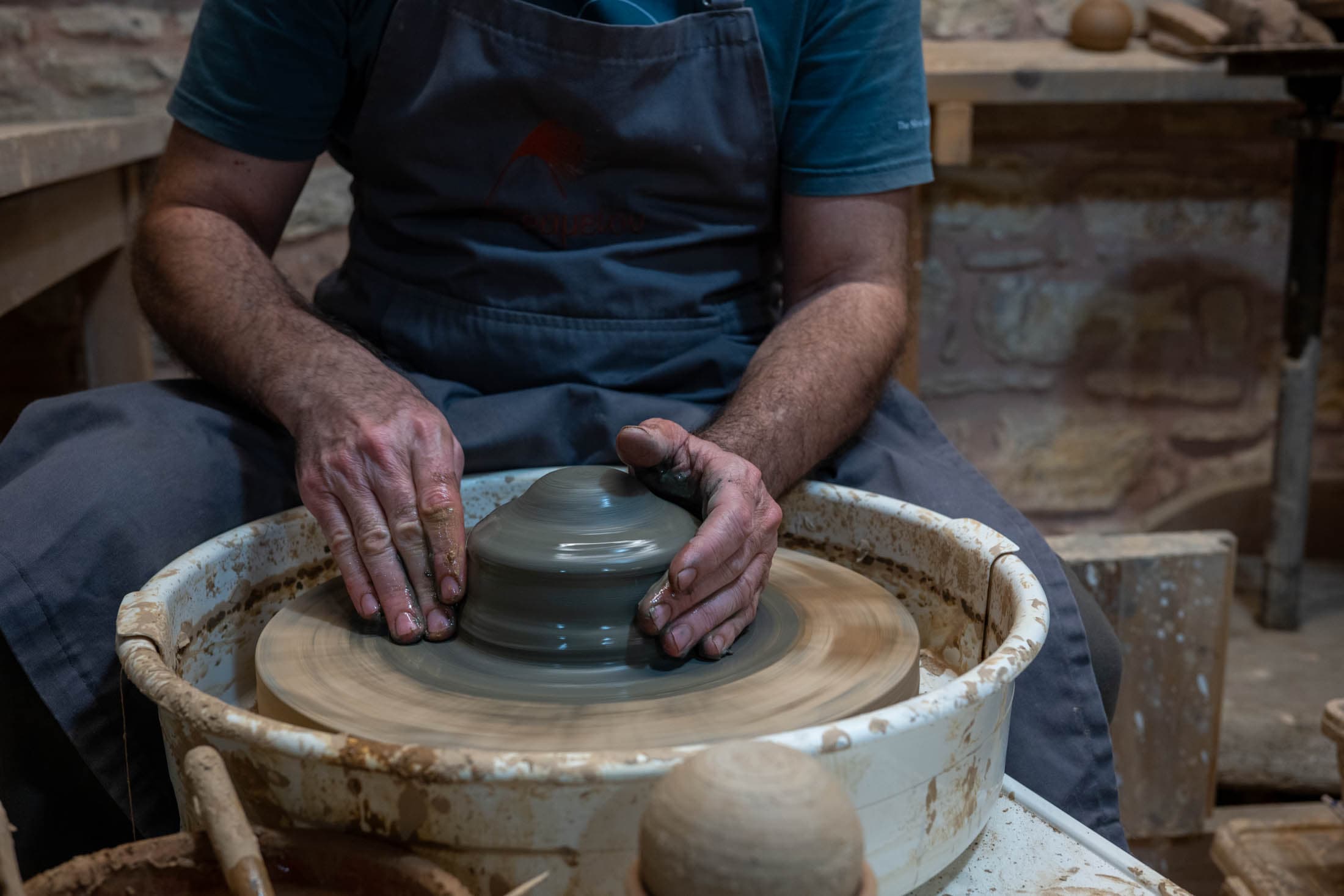
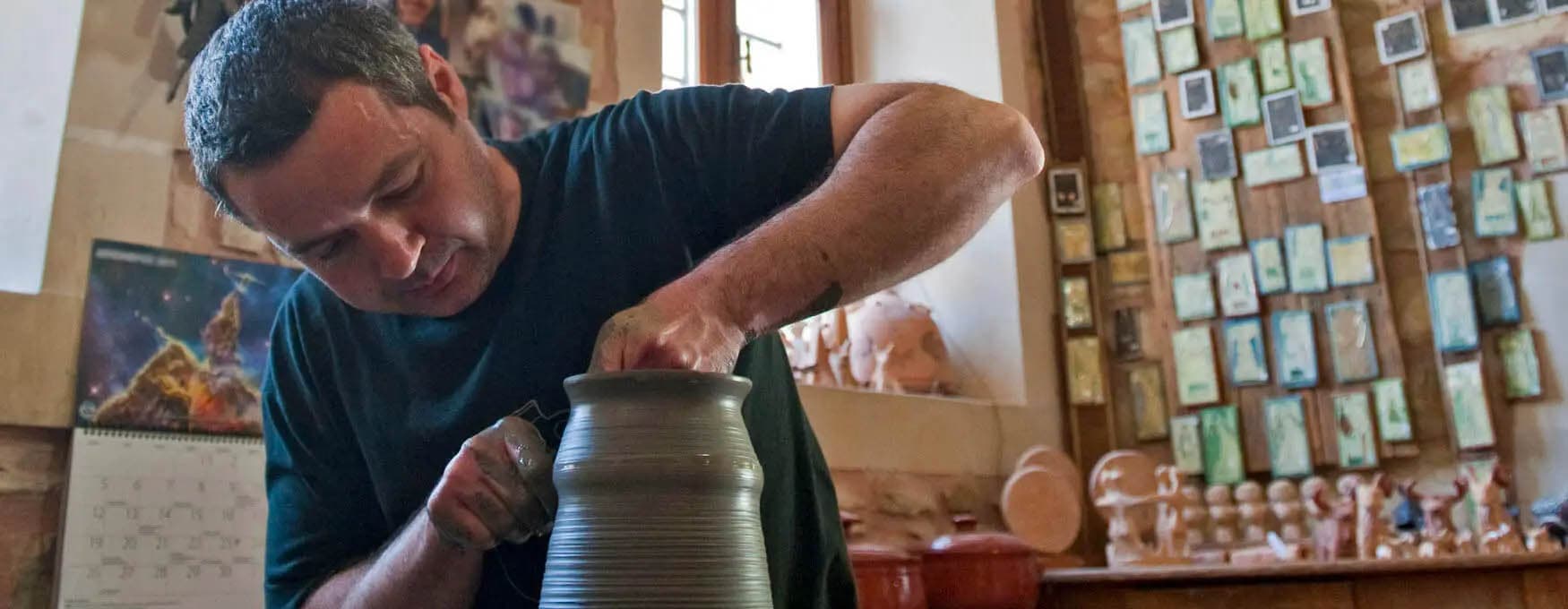
With its inception lost in the prehistoric times, it thrives during the Greek antiquity in an inspired verve of shapes, colours, figures. Storage-jars, amphoras, kraters, jugs, and lekythoi reflect the everyday habits and the traditions of the society that produced them and they give evidence about that society, as pottery accounts for the most numerous objects of the same category found in any archaeological excavation.
In the modern era, new morphologic and technical features have been added to making ceramics. Earthenware jars have helped storing the harvest, while pitchers and flasks have contained liquids, and cooking-pots and dishes have been used as tableware. The forms have been rather simple, but the decorative touch– an exclusive task of the craftsmen’ wives- has sealed the crafted items with grace and sensitivity. Ornamental patterns such as stripes, coils, lines, flowers, leaves, fish, birds, and ship lift the humble clay up on a level of sheer folk art.
The more recent days of glory of the Greek ceramic art have been spent in the mainland (Macedonia, Peloponnese, Thrace, Attica) and on several islands (Thassos, Lesvos, Samos, Crete, Skyros, Aegina, Rhodes, Sifnos). The age-old tradition and the inherited knowledge have never ceased to drive the hands, the imagination and the artistry of the clay modellers.
In the modern era, new morphologic and technical features have been added to making ceramics. Earthenware jars have helped storing the harvest, while pitchers and flasks have contained liquids, and cooking-pots and dishes have been used as tableware. The forms have been rather simple, but the decorative touch– an exclusive task of the craftsmen’ wives- has sealed the crafted items with grace and sensitivity. Ornamental patterns such as stripes, coils, lines, flowers, leaves, fish, birds, and ship lift the humble clay up on a level of sheer folk art.
The more recent days of glory of the Greek ceramic art have been spent in the mainland (Macedonia, Peloponnese, Thrace, Attica) and on several islands (Thassos, Lesvos, Samos, Crete, Skyros, Aegina, Rhodes, Sifnos). The age-old tradition and the inherited knowledge have never ceased to drive the hands, the imagination and the artistry of the clay modellers.