Not to be missed!
Greece is a land shaped by intense geological activity. Over millions of years, the continuous process of mountain formation has given rise to stunning natural landmarks. In various corners of the country, you’ll find awe-inspiring sites such as the Lesvos Petrified Forest, Psiloreitis Natural Park and many more. These places offer a unique opportunity to witness the artistry of nature, where geological phenomena dating back millions of years reveal the Earth’s dynamic and creative forces.
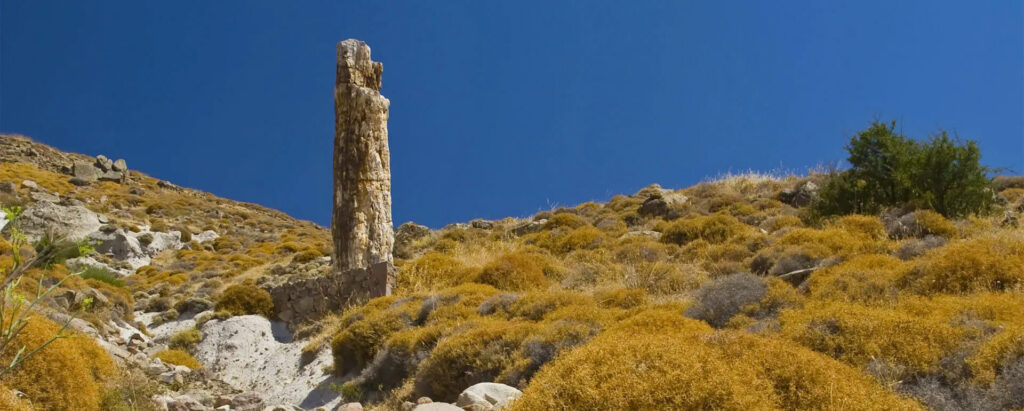
1. Lesvos Petrified Forest: Where time stood still
The
Lesvos Island UNESCO Global Geopark (former Lesvos Petrified Forest Geopark) was created in the Miocene Period some 20 million years ago! It was the result of intense volcanic activity in the Aegean region. The park was
declared a Natural Monument in
1985 and a
Top European Geopark for 2011 – 2014. The singular beauty of the Petrified Forest is really beyond description. The Park lies in the western part of Lesvos Island, where the petrified tree trunks are scattered in a 150 km2 area surrounded by Sigri, Eresos and Antissa villages. A Natural History Museum opened in the village of Sigri in 1994, located right in the heart of the petrified forest. It was the first museum of this type in Greece and its purpose is both to protect and showcase the region’s geological wealth. Getting to know the area’s natural beauty and its rich archaeological and folk heritage is a truly memorable experience.
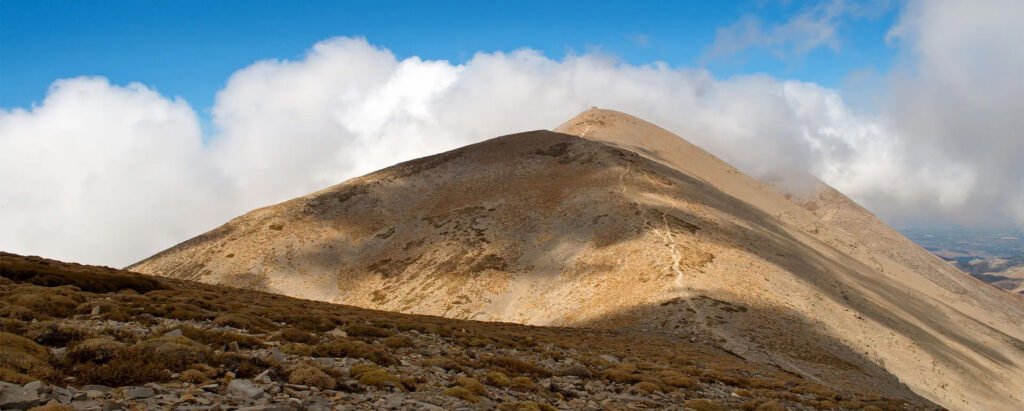
2. Mt. Psiloreitis Natural Park: Unspoilt beauty
Psiloreitis UNESCO Global Geopark located on the island of
Crete is a landscape of
wild beauty, bound to move and stimulate travellers in equal measure. Gorges, caves, charming trails and dense forests make this a real
outdoor natural history museum, while the area’s considerable biodiversity -comprising unique endemic flora and fauna species- makes this a living natural tapestry.
The natural and man-made trails which spread out over the mountainsides are ideal for rambling and trekking, allowing walkers to come into direct contact with the primeval force of nature. The Mygia trail, the path from Doxaro to Ptyches Vossakou and the trail down the Platania Gorge are all well sign-posted and well maintained, the ideal choice for those among you who try to escape the hum-drum of day-to-day city life.
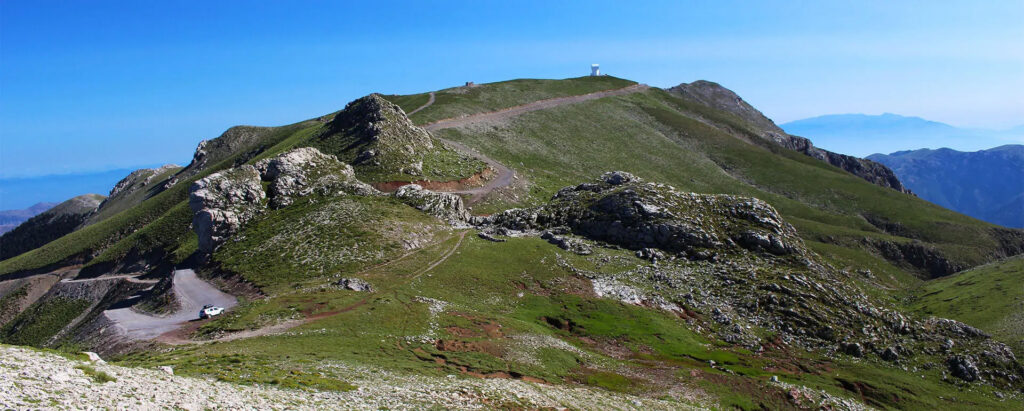
3. Mt. Chelmos - Vouraikos National Park: A glance at the Earth’s past
The sensation you will have as you stand atop Mt. Chelmos in the Peloponnese is that you are looking at an
ancient seabed, which has over the course of millions of years
risen to the surface; a seabed moulded, formed and shaped by the sheer force of the sea. The
Chelmos Vouraikos UNESCO Global Geopark is a place of awe-inspiring natural charm that amazes all visitors.
Mt. Chelmos (a.k.a. Aroania Mountain Range) is Peloponnese’s
third highest range, after Mt. Taygetos and the Ziria Mountains. Here, you will be able to visit the Styga River source (also an ancient Greek deity), Kalavryta town with its famed monasteries, the busy ski centre, the Mt. Chelmos Observatory, and Lake Tsivlou, while the experienced mountaineers among you will mostly enjoy climbing some of Greece’s most demanding mountain trails such as Chtenia trail on Mt. Chelmos.
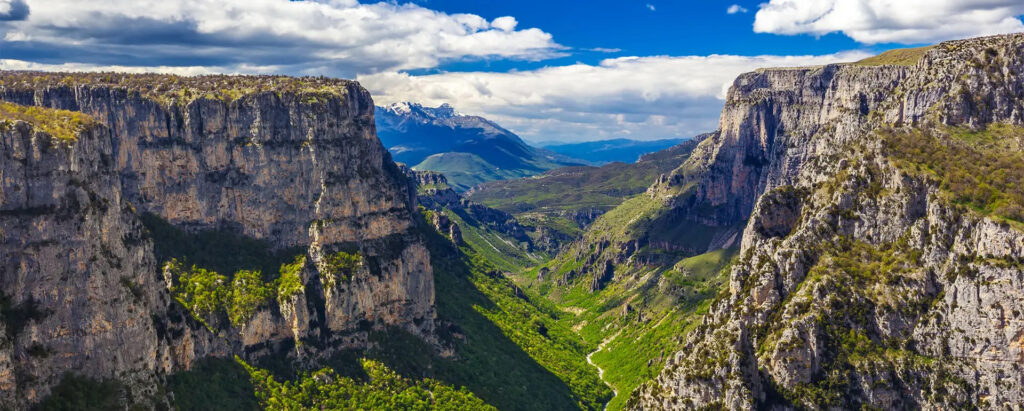
4. Vikos - Aoos National Park: Going back to prehistoric times
The
Vikos - Aoos National Park is also a
UNESCO Global Geopark, located in the
Zagori region of
Epirus, north of
Ioannina City. Traces of human settlements dating back to 40000 BC have been found in the area’s forests and caves. The area’s geological formation is based on water, which has created landscapes of incredible beauty. The Park has been dubbed ‘Towering Peak Park’ because of the area’s very high mountains. This is the location with the most impressive geological formations in the country. There are five caverns surrounded by mostly vertical precipices. The depth of one of them, called Provatina, reaches 407 m. - this makes it the second deepest in the whole world.
Enchanting
nature trails and a range of
trekking and
mountaineering activities have made the area popular to travellers, year-round.
Traditional villages dot the mountain and offer visitors accommodation and food services with an incredible view.
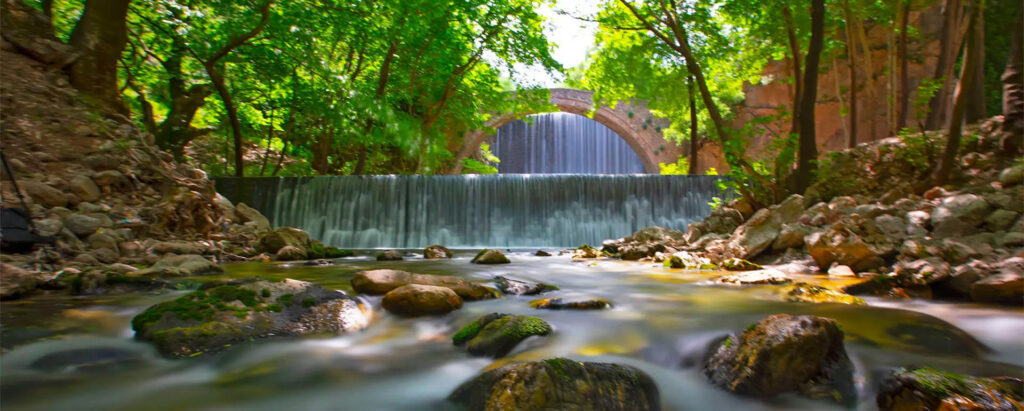
5. Meteora - Pyli Geopark: Where Cultural Legacy Reaches the Sky
On the west part of Thessaly, the
Meteora – Pyli Geopark, a member of the
UNESCO Global Geoparks Network, brings together Earth’s deep-time history and centuries of cultural heritage. Geological wonders shaped by the ancient Tethys Ocean and the uplift of the Greek mountains coexist with age-old Greek Orthodox monuments. The
iconic Meteora Rocks—recognised by UNESCO as a mixed [both Natural and Cultural]
World Heritage Site since 1988—rise majestically, crowned by monasteries that seem to float between the earth and the sky. Visitors can explore dozens of geosites, hiking trails, cultural landmarks and eco-activities in a landscape that inspires awe at every turn.
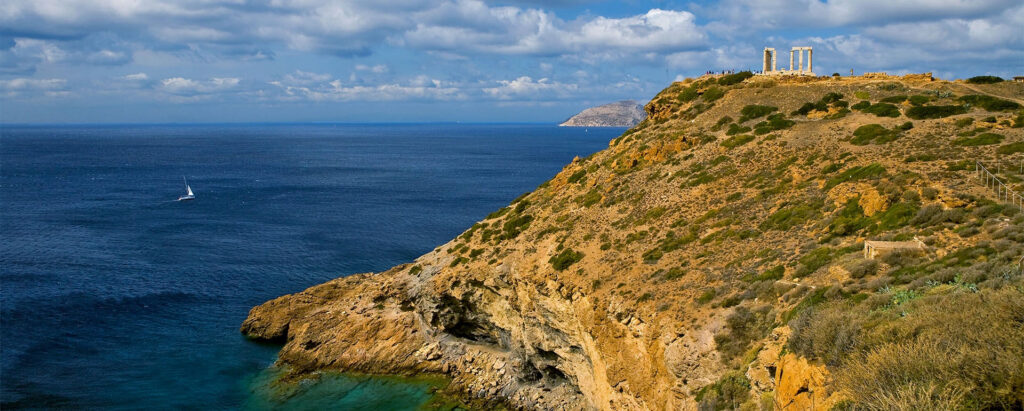
6. Lavreotiki Geopark: Where Geology Meets History
Just 60 km from central Athens, the
Lavreotiki Geopark welcomes visitors to a remarkable fusion of
natural heritage and ancient technology. A member of the UNESCO Global Geoparks Network, it features over 1,000 mining tunnels and shafts, along with 50+ geosites, revealing more than 3,000 years of geological and metallurgical history. Here, ancient Athenians mined silver-bearing lead ore that helped fund their Golden Age (5th c. BC). Discover underground galleries, scenic walking trails and a cultural landscape that uncovers the hidden depths of Attica’s past.
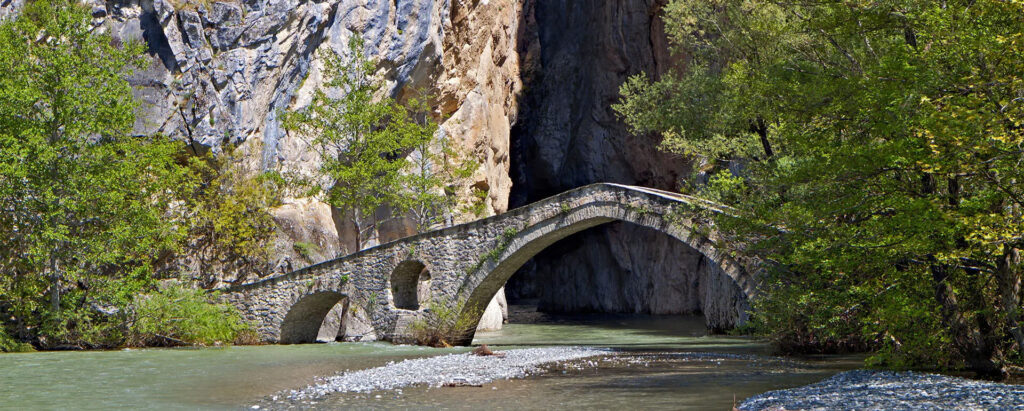
7. Grevena - Kozani Geopark: Where Plate Tectonics Was Born
Set amidst the
Pindos Mountains and
glacial canyons of Western Macedonia, the
Grevena – Kozani UNESCO Global Geopark is a famous landmark. Here, the Vourinos and Pindos ophiolite complexes provided the foundations for modern plate tectonic theory, revealing relics of the ancient Tethyan Ocean. The park features record-breaking mammoth fossils, the oldest rocks in Greece. Traditional mountain villages, pristine forests and Ice Age - type landscapes complete this rare mosaic. This geopark is a treasure trove for geology enthusiasts, nature lovers, and curious travellers alike.
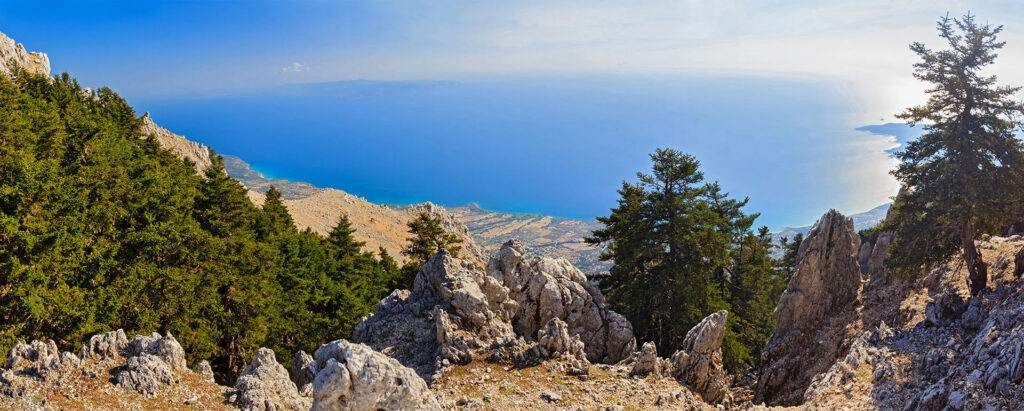
8. Kefalonia - Ithaca Geopark: Land of Ulysses, Landscape of Wonders
In the
Ionian Sea, the
Kefalonia – Ithaca UNESCO Global Geopark invites you to explore a unique blend of geology, myth and culture. Spectacular karstic formations-caves, sinkholes and underground rivers—tell a story that is
250 million years old. This is one of
Europe’s most tectonically active zones, where the Earth’s crust continues to change the shape of the islands. From Homer’s legendary homeland of Ulysses to medieval castles and Byzantine monasteries, the geopark brings together nature and narrative, heritage and science. A destination of discovery and inspiration awaits.
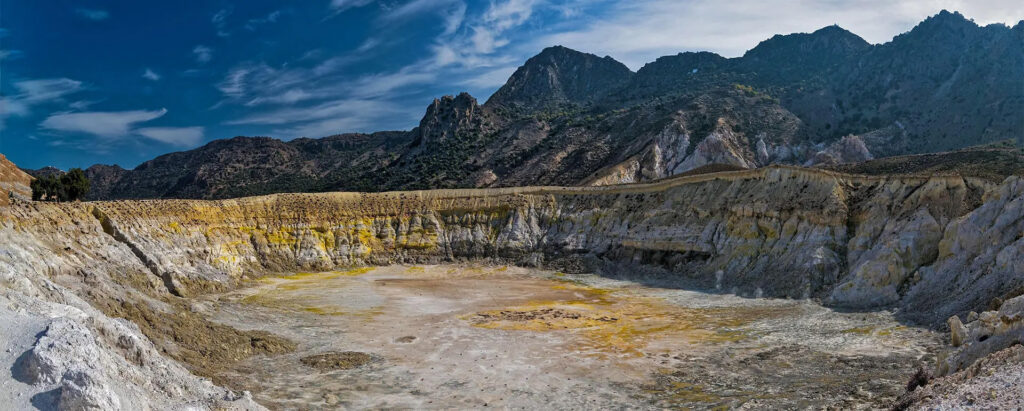
9. Nisyros Geopark: Into the Heart of the Volcano
Nisyros, a
southeast Aegean Sea Island and a member of the
UNESCO Global Geoparks Network, offers visitors a journey into Earth's fiery past. Its dramatic caldera, steaming fumaroles and vast craters create a near-extraterrestrial setting. To the south lies Strongyli Islet, a near-perfect volcanic cone with a
300-metre-wide summit crater, showing signs of recent geological activity. Submarine surveys revealed hidden underwater craters and fault lines around it, adding to the island’s intrigue. Nisyros is not just a destination – it’s a living encounter with the Earth’s creative force.
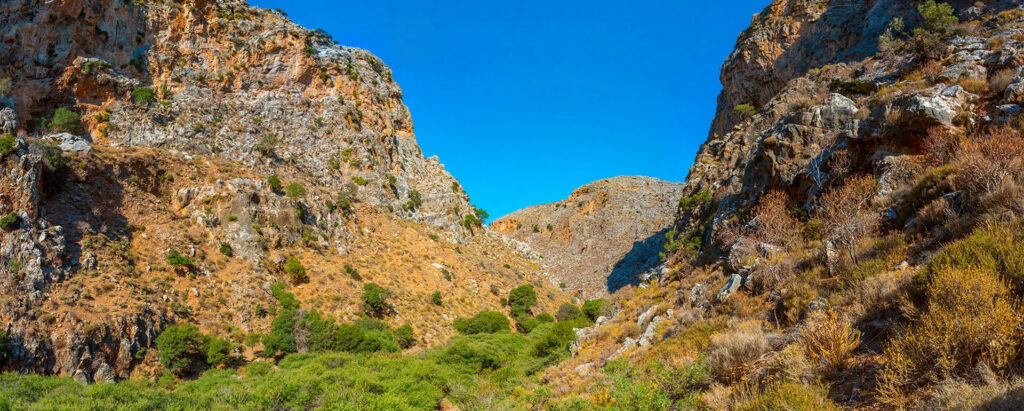
10. Sitia Geopark: Where the Earth Speaks
At the easternmost tip of Crete,
Sitia Geopark—part of the UNESCO Global Geoparks Network since 2015—reveals a vibrant mosaic of natural and cultural heritage. Here, the land includes dramatic
gorges, Europe’s biggest native
palm tree forest, coastal
wetlands and rare
endemic flora. Hike across the secluded coastline at Cape Sidero, take a trip to Zakros, and explore the landscape where nature, science and Minoan legacy intertwine. A truly authentic destination for nature lovers and experience seekers alike!
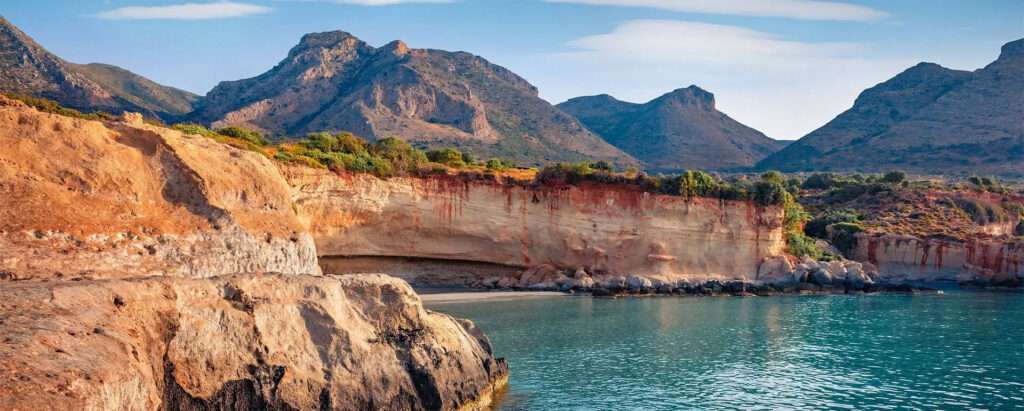
11. Agios Nikolaos Petrified Forest: The Wonder of Laconian countryside
Some 18 km south of Neapoli, Laconia (8km off Agios Nikolaos village) lies the
petrified Palm tree Forest of
Kavomalias, which is
part of the
Atlas of
Geological Monuments of the
Aegean and is a strong candidate for a place in the European Geoparks Network.
A long process of geological phenomena over the course of millions of years has led to the creation of the Petrified Forest. Its singularity is about the way the
tree trunks were petrified. Some two to three
million years ago when the climate in that area was subtropical, there was a huge palm tree forest, which also included date trees, conifers, and broadleaf trees. As seawater levels rose, the forest got eventually submerged; as a result, the trees were covered by lime instead of being covered by silica contained in the ashes of volcanoes, as was the usual case with other petrified forests in Greece.
The petrified tree trunks combined with the rugged and impressive landscape of Kavomalias, next to Agia Marina’s deep blue waters create a scenery of
great beauty which is absolutely fascinating. The seawater goes through some of these trunks and gushes out of their top as in a fountain! In the area by the seashore and further deeper into the land you can walk past shrubs of kermes oak and lentisks growing from a soil full of shells, molluscs, starfishes, crabs and fossils in abundance. Wear your mask, dive into the water from the rocks of the petrified forest and enjoy the shallow underwater area and lovely seabed!