A Natural and Historical Monument
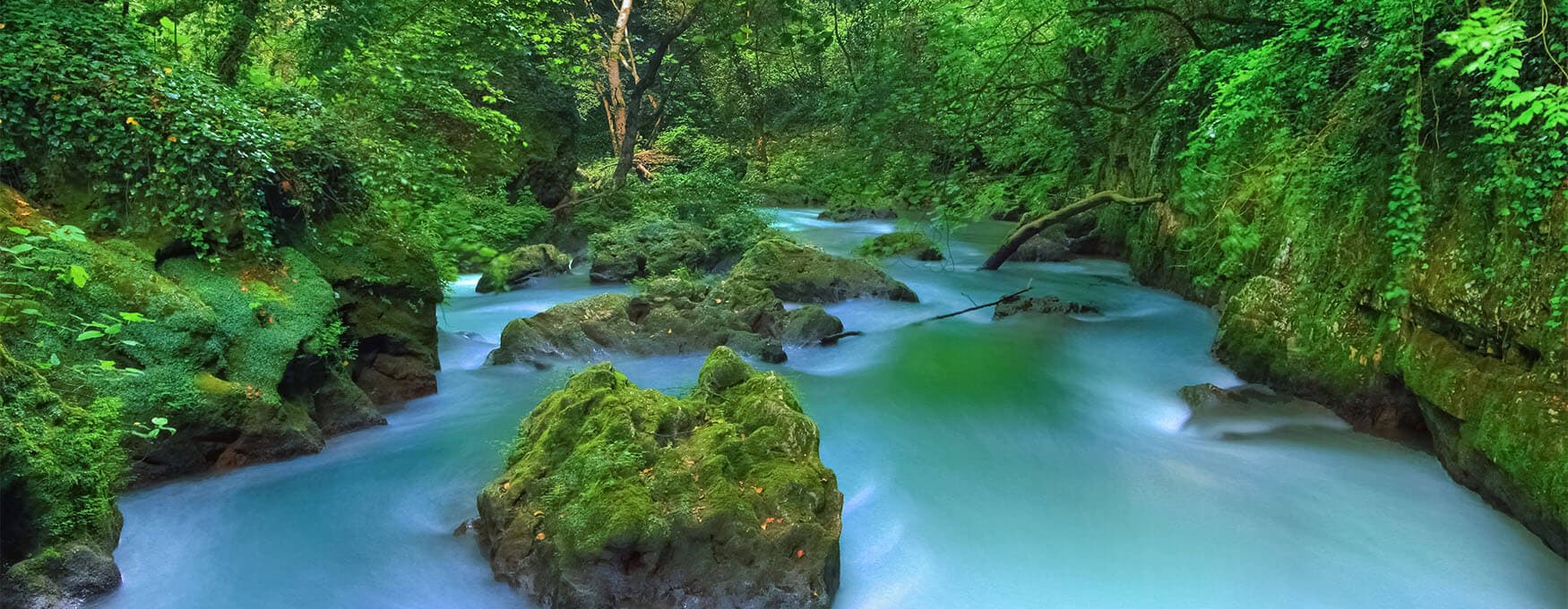
The Gorge of Kalamas, included in the Natura 2000 network, is a place of unparalleled natural beauty with rich fauna and flora. At its entrance and exit, the ancient citadels of Osdina and Raveni stand as eternal guardians, protecting the ruins of castles and Byzantine churches that resist the ravages of time.
Access and Route
Access is easy from Ioannina, Igoumenitsa or Filiates. Following the route to Pente Ekklisies, the paved road leads to "Paleochora" and the Belley Bridge. Perched atop a rock dominates the citadel of Osdina, a point where the ancient fortifications meet the post-Byzantine architecture.
The entrance to the gorge starts from the left bank of the river. Along the way, we find the ruins of the historic bridge of Boliana, while caves can be seen in the steep cliffs—once used as shelters by hermits. The hike to “Spyropigadia” can be completed without entering the water, although caution is required at certain points when crossing sections of the riverbed.
The Challenge of Crossing
The most impressive point is "Faragopidima", the narrowest part of the route. Here the trail is interrupted, and continuing requires entering the river—something recommended only for well-experienced hikers. Others can choose to end their walk at this point or approach the gorge from the Polydroso side instead.
Ending and Experiences
A little higher up, the site of “Anavristika”, beneath the Castle of Raveni, offers a unique setting with bubbling natural springs. The path from the old watermill leads to Polydroso, where visitors can explore the folklore museum and rest. The total route takes about 4 hours, is demanding and needs special attention, but rewards hikers with images of wild, untouched nature.
Access and Route
Access is easy from Ioannina, Igoumenitsa or Filiates. Following the route to Pente Ekklisies, the paved road leads to "Paleochora" and the Belley Bridge. Perched atop a rock dominates the citadel of Osdina, a point where the ancient fortifications meet the post-Byzantine architecture.
The entrance to the gorge starts from the left bank of the river. Along the way, we find the ruins of the historic bridge of Boliana, while caves can be seen in the steep cliffs—once used as shelters by hermits. The hike to “Spyropigadia” can be completed without entering the water, although caution is required at certain points when crossing sections of the riverbed.
The Challenge of Crossing
The most impressive point is "Faragopidima", the narrowest part of the route. Here the trail is interrupted, and continuing requires entering the river—something recommended only for well-experienced hikers. Others can choose to end their walk at this point or approach the gorge from the Polydroso side instead.
Ending and Experiences
A little higher up, the site of “Anavristika”, beneath the Castle of Raveni, offers a unique setting with bubbling natural springs. The path from the old watermill leads to Polydroso, where visitors can explore the folklore museum and rest. The total route takes about 4 hours, is demanding and needs special attention, but rewards hikers with images of wild, untouched nature.