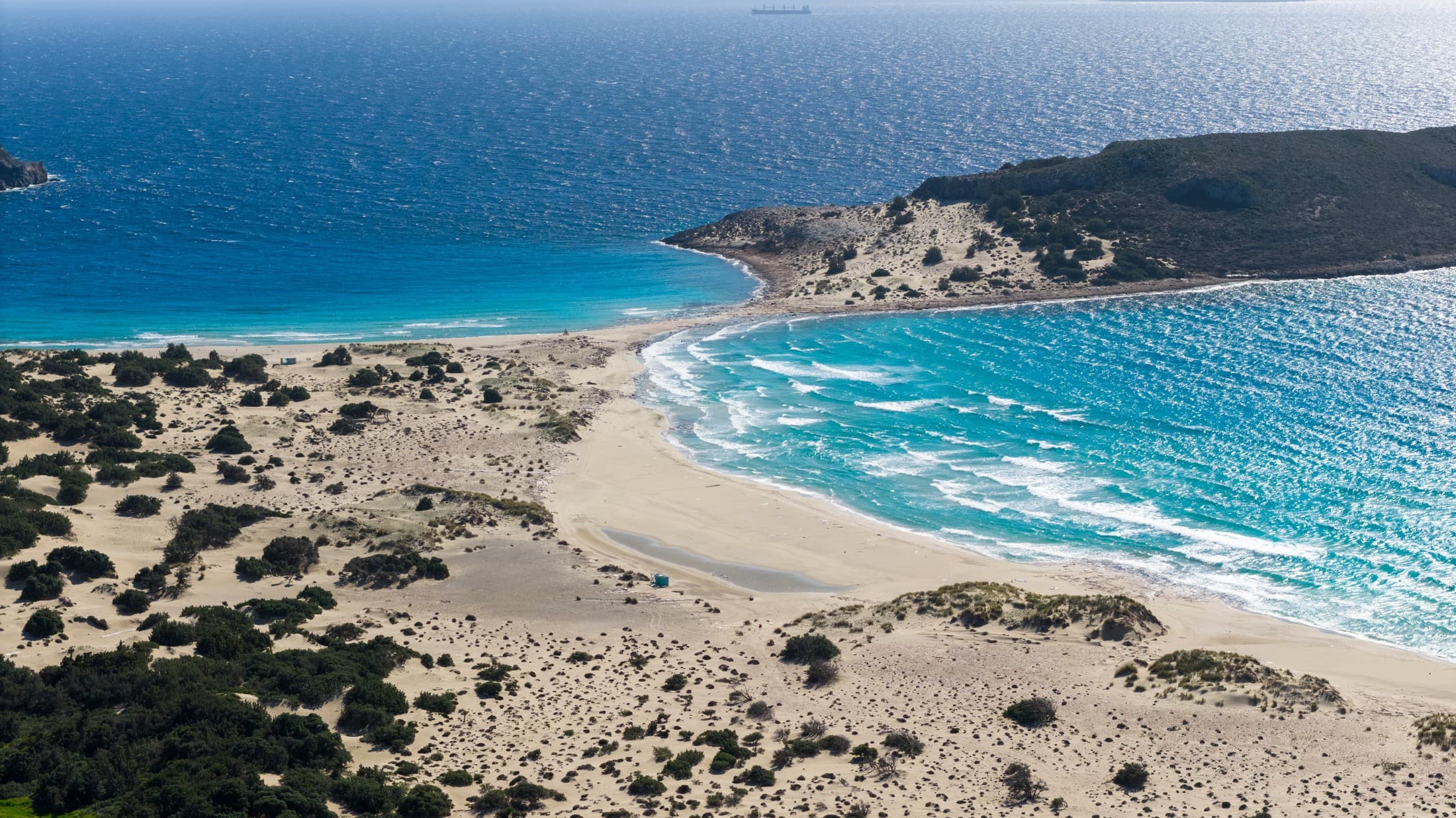
Sandy Shores and Coves in a Unique Island Landscape
Elafonisos, a small island off the south-eastern tip of the Peloponnese, is renowned for its rare coastal landscape: rolling sand dunes, sea cedars, shallow turquoise waters, and a coastline that reveals a different character at every turn.
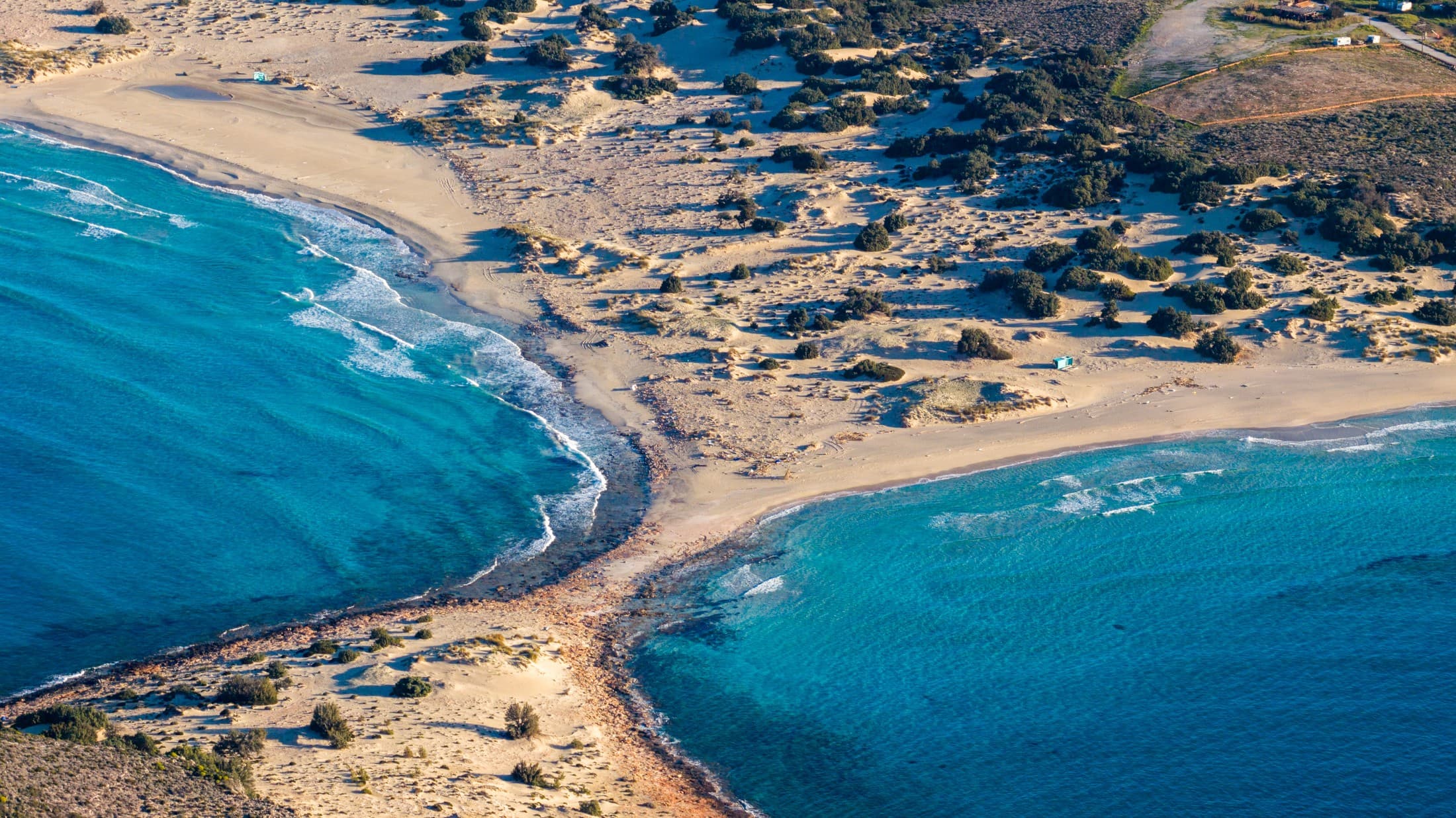
To the south, in the area of Lefki, lies the internationally acclaimed Simos Beach. The Sarakiniko peninsula divides the shore into two natural bays: Megali Paralia (Sarakiniko) and Mikri Paralia (Frangos). Fine golden sand, dunes reaching heights of 10 metres, and an expansive forest of sea cedars create a landscape that feels truly exotic.
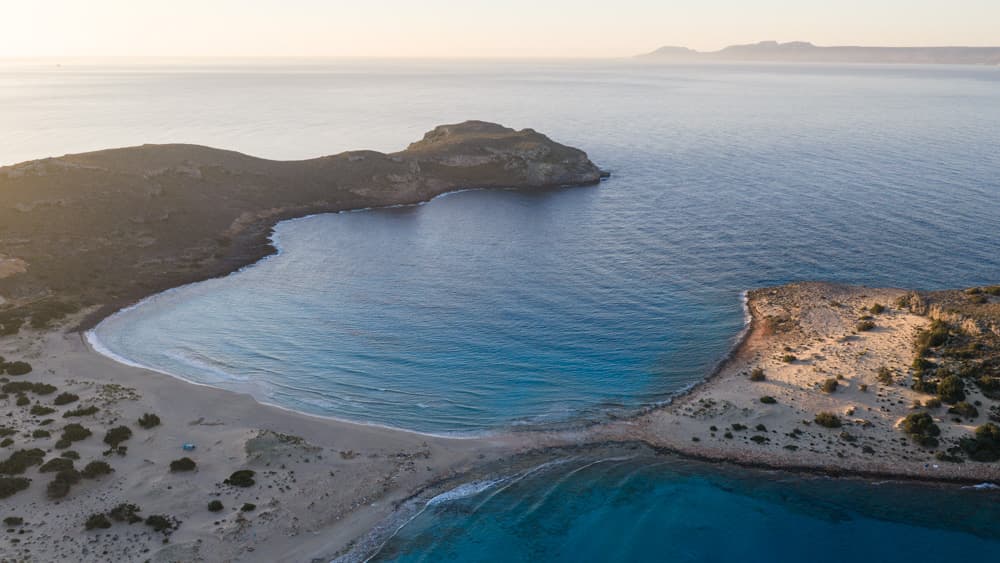
Slightly further east, the Bay of Lefki offers a sheltered haven with emerald waters and a vibrant seabed, while Karantrea Cave—accessible only by sea—stands as a natural landmark perfect for short maritime excursions.
On the western side, at Kato Nisi, you will find the long sandy beach of Panagia, characterised by its dunes, sea cedars, and three protective islets. In winter, a small seasonal lagoon known as "Limnitsa" forms here, while the Church of Panagia Katonisiotissa watches over the area from its elevated position. Further west, Aglyftis—secluded and rugged—features a pebbly shore, the small chapel of Agios Patapios, and a profound sense of isolation.
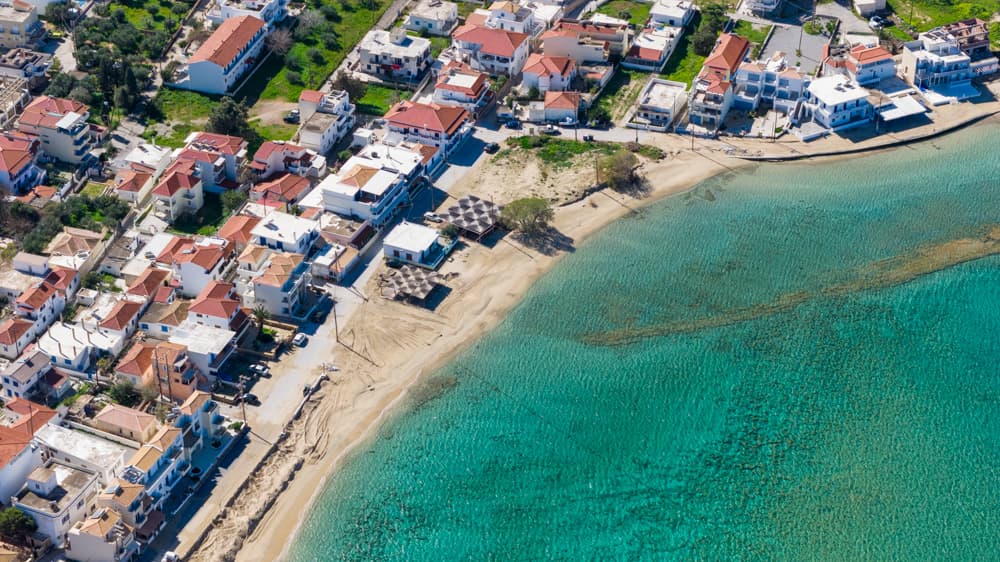
Around the main settlement of Elafonisos, the beaches are more tranquil: Kontogoni, Kalogeras, and Megalo Tigani serve the daily needs of locals and visitors alike. At Fountianika, the vista encompasses the islet of Pavlopetri and Cape Maleas, while from Vardia, the island’s highest point, the view extends as far as Kythira.
On the opposite shore, Pounta and Pavlopetri serve as a reminder that Elafonisos was once physically joined to the Peloponnesian mainland. At Chamokylo, the sea and Lake Strongyli coexist, forming a wetland of exceptional ecological value.
To the south, in the area of Lefki, lies the internationally acclaimed Simos Beach. The Sarakiniko peninsula divides the shore into two natural bays: Megali Paralia (Sarakiniko) and Mikri Paralia (Frangos). Fine golden sand, dunes reaching heights of 10 metres, and an expansive forest of sea cedars create a landscape that feels truly exotic.
Slightly further east, the Bay of Lefki offers a sheltered haven with emerald waters and a vibrant seabed, while Karantrea Cave—accessible only by sea—stands as a natural landmark perfect for short maritime excursions.
On the western side, at Kato Nisi, you will find the long sandy beach of Panagia, characterised by its dunes, sea cedars, and three protective islets. In winter, a small seasonal lagoon known as "Limnitsa" forms here, while the Church of Panagia Katonisiotissa watches over the area from its elevated position. Further west, Aglyftis—secluded and rugged—features a pebbly shore, the small chapel of Agios Patapios, and a profound sense of isolation.
Around the main settlement of Elafonisos, the beaches are more tranquil: Kontogoni, Kalogeras, and Megalo Tigani serve the daily needs of locals and visitors alike. At Fountianika, the vista encompasses the islet of Pavlopetri and Cape Maleas, while from Vardia, the island’s highest point, the view extends as far as Kythira.
On the opposite shore, Pounta and Pavlopetri serve as a reminder that Elafonisos was once physically joined to the Peloponnesian mainland. At Chamokylo, the sea and Lake Strongyli coexist, forming a wetland of exceptional ecological value.