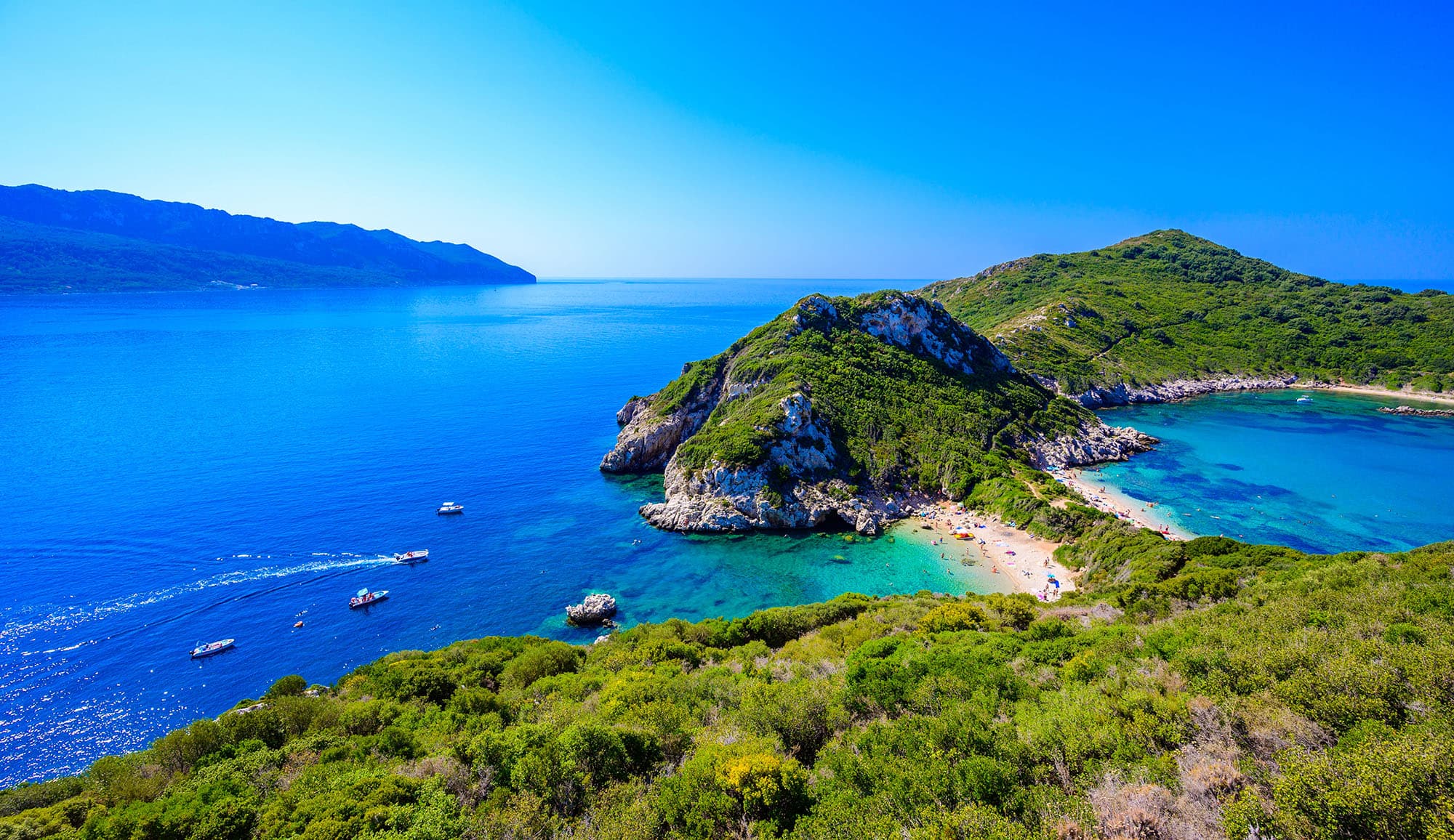
A mosaic of shores on the lush green island of the Ionian
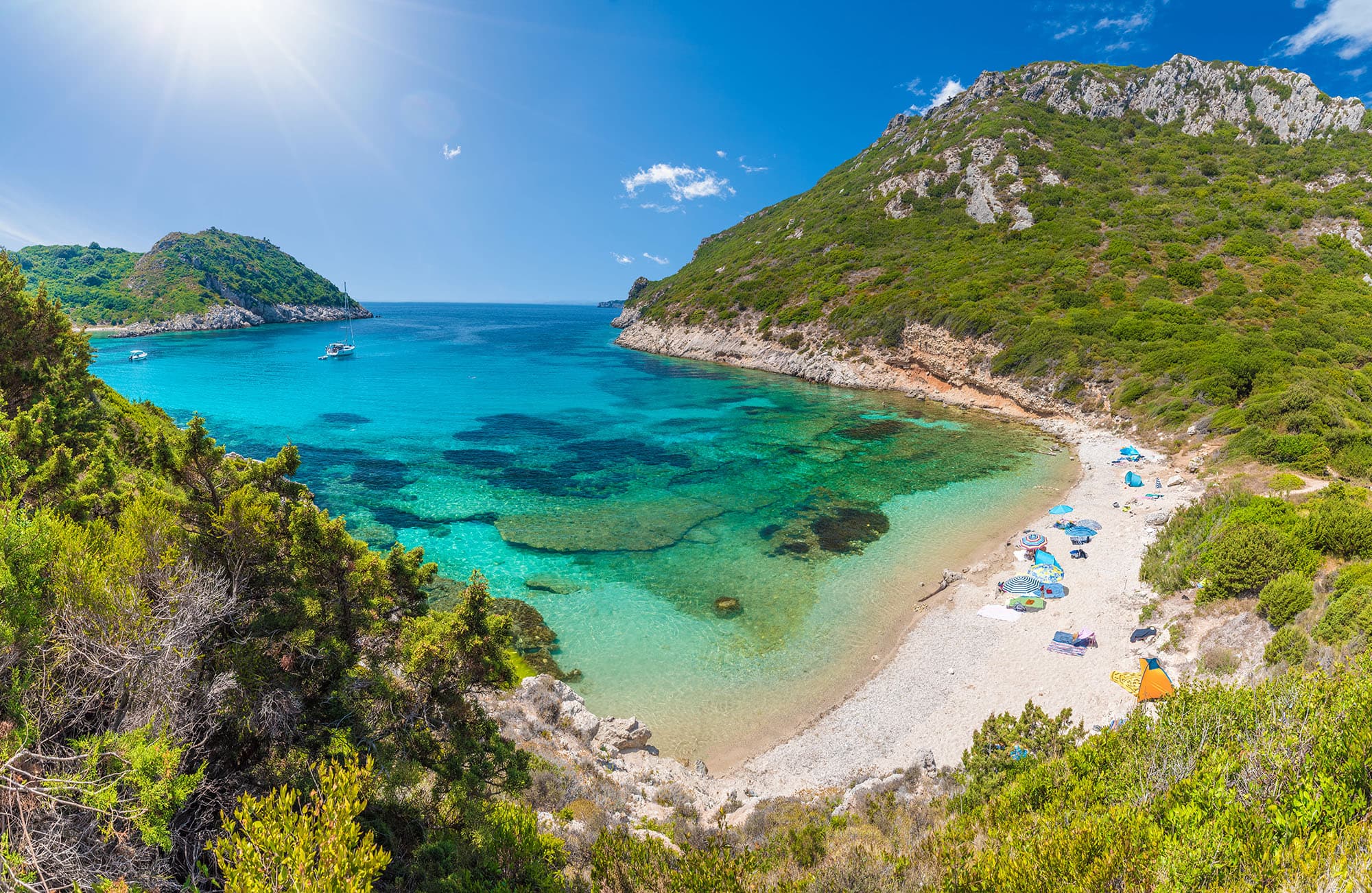
Corfu is one of Greece's most distinctive islands in terms of its geomorphology and the variety of its coastline. The island's shores offer striking contrasts: long sandy beaches, stretches with white pebbles, dramatic cliffs, small coves, and natural formations of remarkable beauty.
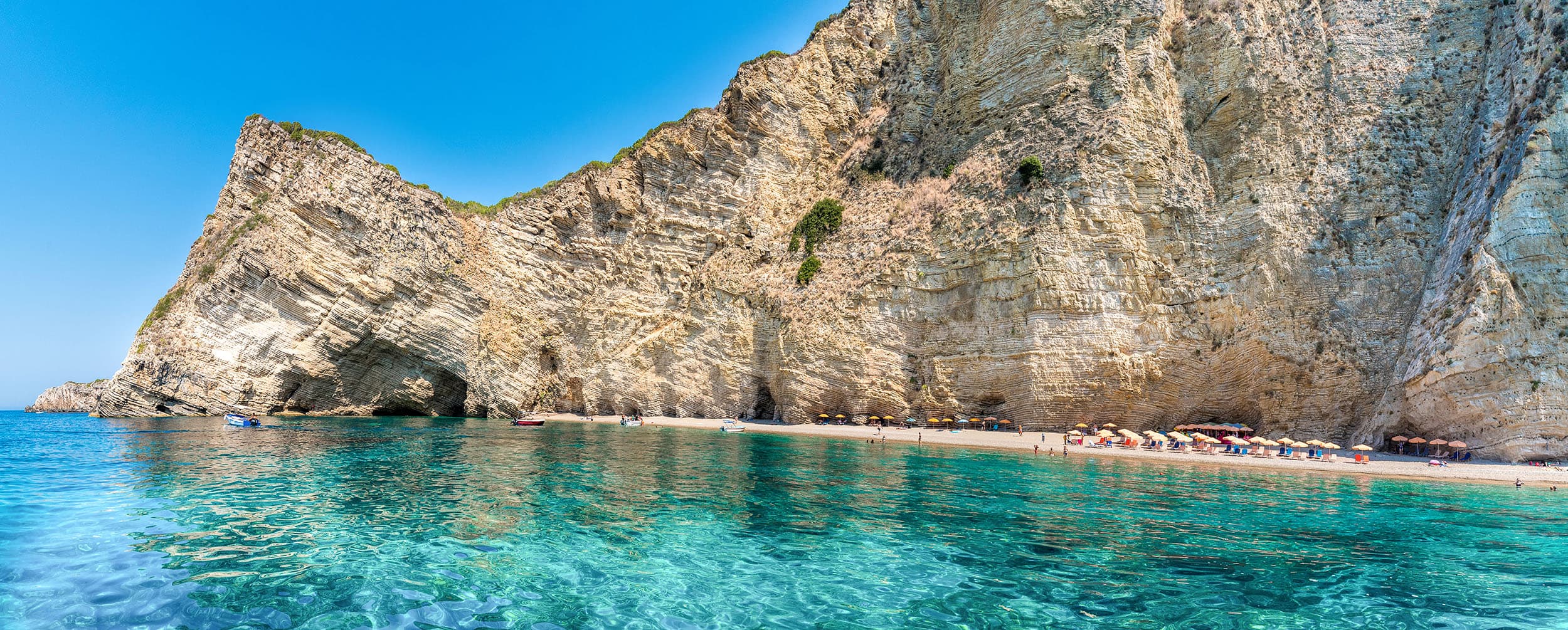
In the renowned Paleokastritsa, on the western side of the island, you will encounter rocky formations, sea caves, and small coves with deep turquoise waters. One particularly special spot is La Grotta, a small rocky inlet reached by 142 steps. Among the best-known beaches on the west coast are the sandy Kontogialos, also known as Pelekas after the nearby village, and the equally sandy Agios Gordios.
The Agios Georgios Pagon, Issos, and Chalikounas stand out for their sand dunes, open landscapes, and shallow waters. Chalikounas in particular, lying right beside Lake Korission, forms a rare ecosystem where sea and wetland coexist.
The north-western coast is noted for its shallow waters and the iconic Canal d'Amour in Sidari, one of the island's most recognisable natural landmarks, with impressive sandstone formations.
On the north-eastern side, you will find small coves ideal for boat trips, framed by Mount Pantokrator and the island's rich vegetation.
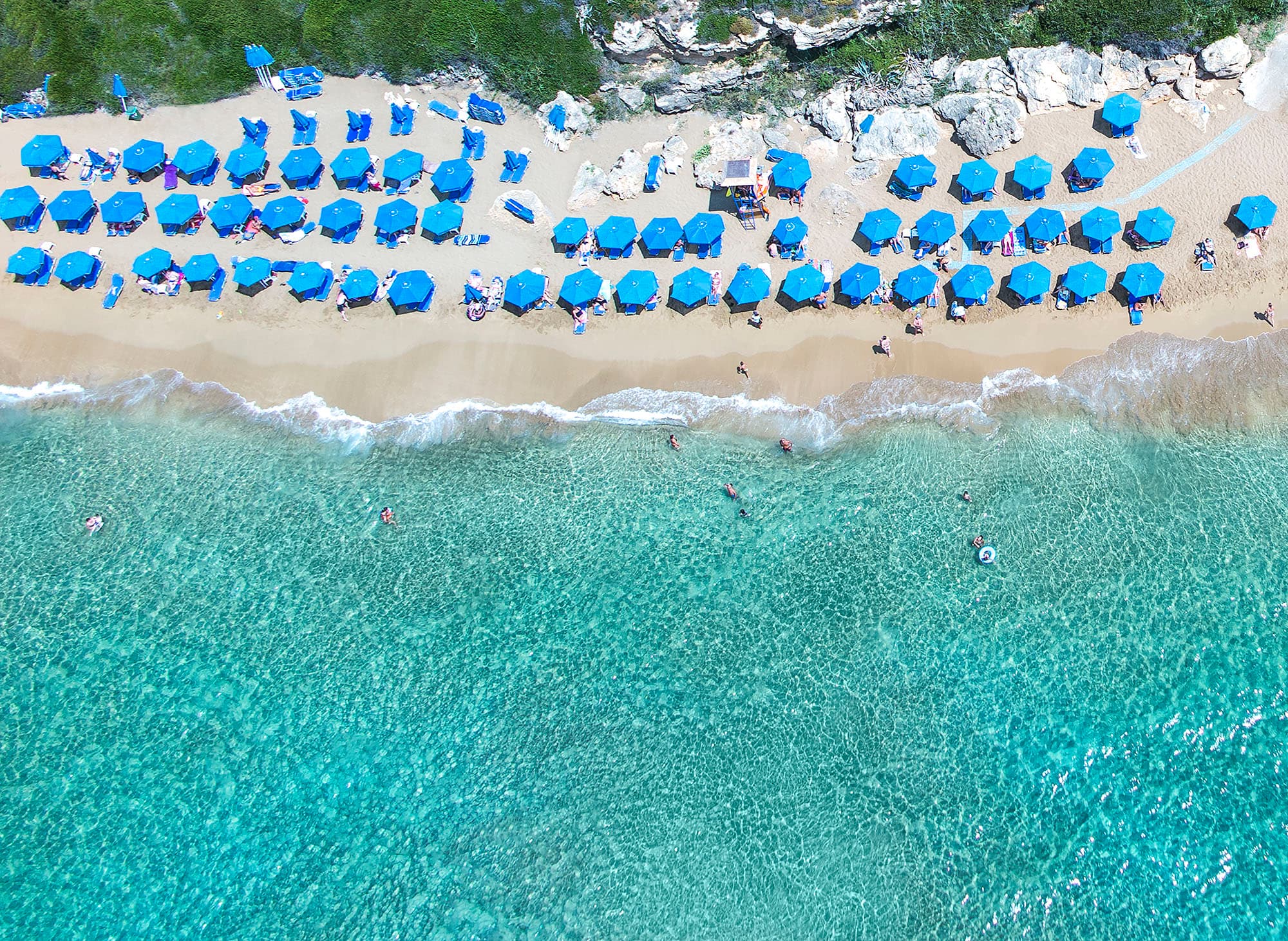
The south-western coast is a paradise if you prefer sand and shallow waters, while the south-eastern coast offers calm, smaller beaches with sand and pebbles, sheltered from the waves and well equipped.
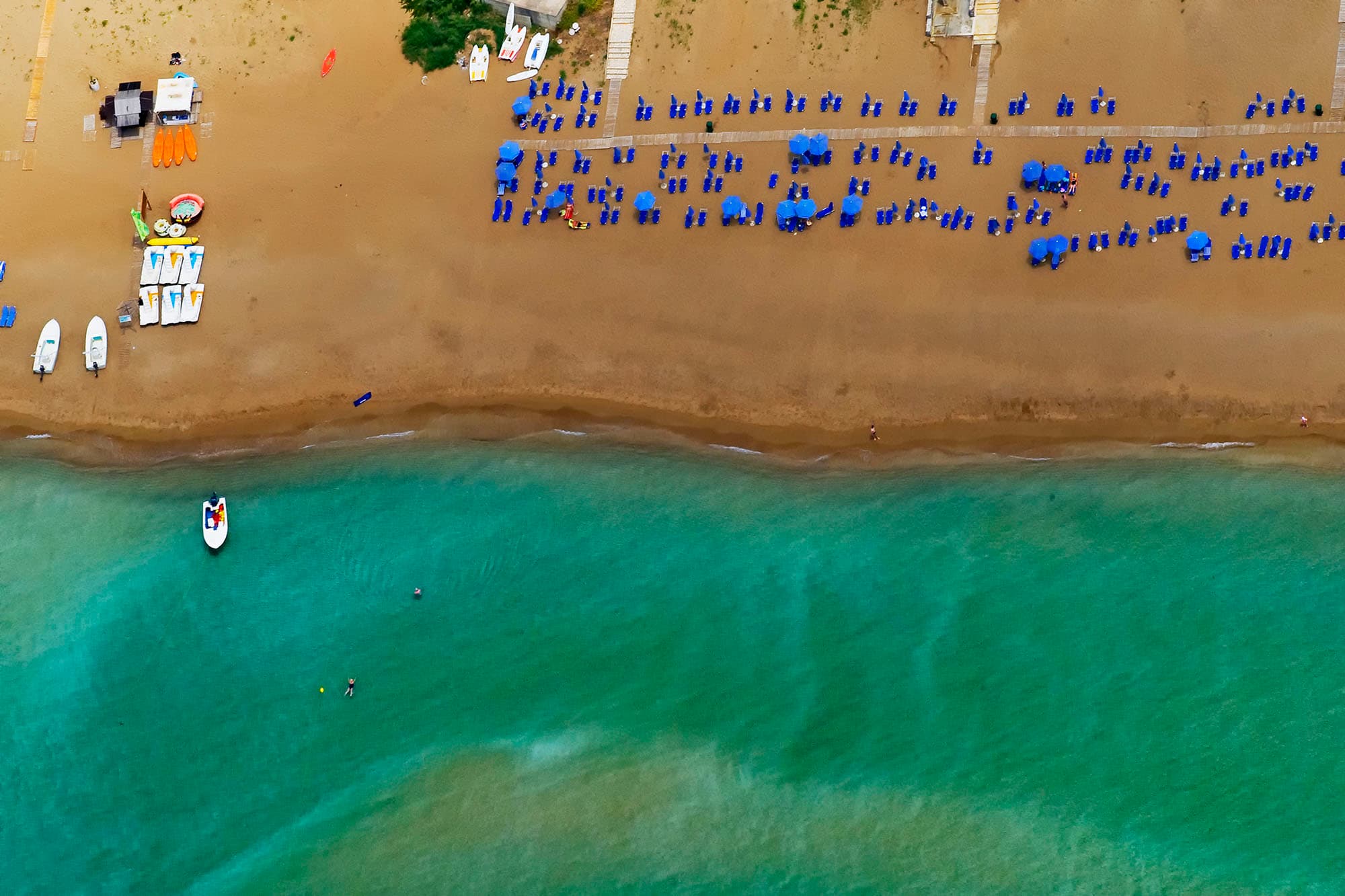
If you prefer organised beaches, head to Glyfada. Rich natural beauty and excellent facilities make it one of the island's most popular choices for all ages, while in the southern part of Corfu, Kavos mainly attracts a younger crowd.
Across the island, long sandy stretches and quiet coves with crystal-clear waters are perfect for snorkelling, while many beaches also offer diving centres and water sports facilities, along with safe activities for the whole family.
In the renowned Paleokastritsa, on the western side of the island, you will encounter rocky formations, sea caves, and small coves with deep turquoise waters. One particularly special spot is La Grotta, a small rocky inlet reached by 142 steps. Among the best-known beaches on the west coast are the sandy Kontogialos, also known as Pelekas after the nearby village, and the equally sandy Agios Gordios.
The Agios Georgios Pagon, Issos, and Chalikounas stand out for their sand dunes, open landscapes, and shallow waters. Chalikounas in particular, lying right beside Lake Korission, forms a rare ecosystem where sea and wetland coexist.
The north-western coast is noted for its shallow waters and the iconic Canal d'Amour in Sidari, one of the island's most recognisable natural landmarks, with impressive sandstone formations.
On the north-eastern side, you will find small coves ideal for boat trips, framed by Mount Pantokrator and the island's rich vegetation.
The south-western coast is a paradise if you prefer sand and shallow waters, while the south-eastern coast offers calm, smaller beaches with sand and pebbles, sheltered from the waves and well equipped.
If you prefer organised beaches, head to Glyfada. Rich natural beauty and excellent facilities make it one of the island's most popular choices for all ages, while in the southern part of Corfu, Kavos mainly attracts a younger crowd.
Across the island, long sandy stretches and quiet coves with crystal-clear waters are perfect for snorkelling, while many beaches also offer diving centres and water sports facilities, along with safe activities for the whole family.