Faith and Memory from Asia Minor
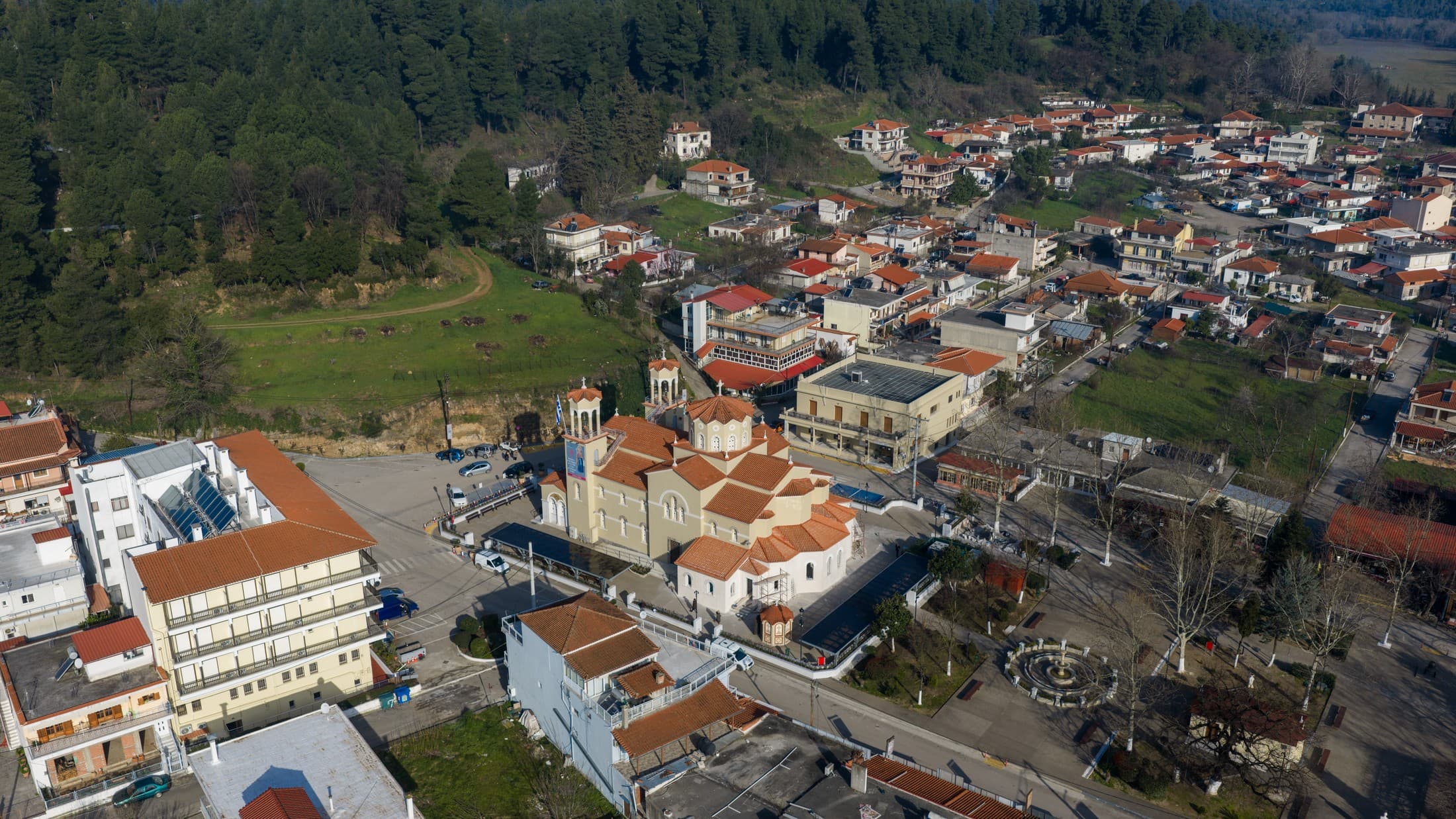
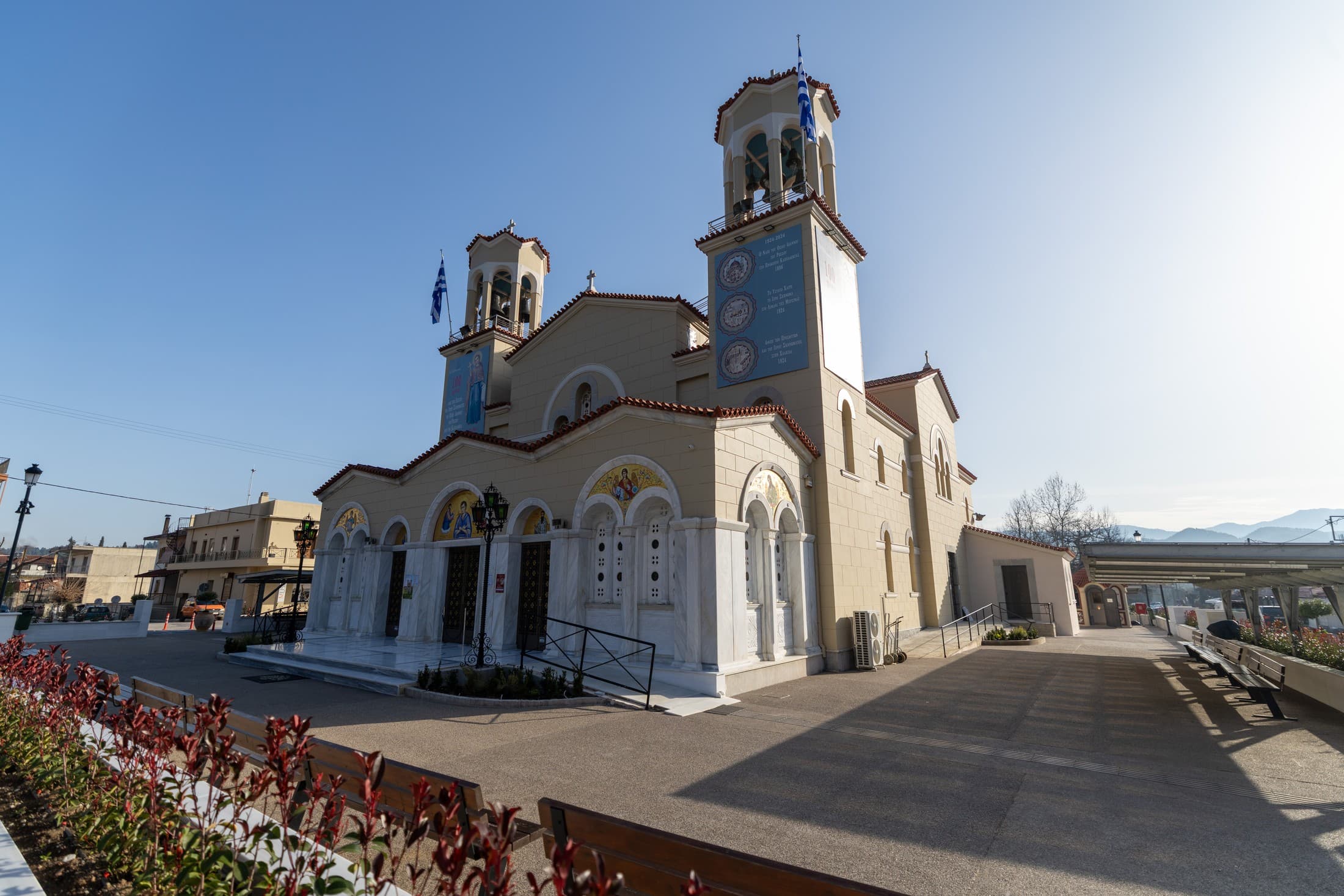
Many locals from Evia make a personal vow: each year on 27th May, the feast day of Saint John the Russian, they arrive in Prokopi on foot from Chalkida, undertaking an emotional journey of nearly 50 kilometers. The church of the saint is one of the largest pilgrimage sites in Greece, attracting faithful from across the Christian world throughout the year.
The holy relic of Saint John is kept in the church, brought in 1925 by refugees from Prokopi in Cappadocia. The relic was originally housed in the Church of Saints Constantine and Helen until 1951, when the current church was built in honour of the saint.
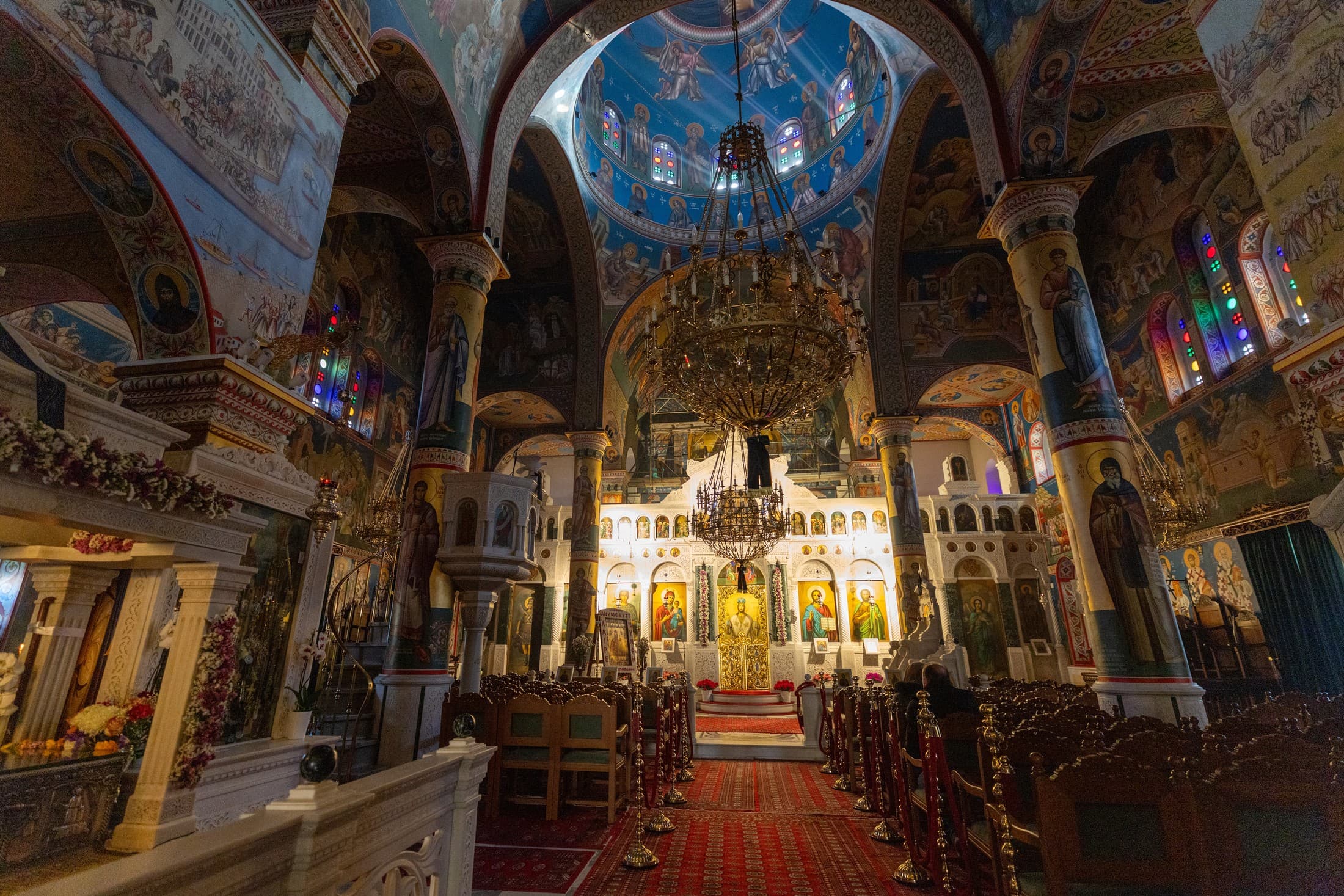
Inside the church, take note of the icons brought by the faithful from Cappadocia, as well as the two frescoes depicting the Exodus of the Greeks from Cappadocia and the reception of refugees and the saint’s relics in Chalkida.
Next to the church is the modern Museum of Asia Minor Culture, designed according to a meticulous museological study. It houses sacred relics and personal items brought by refugees after the Asia Minor Catastrophe. Wedding crowns, chalices and censers, religious amulets, jewellery, and traditional costumes evoke deep emotion, as they represent the precious belongings the refugees could not leave behind when they fled their homeland.
The holy relic of Saint John is kept in the church, brought in 1925 by refugees from Prokopi in Cappadocia. The relic was originally housed in the Church of Saints Constantine and Helen until 1951, when the current church was built in honour of the saint.
Inside the church, take note of the icons brought by the faithful from Cappadocia, as well as the two frescoes depicting the Exodus of the Greeks from Cappadocia and the reception of refugees and the saint’s relics in Chalkida.
Next to the church is the modern Museum of Asia Minor Culture, designed according to a meticulous museological study. It houses sacred relics and personal items brought by refugees after the Asia Minor Catastrophe. Wedding crowns, chalices and censers, religious amulets, jewellery, and traditional costumes evoke deep emotion, as they represent the precious belongings the refugees could not leave behind when they fled their homeland.