The golden route of the olive. A journey of taste and culture in the Peloponnese

The golden route of the olive. A journey of taste and culture in the Peloponnese

Share

Indulge in an unprecedented exploration through Greece on a cultural route that celebrates its liquid gold: olive oil. The Peloponnese, with its unique transitions in landscape, exceptional natural beauty, and endless olive groves invites you on an unforgettable experience featuring its most emblematic product, the crown jewel of the Mediterranean diet. Discover the secrets of the olive in Laconia and Messinia, taste traditional recipes that utilise and highlight this beneficial raw ingredient, and buy award-winning extra virgin olive oils in their place of production.

Peloponnese

Route information

Distance

230km

Estimated duration

4 hours

Route type

Road

?

Route Category

Linear

When to go

All year round, without no particular restrictions. From November to February, the olive harvest period, you will have the opportunity to see the producers on-site in the olive groves, gathering the fruit with extreme care. During the summer months, due to higher temperatures, it is advisable to adjust your excursion schedule so that you reach the suggested archaeological sites early in the morning, when conditions are more pleasant.

Visit proposal

It is recommended to spread the route over 2–3 days.

  • 01
    Museum of the Olive and Greek Olive Oil

    Museum of the Olive and Greek Olive Oil

    The journey begins in the heart of Laconia, at historic Sparti, a city with close ties to olives since antiquity. At the Museum of the Olive and Greek Olive Oil you will come into contact with the culture, history, and technology of olives and olive oil production in the Greek region from prehistoric times to the 20th century. If you find yourself in the area in November, it is worth experiencing the Boukouvala Festival, organised every year during the harvest period in the village of Kastori, on the slopes of northern Mt Taygetus. Olive picking has just begun and the locals celebrate by offering boukouvala (fresh olive oil spread over charcoal-grilled bread), singing, and dancing.

  • 02

    Not found

    Castle of Androusa

    Leaving Laconia behind, the route will lead you to the Castle of Androusa. The view of the fertile Messinian plain from the medieval fortress is breathtaking: endless olive groves stretch as far as the eye can see, emphatically confirming the land’s unbreakable bond with olives.

  • 03
    Kalamata

    Kalamata

    All your senses participate in this journey. The gastronomic pulse of Kalamata beats at the Central Market. Here, you will taste the famous Kalamata olives, purchase high-quality Messinian olive oil, and shop like a local. Every Wednesday and Saturday, the Kalamata laiki (outdoor market) takes place outside the Central Market building, offering fresh products from all over Messinia – a true treasure for gourmands. Around the city, many estates and olive mills offer experiential olive-tourism activities, including visits to olive groves, introductions to the olive oil production process, and tastings.

  • 04
    Palace of Nestor

    Palace of Nestor

    The timeless value of olives to the region becomes even more apparent at the Palace of Nestor. Visit the best-preserved Mycenaean palace in Greece and see for yourselves how, since ancient times, the local economy relied on the production and trade of olive oil. Behind the Throne Room there were two large storerooms where olive oil was kept in jars, while Linear B tablets found in the palace complex reveal deciphered ideograms for olive oil, olives, and the olive tree. At the Archaeological Museum of Chora (temporarily closed for renovations), you can admire an impressive exhibit related to olive oil production: a giant clay storage jar from the 13th century BC, discovered at the Palace of Nestor.

  • 05
    Archaeological Museum of Pylos

    Archaeological Museum of Pylos

    Your journey into the past and Messinia’s ancient history of olive oil production continues at the Archaeological Museum of Pylos in Niokastro, where you can see stirrup jars used mainly for storing the aromatic oil found in tholos tombs (beehive tombs) in the Pylia region.

  • 06

    Not found

    Traditional Olive Mill in Charakopio

    What were millstones? How were they used in traditional olive mills to press olives and produce oil? At the Traditional Olive Mill in Charakopio, members of the village’s Cultural Association share their knowledge with visitors and recount stories of old. In their small "handmade" museum that opens by appointment, exhibits include the threshing floor with the two millstones where the olives were ground, two huge 19th-century clay jars, and the perfectly maintained double press.

  • 07
    Koroni, home of the Koroneiki olive

    Koroni, home of the Koroneiki olive

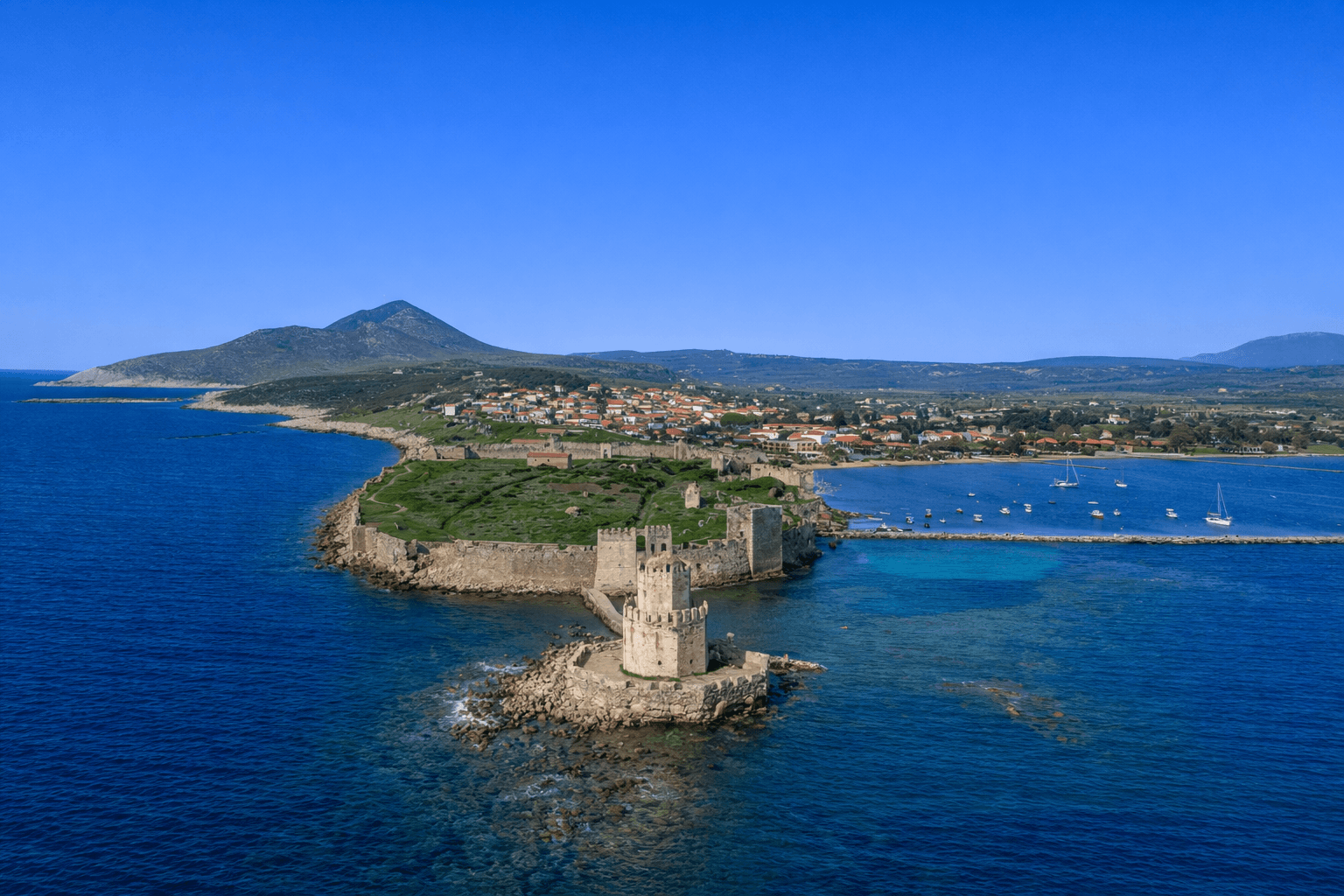
    The route ends at beautiful Koroni, home to the world-renowned Koroneiki olive variety. It is no coincidence that Koroni has been recognised by UNESCO as an Emblematic Community of the Mediterranean Diet, a nutritional model inscribed in 2013 on the Representative List of the Intangible Cultural Heritage of Humanity. This is where taste and culture meet in a unique way. Enjoy the stunning view from the Venetian castle that overlooks the traditional hamlet with its well-preserved mansions, walk through the well-kept alleys, and taste local recipes based on extra virgin olive oil in the beautiful tavernas. Is there a more ideal endling for this journey into the culture of olives? All that remains is to live the experience and make it your own!

Let Greece inspire you!

Subscribe to our newsletter and discover unique ideas and hidden treasures for your next trip.