Meteora. A pilgrimage between heaven and earth

Meteora. A pilgrimage between heaven and earth

Share

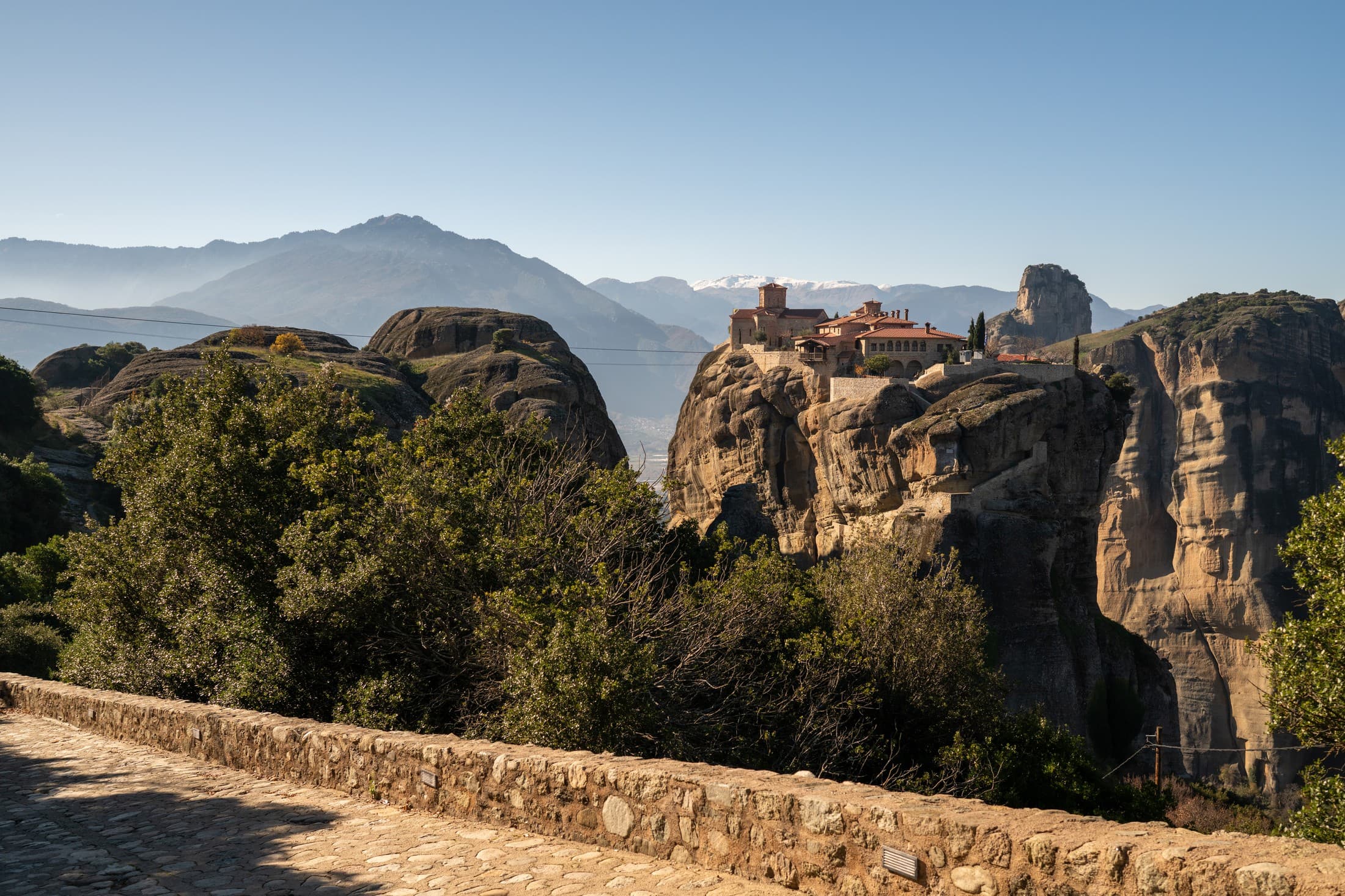
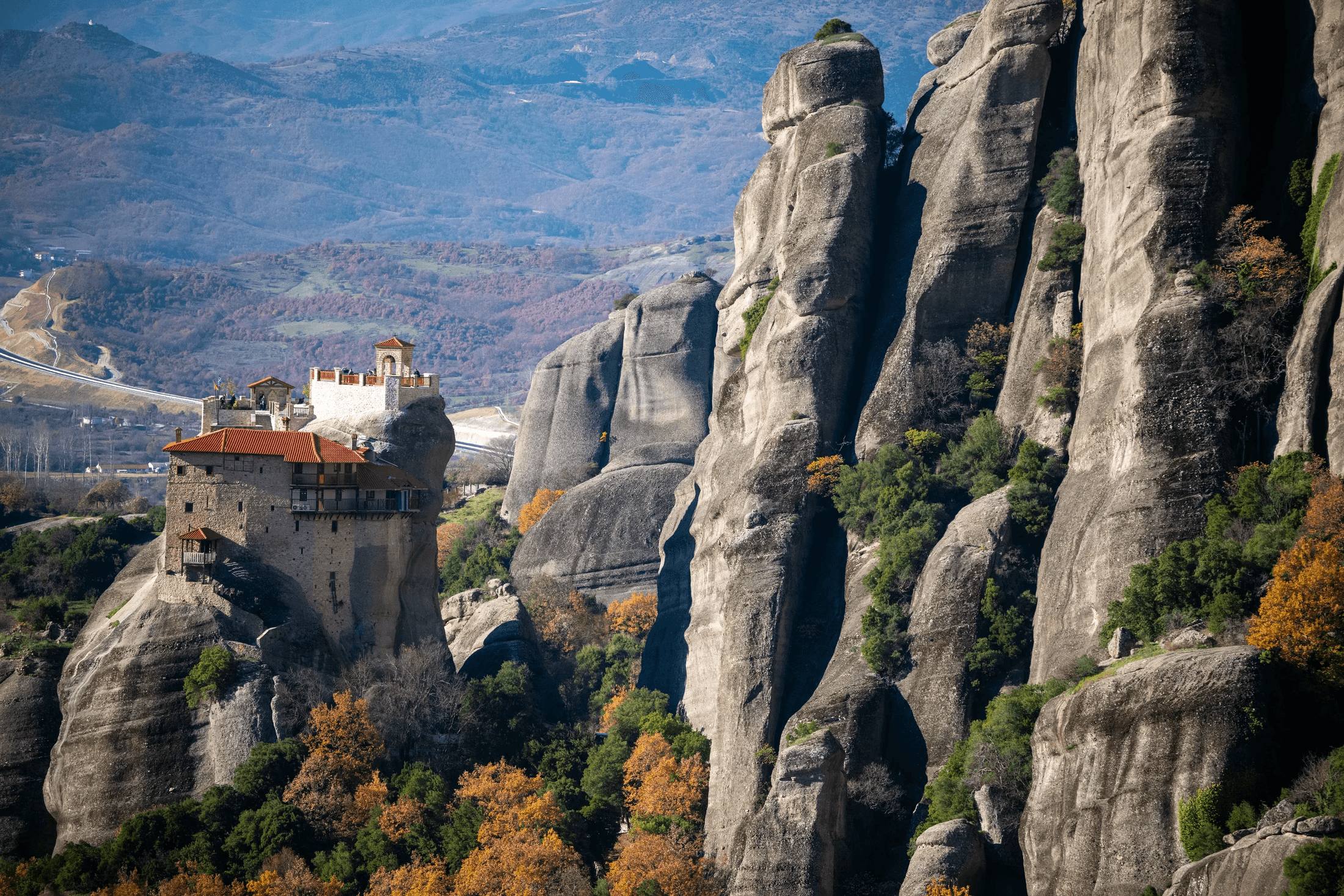
A sacred place, inscribed as a UNESCO Mixed World Heritage Site in 1988, Meteora blends spirituality and religious devotion with unparalleled natural beauty. The rocks of Meteora, which are part of the Meteora-Pyli Geopark, belonging to the UNESCO Global Geoparks Network, were formed from sediments carried by rivers that accumulated here millions of years ago, when the area was a sea. The sandy sandstone was sculpted over time by rain, snow, and wind, creating an impressive relief. Perched on the rocks, the six active monasteries house the second-largest monastic community in Greece, after Mount Athos. Visiting Meteora is a transcendent experience that is worth savouring at least once in your lifetime. The organised monastic life began at Meteora in 1340, with the arrival of the Athonite monk Athanasius the Meteorite, who chose Platys Lithos, the largest rock in the complex. He named it “Meteoro”, meaning a rock suspended between heaven and earth, gathered ascetics from the surrounding rocks, and established a monastic community modelled after Mount Athos, with rules that he himself formulated. There, he established the Church of Panagia tis Meteoritissas Petras (Virgin Mary of the Suspended Rock) and later the Church of the Transfiguration of the Saviour, gradually creating the Great Meteoron. The total number of Meteora monasteries is 24, of which six are currently in operation: Great Meteoron, Varlaam, Agios Stefanos, Agia Triada, Rousanou, and Agios Nikolaos Anapafsas. The suggested route is by road. Alternatively, hiking is a wonderful way to connect with the Meteora region. The extensive network of trails essentially comprises the trails that once connected monasteries and hermitages. It will reveal places of unique natural beauty and will lead you to currently inactive monasteries of great historical value, such as the Monastery of the Ypapanti (Presentation of Jesus) and the Monastery of Agios Nikolaos Badovas (Saint Nicholas of Badova). Local offices organise hiking excursions in the area, and for your safety, it is recommended that you do not attempt any of the routes without the accompaniment of a guide.

Thessaly

Route information

Distance

24.6 km (approximate circular route within the main Meteora complex)

Estimated duration

48 minutes (excluding visit time)

Difficulty level

Easy

Route type

Road

?

Route Category

Circular

When to go

The visitable monasteries of Meteora are open year-round. If you wish to combine your visit with hiking excursions, spring and autumn are ideal seasons. During the summer months, temperatures are high, while in winter, the weather conditions do not favour hiking, as the trails can become slippery. On the other hand, when the winter mist envelops the rocks with its veil, the landscape becomes particularly evocative. The celebration of Christmas and Easter at the monasteries of Meteora is particularly solemn, offering a profound spiritual experience.

Visit proposal

During your visit, it is important to respect the dress code and behaviour expected in monasteries: tops that cover the shoulders, long trousers for men, and long skirts for women. For visitors not appropriately dressed, monasteries typically provide long skirts and scarves at the entrance.Wear comfortable shoes. Access to the monasteries involves staircases and uphill walking, with the exception of the Monastery of Agios Stefanos, which is more accessible.Respect the quiet in places of worship. Communication with monks and nuns should be conducted with courtesy and discretion.The opening hours of the monasteries are strictly adhered to. Adapt your itinerary accordingly, spreading visits to points of interest across two or more days.

  • 01
    Digital Projection Centre of Meteora’s History and Culture

    Digital Projection Centre of Meteora’s History and Culture

    Begin your journey in Kalambaka and the Digital Projection Centre of Meteora’s History and Culture, which will transport you millions of years into the past. Discover how the imposing rocks of Meteora were formed and get a taste of everything you will see next by watching a 3D projection specially designed for visitors.

  • 02
    Church of the Dormition of the Virgin Mary

    Church of the Dormition of the Virgin Mary

    At the foot of the sheer cliff of Agia, in Kalambaka, the church of the Dormition of the Virgin Mary is one of the most important Byzantine churches in Greece. It was built in the 10th or 11th century on the site of an Early Christian basilica, which in turn had been built on the site of an ancient Greek temple dedicated to Apollo. The marble pulpit, the ciborium (canopy) of the sanctuary, the bishop’s throne, and the synthronon, reminiscent of the tiered seating of an ancient theatre, are astonishing. The church’s murals are also unique, with the oldest painted layer dating back to the late 11th to early 12th centuries.

  • 03

    Not found

    Holy Spirit Rock

    Make a stop at Kastraki Square to admire the Holy Spirit Rock. The eponymous ruined chapel is carved into a cave at the summit. From here you can enjoy the grandeur of the rock, or if you have the time and energy, follow the marked uphill trail of moderate difficulty. Ascending the rock face, you will have the opportunity to closely observe the formation of the Meteora Conglomerates (dating back to the Miocene epoch) and to savour the breathtaking views of the irregular rocky formations in Kastraki, the plain, and the Pindos mountain range. The ascent takes approximately 20 minutes and definitely requires a good level of physical fitness.

  • 04

    Not found

    Panagia Doupiani of Meteora

    The charming chapel of Panagia Doupiani of Meteora (Virgin Mary of Doupiani) is nestled beneath the eponymous rock in Kastraki. It was built in the late 12th century and served as the core of monasticism in Meteora.

  • 05
    Monastery of Agios Nikolaos Anapafsas

    Monastery of Agios Nikolaos Anapafsas

    The first monastery you will encounter as you ascend from Kastrakí is the Monastery of Agios Nikolaos Anapafsas. It was established in the 14th century and completely renovated in the 16th century, when the current chapel, dedicated to Saint Nicholas, was built. The exquisite murals were painted by Theofanis Strelitzas Bathas, an icon painter of the Cretan School, and are considered his oldest signed work.

  • 06

    Not found

    Monastery of Rousanou - Agia Varvara

    The Monastery of Rousanou - Agia Varvara is built on a vertical cliff face approximately 60 metres tall and resembles a natural extension of the rock. Today, it is inhabited by a female religious order, while its official founders are two Epirot brothers, monks Ioasaph and Maximus, who, between 1527 and 1529, requested and received permission to settle and establish a monastery here. Visit the solemn monastery church, dedicated to the Transfiguration of the Saviour, as well as the chapel of Saint Barbara, whose memory is revered with devotion every December 4th. The view from the monastery is breathtaking, encompassing the entire monastic complex.

  • 07
    Monastery of Varlaam

    Monastery of Varlaam

    The rock of the Monastery of Varlaam was first inhabited 600 years ago by the ascetic Varlaam, after whom it is named. Four rope ladders aided the first hermits in climbing, whereas today 195 steps lead to the plateau where the monastery stands — and they are well worth the climb to visit its magnificent, Athonite-style monastery church, which is dedicated to All Saints. Its icons were painted in 1548 and are attributed to the Theban painter Frangos Katelanos. The monastery boasts an extensive collection of manuscripts, comprising 290 items. From the early 16th to the early 17th centuries, this was home to the best organised copying workshop among the Meteora monasteries. Furthermore, the impressive gold-embroidered epitaphios from 1609 demonstrates the existence of a specialised gold embroidery workshop. In the old Trapeza (Refectory), which now serves as a sacristy and museum, you will encounter a highly interesting collection of ecclesiastical heirlooms.

  • 08

    Not found

    Monastery of Great Meteoron

    The tallest and largest rock is dominated by the Monastery of Great Meteoron, founded by Saint Athanasius the Meteorite around 1340. Visit the hermitage of Saint Athanasius, which serves as a chapel, the monastery church, dedicated to the Transfiguration of the Saviour, and the impressive refectory, which houses relics and artworks on the theme of monastic life. Also see the hearth with the old copper, earthenware, and wooden cooking utensils, the hospital-nursing home that now operates as a museum of sacred relics and manuscripts, and, of course, the lift tower, from which the net for transporting ascetics was raised and lowered. In the mid-14th century, at the urging of the venerable Athanasius the Meteorite, the first vineyard was planted at the foot of the rocks. Wine has historically held a prominent place in the lives of monks, as it is used, among other things, for the celebration of the sacrament of the Eucharist. The old wooden barrels in the monastery’s cellar bear witness to the wine-making tradition of the Great Meteoron. Since 2013, an initiative by the brotherhood has launched a systematic effort to revive the abandoned vineyard located below the monastery's cliff.

  • 09

    Not found

    Main Viewing Platform at Meteora

    To savour a panoramic view of the entire monastic complex, be sure to stop at selected viewpoints along the route. The main viewing platform at Meteora location, accessible by road, you will capture stunning photographs and savour one of the most beautiful sunsets of your life. Let the serenity and evocative atmosphere of the landscape envelop you – here, you stand between heaven and earth.

  • 10
    Monastery of Agia Triada

    Monastery of Agia Triada

    The Monastery of Agia Triada offers unparalleled views of all the monasteries of Meteora. You can reach it by ascending the 149 steps that lead to the entrance of its complex. Its establishment dates back to the mid-14th century. The monastery church is dedicated to the Holy Trinity and was built during several phases, with its oldest sections comprising the sanctuary and the main nave. The chapel of Saint John the Baptist, carved into the rock, is of particular interest and can be found to left after entering the monastery.

  • 11

    Not found

    Theopetra Cave

    Just outside Kalambaka, the Theopetra Cave is a testament to continuous human presence from the Middle Paleolithic period (130,000 years ago) to the Neolithic period (4000 BC). This is one of the few archaeological excavations in Greece containing evidence of the transition from the Paleolithic to the Neolithic way of life. The most famous find is the renowned human footprints from the Middle Paleolithic period, a discovery that is rare not only for Greece, but for all of Europe.

    Complete your tour with a stop at the Documentation and Education Center of Theopetra Cave, located almost 2 km further. Selected finds from the archaeological excavations are on display here, offering visitors the opportunity to interactively learn about the nature and function of prehistoric societies.
  • 12
    Monastery of Agios Stefanos

    Monastery of Agios Stefanos

    The Monastery of Agios Stefanos, inhabited by a female community, is easily accessible —and therefore popular with visitors— as a stone bridge connects it to the road. It is believed that the ascetic Jeremiah lived on the rock in the 12th century; however, the saints Anthony Kantakouzenos (late 14th–early 15th centuries) and Philotheos (mid-16th century) are officially venerated as its founders. Admire the church dedicated to Saint Stephen, a single-aisled basilica built around 1350 and rebuilt in 1545 by Saint Philotheos, and the new Athonite-style monastery church built in 1798 in honour of Saint Charalambos, which houses his skull, regarded as miraculous. Admire the exquisitely carved iconostasis dating back to 1814, a masterpiece by Metsovo artisans, and be sure to visit the repository in the old refectory, where you will find valuable manuscripts, significant early printed books, and other precious artefacts.

  • 13

    Not found

    Natural History Museum of Meteora and Mushroom Museum

    make time for a visit to the Natural History Museum of Meteora and Mushroom Museum, the first of its kind in Greece. The collection comprises 350 preserved animal and bird specimens, along with 250 species of fungi, which are displayed using dioramas to provide visitors with an accurate representation of the ecosystems in which they are found. Register for the truffle hunt organised by the museum, featuring trained truffle dogs in the forest, and witness firsthand how your efforts become the ingredients for the most delicious truffle pasta!

Let Greece inspire you!

Subscribe to our newsletter and discover unique ideas and hidden treasures for your next trip.