Gate to an unseen world
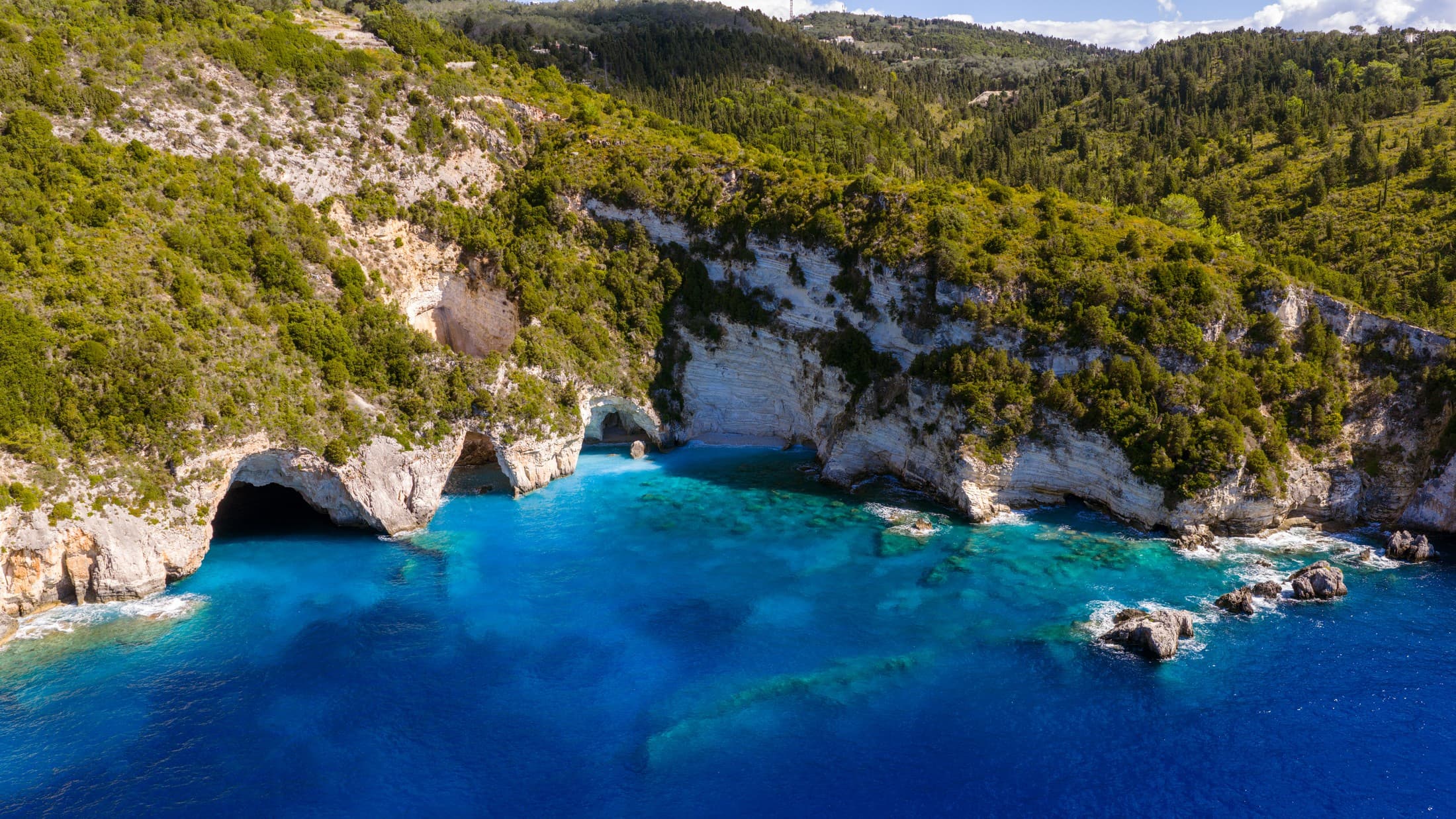
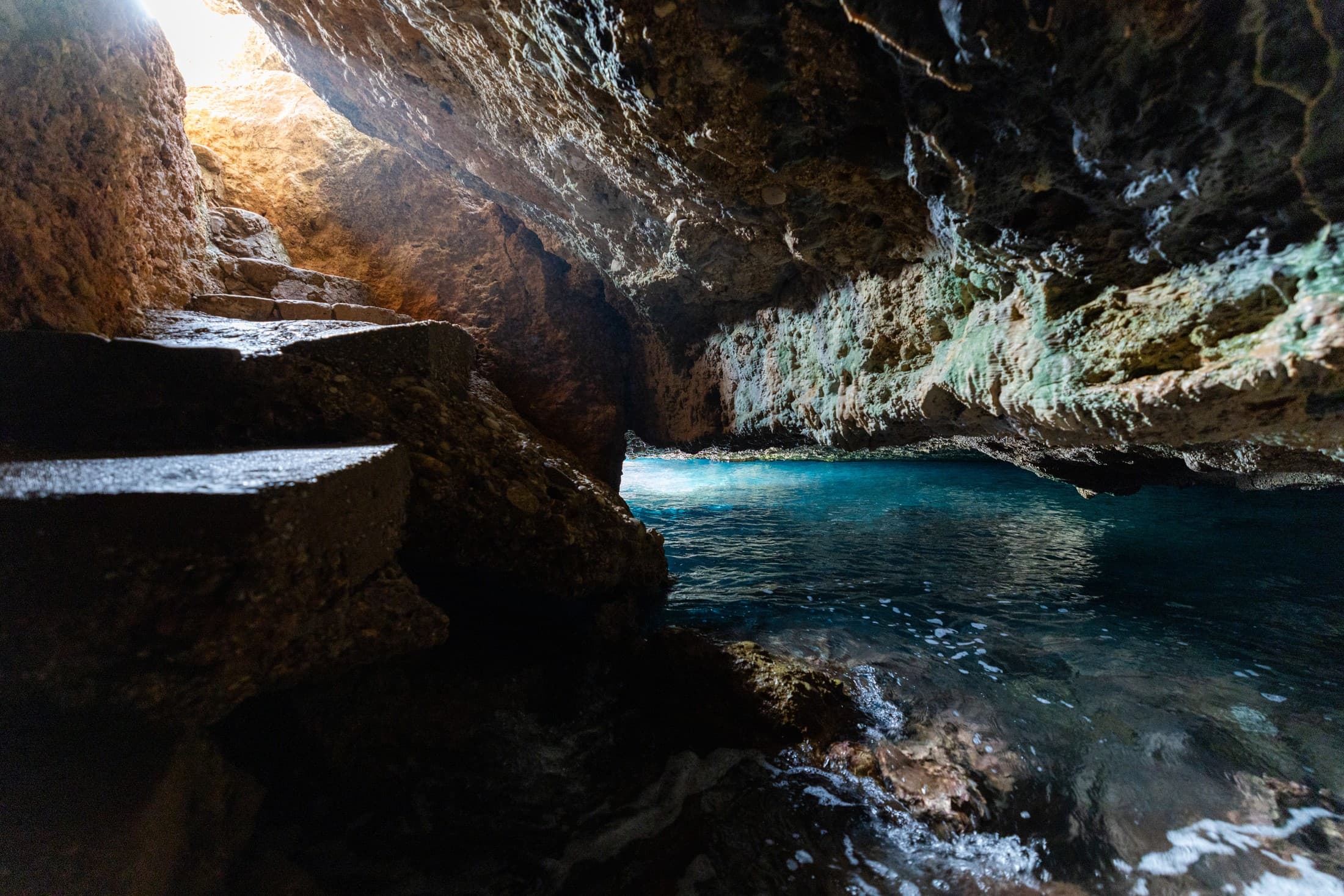
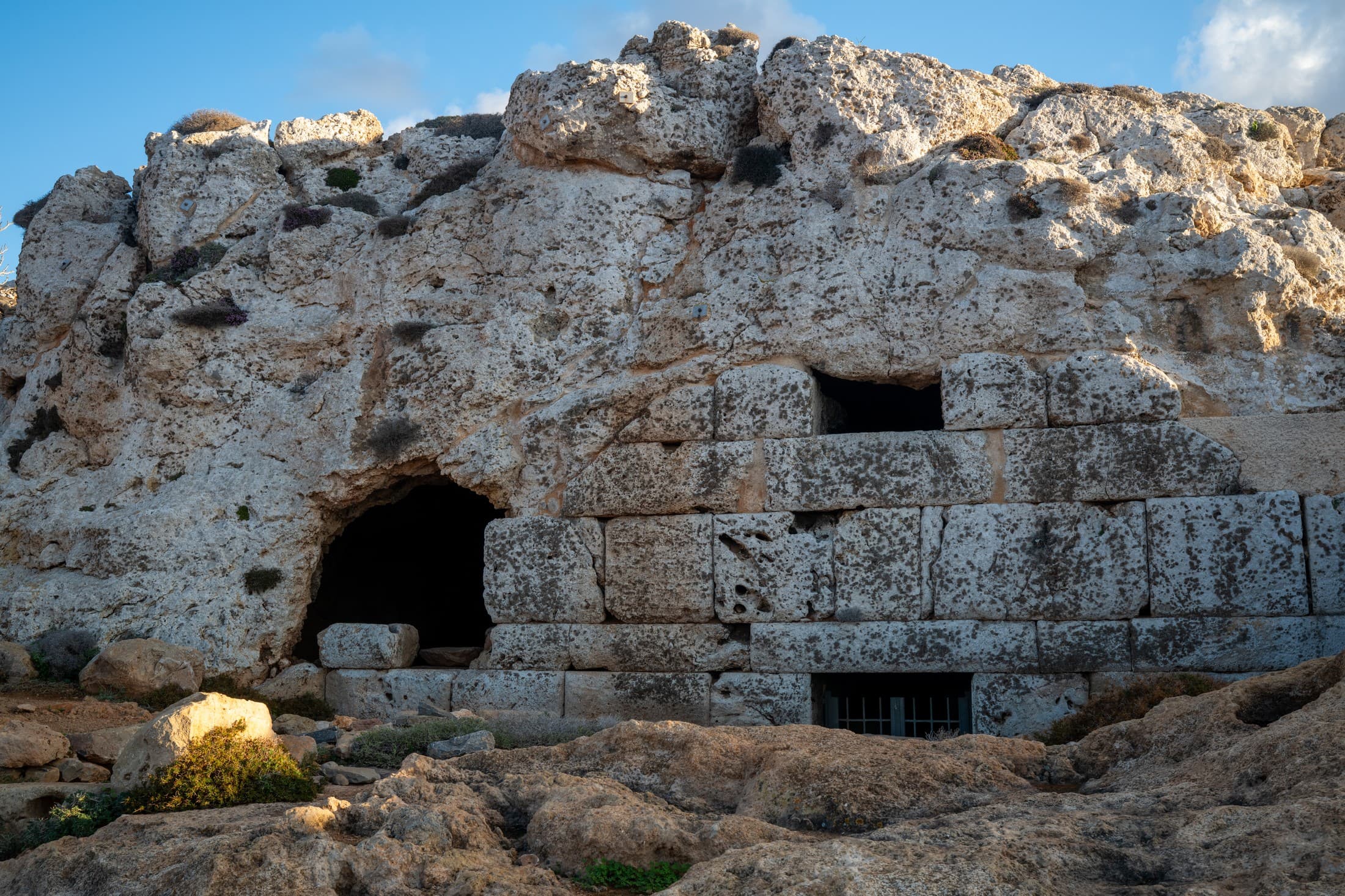
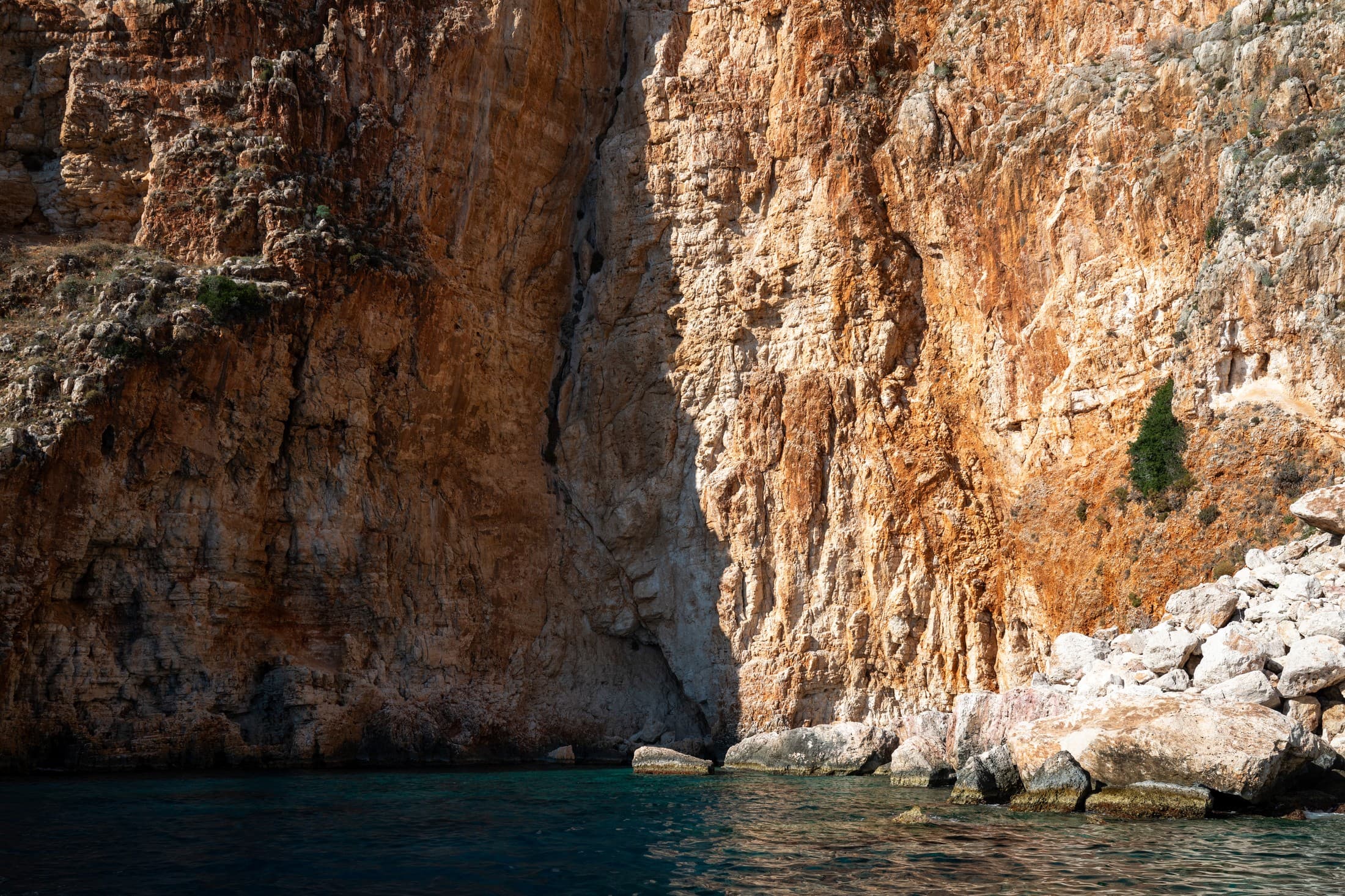
The caique leaves behind the sandy shore of Agios Pavlos on Amorgos. Ahead, the rock of the uninhabited islet of Nikouria rises like a gateway to an unseen yet enchanting world. Within it lies the eponymous underwater cave, featuring large natural openings on its surface that resemble doors and windows, ready to welcome visitors.
Diving into the waters, the light transforms: blue turns to emerald, then deep turquoise. On the walls, purple and red sponges, corals and fan worms create a living mosaic. On the seabed, lobsters and scorpion fish hide in crevices, while moray eels, nudibranchs and schools of sea bass traverse the azure landscape. Visibility rarely drops below 50 metres, whilst the Posidonia meadow —a hallmark of clean waters— is illuminated by the transparent Aegean light.
Above the water's surface, Nikouria offers equally charming sights. At the church of Panagia, the famous Nikouria Decree, inscribed around 280 BC, was discovered. It records the transition of power in the Aegean Sea from the Macedonians to the Ptolemies and proves that this small islet was a link in a major political network.
Today, the absolute silence of Nikouria meets the underwater pulse. From snorkellers to experienced divers, anyone arriving here can dive into one of Greece's most beautiful caves. During your tour of the cave, ensure you follow all safety measures and, if you lack experience, engage a certified guide.
Combine your dive at Nikouria with a stroll around the Bay of Agios Pavlos, a spot offering unique views towards Kalotaritissa and the endless blue of Amorgos. Head up to Tholaria, the island's highest village, to watch the sunset paint the rock of Nikouria in golden-pink hues.
If you prefer dry land, opt for a hike along the ancient footpaths connecting Tholaria to Egiali, enjoying the scent of sage and the sound of the wind.
Diving into the waters, the light transforms: blue turns to emerald, then deep turquoise. On the walls, purple and red sponges, corals and fan worms create a living mosaic. On the seabed, lobsters and scorpion fish hide in crevices, while moray eels, nudibranchs and schools of sea bass traverse the azure landscape. Visibility rarely drops below 50 metres, whilst the Posidonia meadow —a hallmark of clean waters— is illuminated by the transparent Aegean light.
Above the water's surface, Nikouria offers equally charming sights. At the church of Panagia, the famous Nikouria Decree, inscribed around 280 BC, was discovered. It records the transition of power in the Aegean Sea from the Macedonians to the Ptolemies and proves that this small islet was a link in a major political network.
Today, the absolute silence of Nikouria meets the underwater pulse. From snorkellers to experienced divers, anyone arriving here can dive into one of Greece's most beautiful caves. During your tour of the cave, ensure you follow all safety measures and, if you lack experience, engage a certified guide.
Combine your dive at Nikouria with a stroll around the Bay of Agios Pavlos, a spot offering unique views towards Kalotaritissa and the endless blue of Amorgos. Head up to Tholaria, the island's highest village, to watch the sunset paint the rock of Nikouria in golden-pink hues.
If you prefer dry land, opt for a hike along the ancient footpaths connecting Tholaria to Egiali, enjoying the scent of sage and the sound of the wind.